
№ 55: A Flying Visit
Also authority in Deuteronomy and a Bruderhof wedding



Alastair: Since we published our last post, I have had ten flights (two of them red-eyes), taking me from Manchester to New York, to Vancouver, to Columbia SC, to Birmingham AL, to Franklin TN, back to New York, and then back to Manchester. In the past fortnight, I have delivered six talks, participated in three days of a colloquium, had three question and answer sessions, preached one sermon, recorded three podcasts, written a couple of articles, taught two hours of classes, and held a couple of office hours. I have spent countless hours in conversation with various people, making several new friends and reconnecting with several older ones. It has been quite exhausting, yet truly wonderful. I have been treated to some remarkable hospitality and have also been inspired by some incredible people and ministries. I am now looking forward to three months with fewer travel and speaking commitments.


We flew back to New York on the 22nd. We had a forty-five minute chat with our Uber driver to Manchester Airport about Christianity and Islam: telling people what I do often results in fascinating conversations! We caught up with Susannah’s mother upon our arrival. As I was leaving in little over a day’s time, my brief stop in the city also gave me the chance to meet up with our pastor, with whom I walked and talked for a few hours. We are incredibly grateful for the church in New York, for the ministers in it, and wish we were not so limited in the time we could spend at it.


After an office hour for my Davenant Hall class the next morning, I went to JFK airport for my flight to Vancouver. Having a couple of hours to pass, I decided to pay a visit to the TWA Hotel, the former TWA Flight Center, a distinctive early 1960s building with a concrete shell roof, designed by Eero Saarinen.
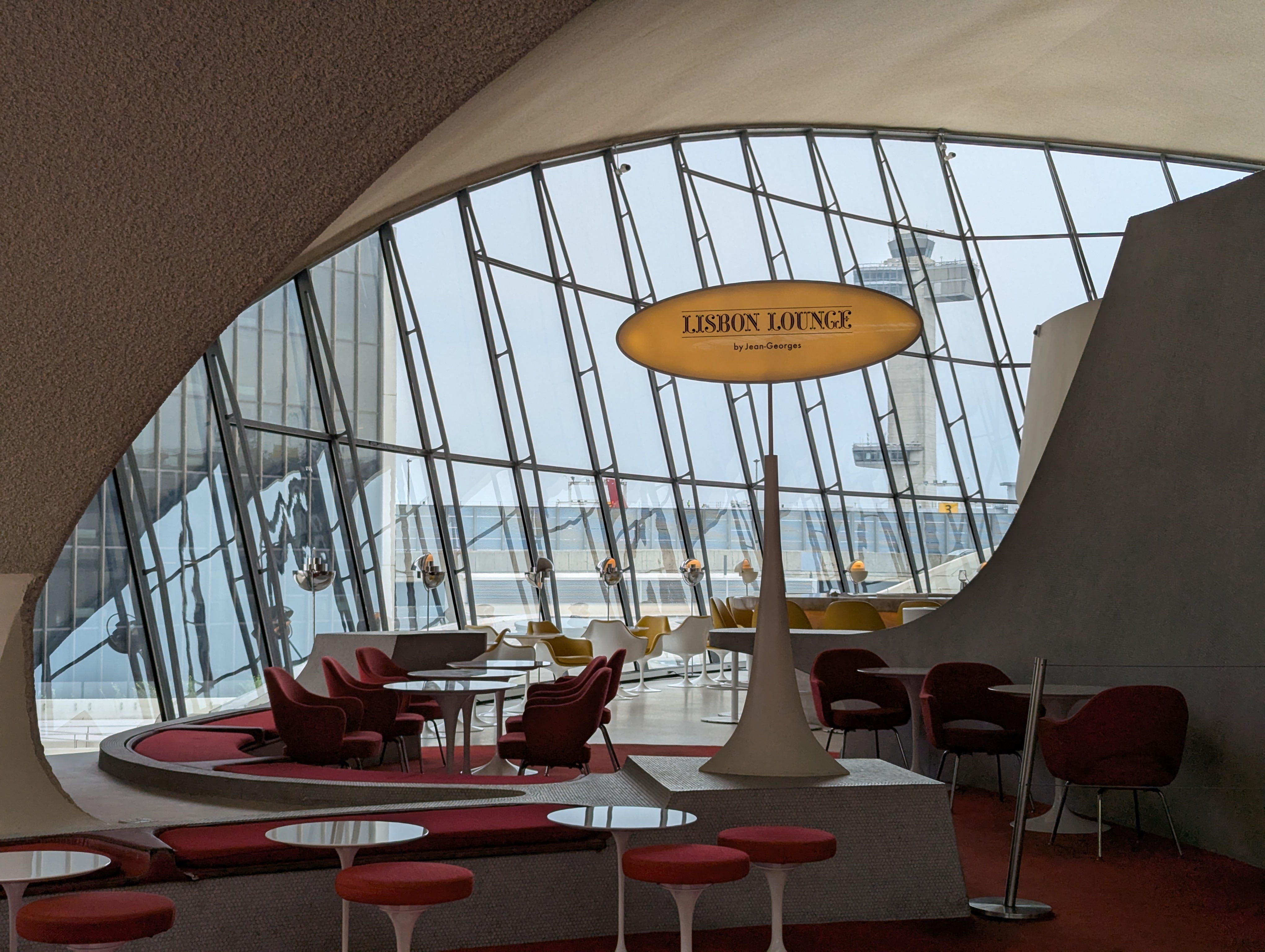

Susannah and I had visited the building back in May 2022 as we were leaving New York for our honeymoon. Postwar architectural styles and buildings seldom hold any appeal for me, but the TWA Flight Center is a notable exception, an elegant and fanciful confection of futurist and other avant garde styles, evoking the glamour and the romance of mid-twentieth century flight.


Approached through long red-carpeted hallways, the flight center—now a hotel—is an airy and open space, with hardly any divisions or barriers.


The visitor will be struck by the curves throughout the structure—the dramatic vaulting of the roof, the stairs, walkways, and other features; there is barely a straight line to be seen.


Behind the building—the direction from which I entered from Terminal 5—there is an old TWA aircraft. On the other side, there is a VW camper van and a classic car. Throughout the building, there are stylish 1950s and 1960s features. It really is a showcase of the very best of 1960s architecture and style, and quite a contrast with what I usually associate with the decade.


After flying to Vancouver, I was picked up from the airport by a former student, giving me the opportunity to catch up with him on the drive to the place where I was staying. I briefly chatted with my host after arriving in. Vancouver’s timezone is nine hours different to the UK’s, so I was expecting to struggle with the adjustment. I did not feel too exhausted upon my arrival, but woke up the next morning with a heavy cold.
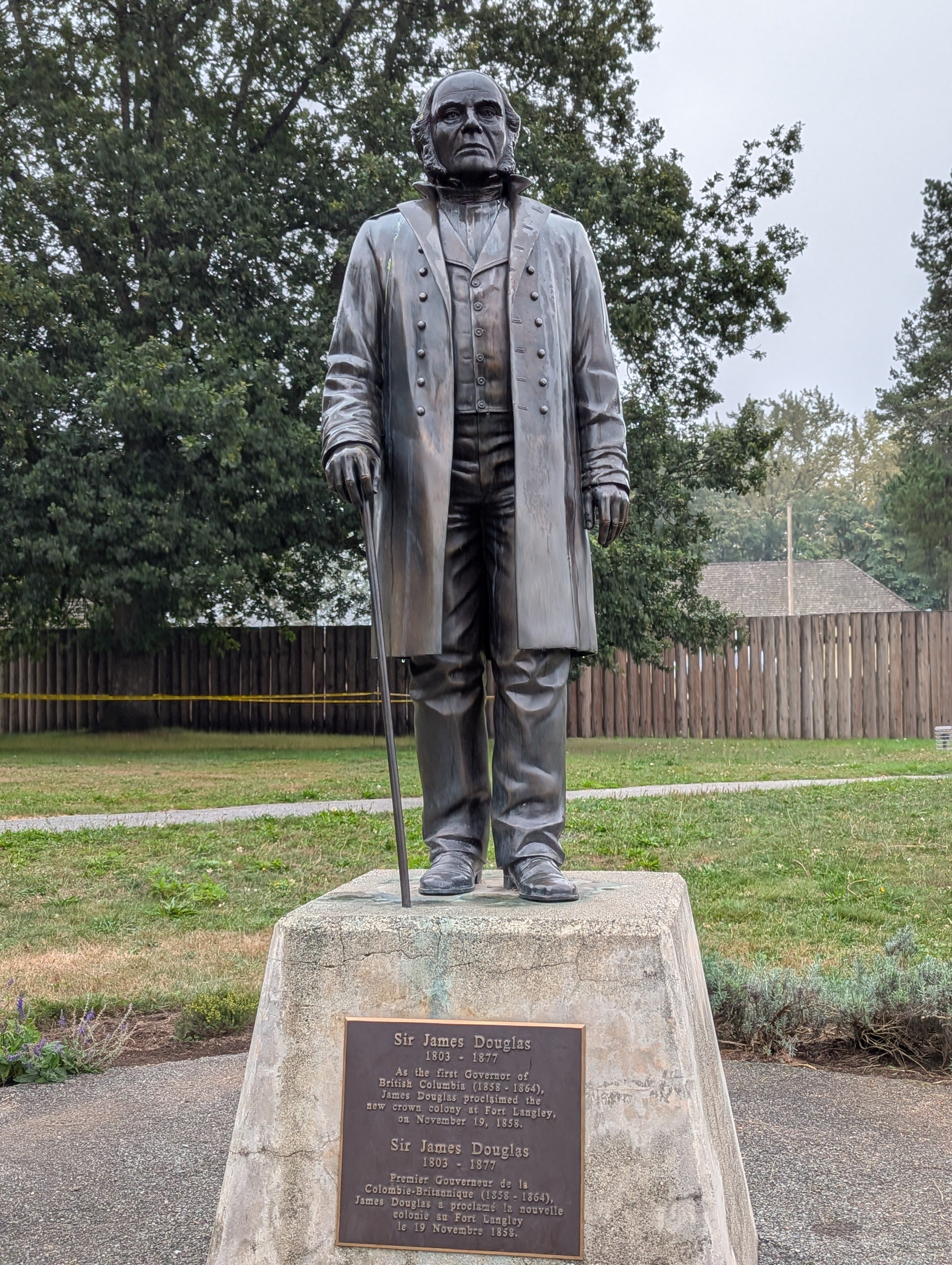

A couple of other guys were staying in the house for the conference and some further meetings. I was introduced to them the following morning. My hosts also had a slide built into their house, going down three storeys; I did not pass up the opportunity to try it out! We then went into the nearby town of Fort Langley, which was very charming.

We then drove to Stanley Park near Vancouver, visiting the Prospect Point Lookout, next to the Lions Gate Bridge, from which we could see the Burrard Inlet. Despite the weather being overcast, the view was incredible. The scale of the landscapes in North America can be so awe-inspiring when compared to the much more bucolic landscapes of the UK.


From the Lookout, we walked down towards the seawall path. We spent a few minutes on the beach, before walking back to the car and driving into the city for a meal.


We went back to the house, where I had a short nap. We went out for another meal later. However, at that point, I was utterly wiped out, with both the jetlag and my cold. I could barely eat anything and when we returned, I completely collapsed.
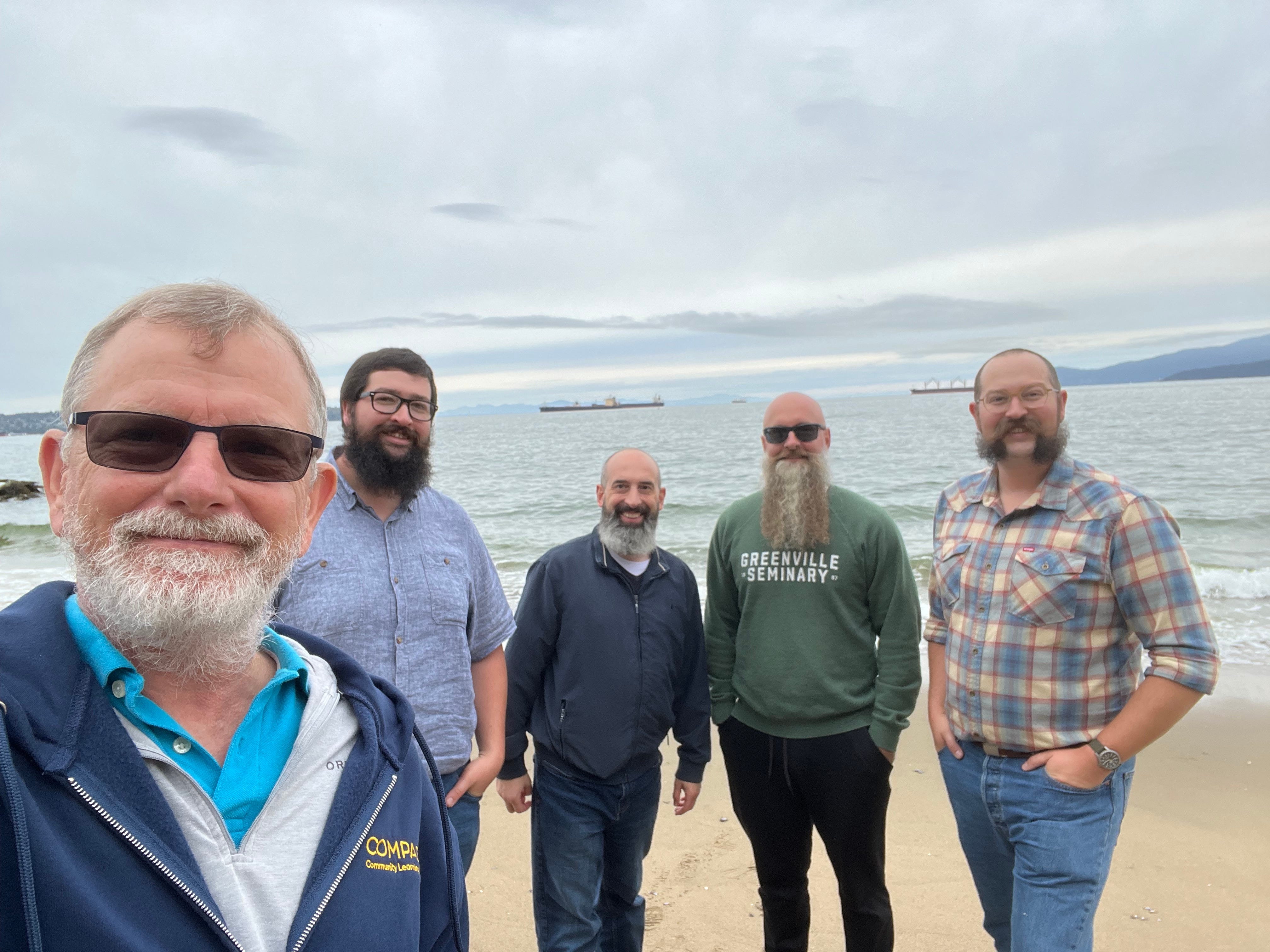

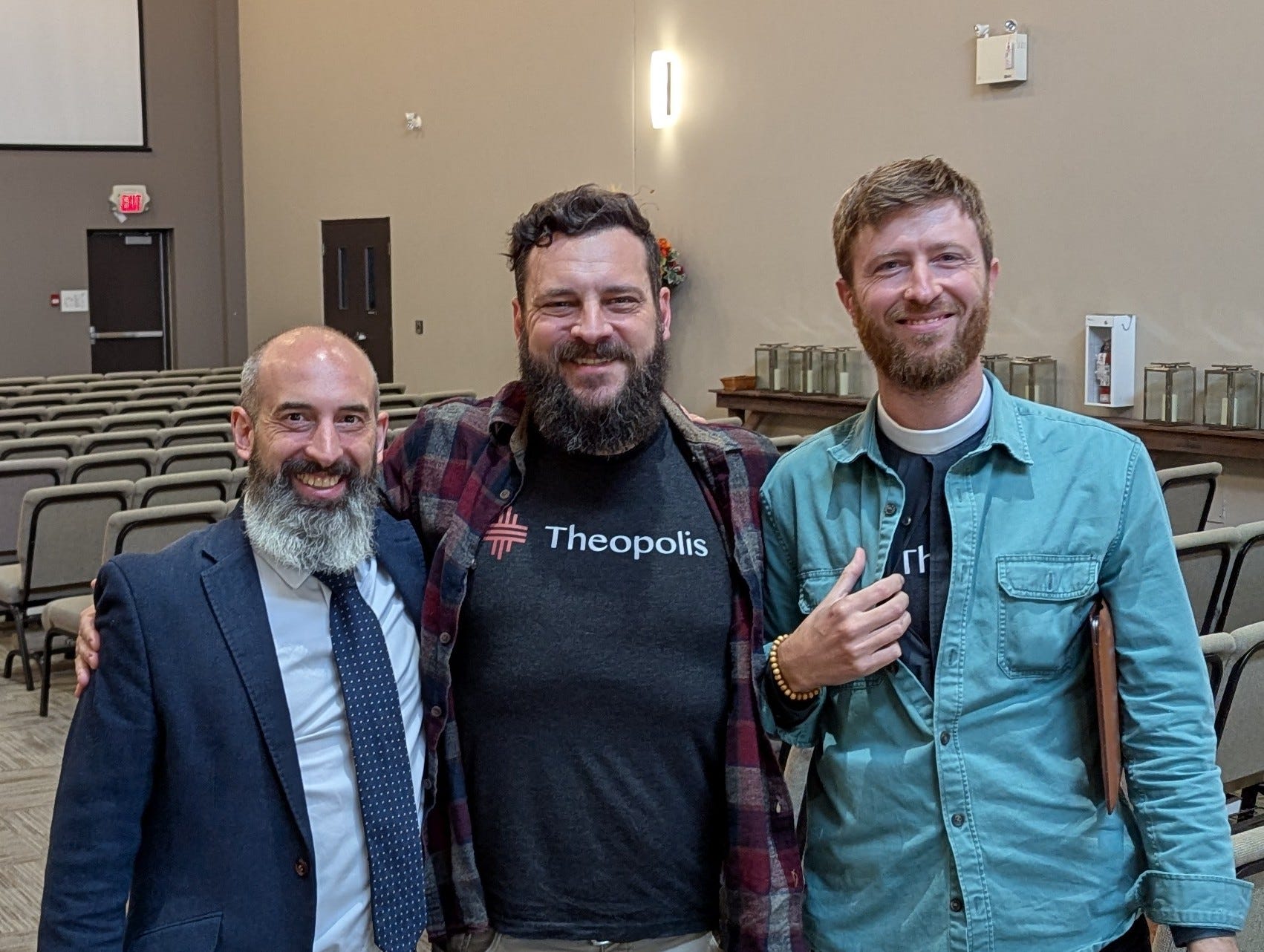
The next day, the conference began. The topic was on the book of Deuteronomy, and I delivered four talks over two days: ‘Deuteronomy and Remembrance’, ‘Law and Wisdom’, ‘Deuteronomy for Elders’, and ‘Deuteronomy and Succession’. I was particularly delighted that some former Theopolis fellows were able to make it up from Washington. Catching up with them was an unexpected treat.
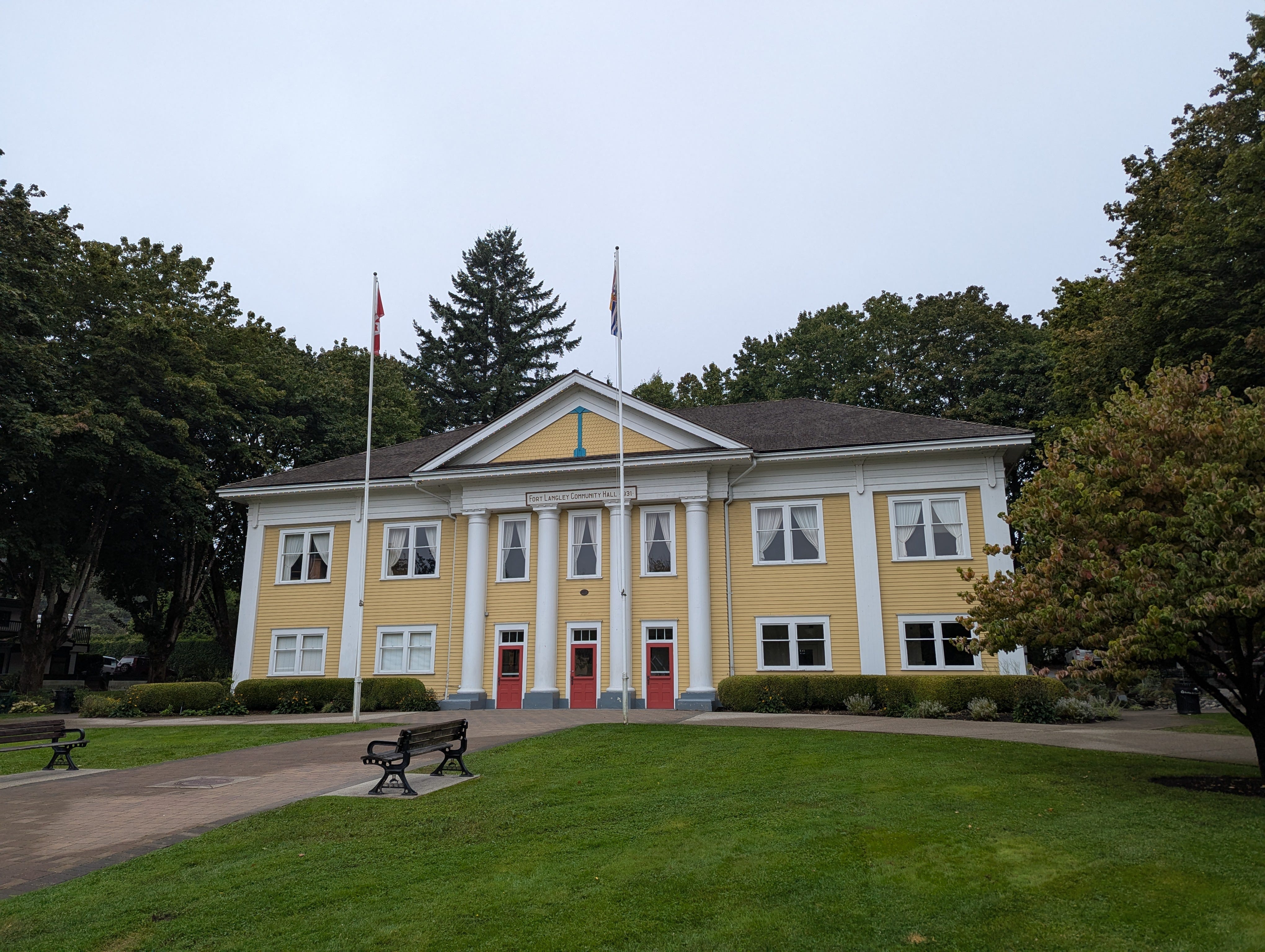
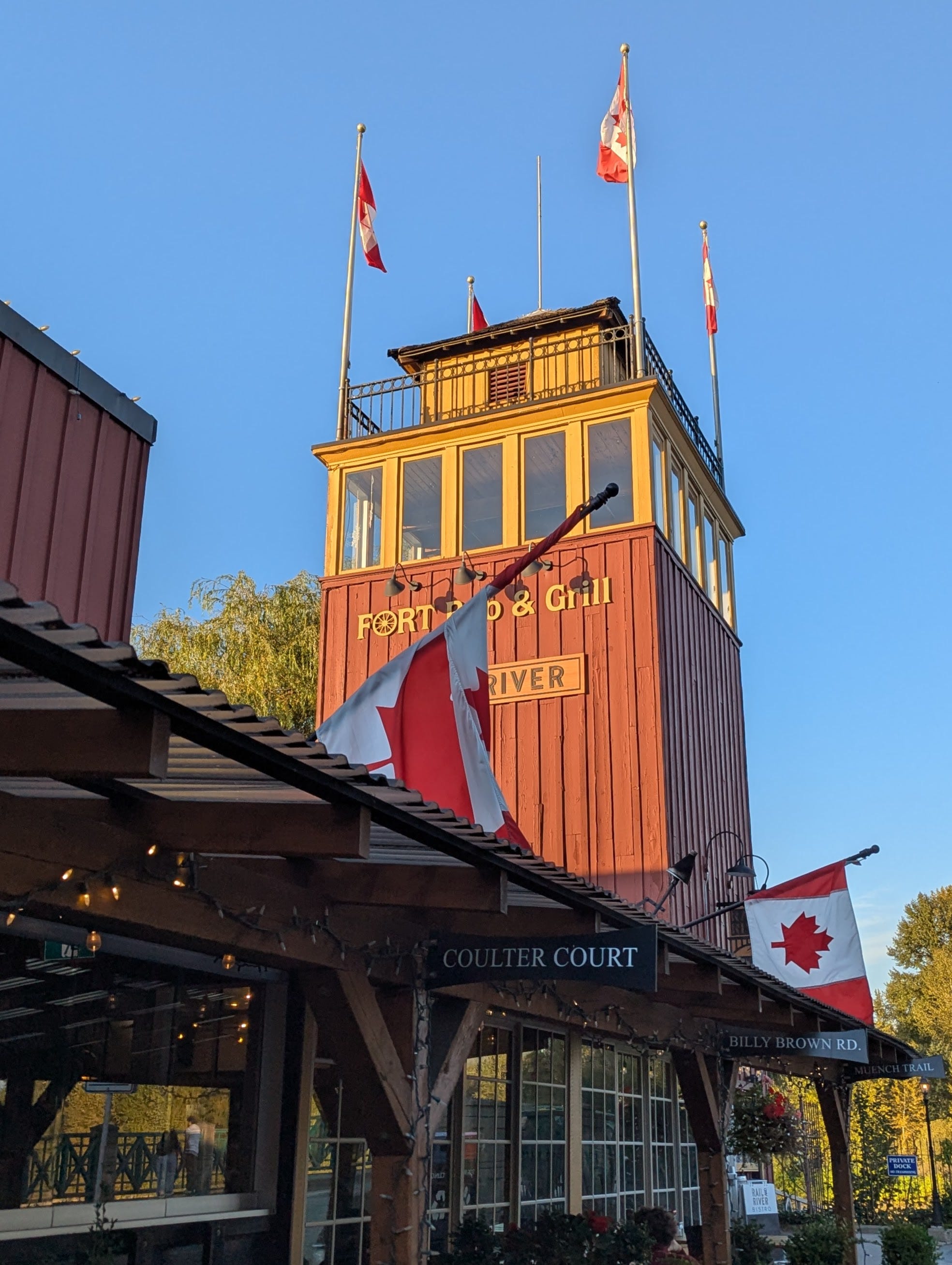
On the Saturday evening, a young man from the church kindly invited me for an evening walk along the river in Fort Langley. We walked and talked for an hour or so, seeing the full width of the river and also discovering some of the wildlife.

The next morning, I preached at the church, on the voice of the bridegroom, from John 3:22-36. I was invited for a meal, before which I had another short walk with someone from the church. After a wonderful meal and some conversation, I returned to my hosts’ house and spent some time with them.
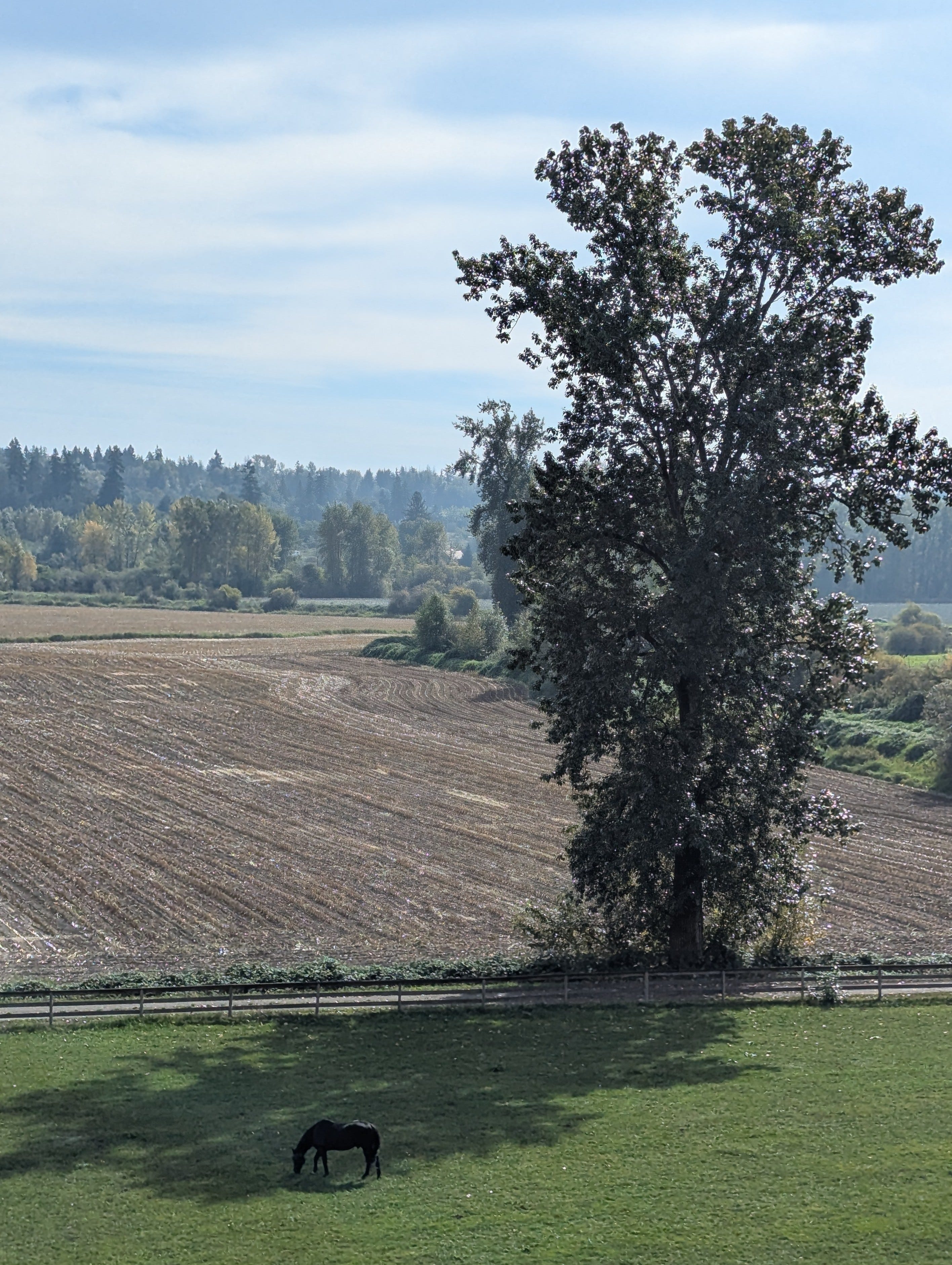
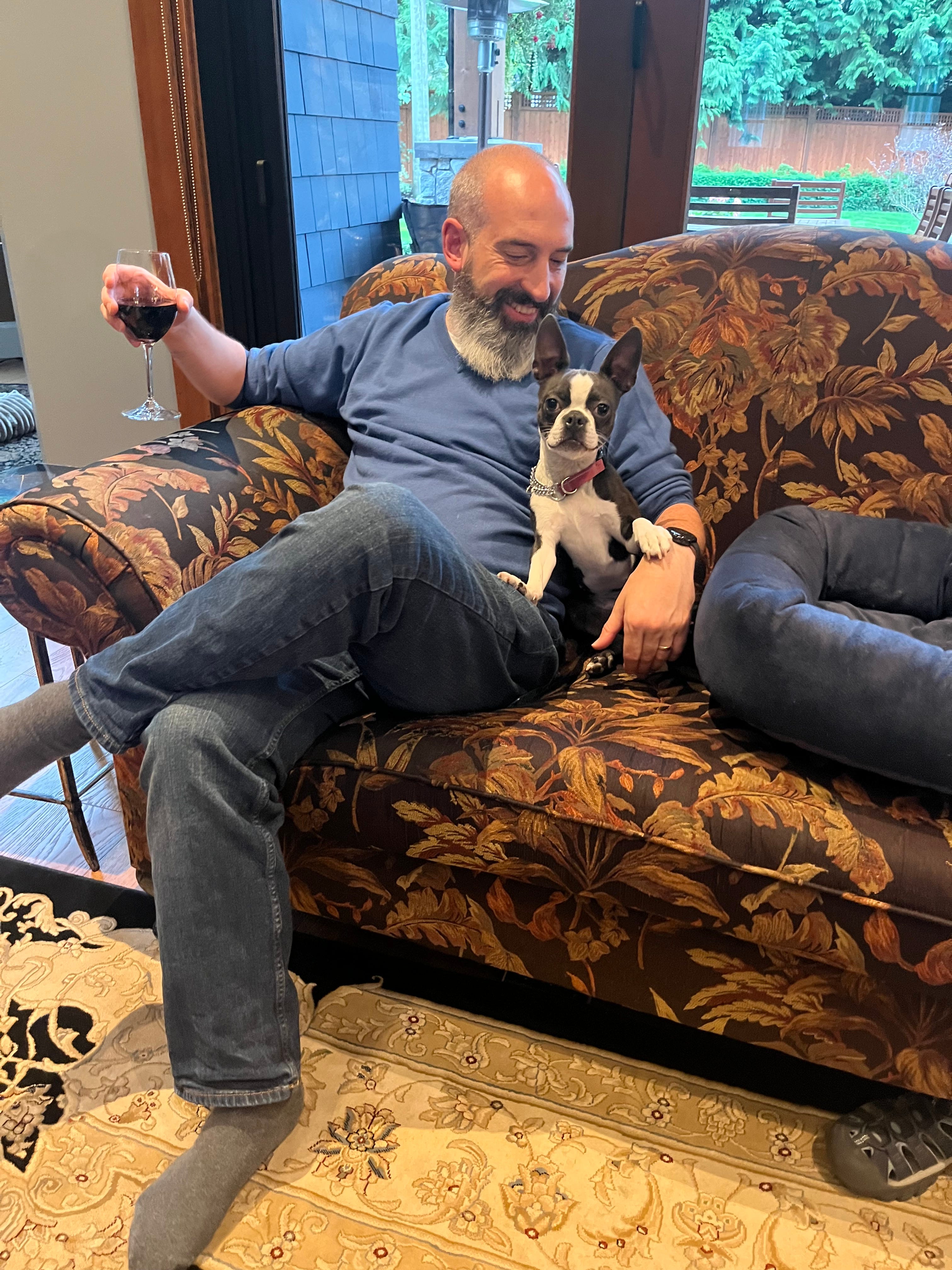
It was my first visit to Canada, which is a little surprising considering I have visited over thirty-three US states. Canada and the Canadians I met made a wonderful first impression. When I was a child, my Sunday school teacher came from British Columbia and used to have calendars of the province. Seeing the incredible beauty of the place, I had always wished to visit at some point. While I was limited in what I could see, my appetite was whetted and I very much hope to return some day. I was treated to some superb hospitality, and made several new friends.


I flew out that evening, flying overnight to Charlotte, where I was picked up for my next events, with a Christian study centre in the University of South Carolina in Columbia. I seldom sleep on flights (I am currently writing this surrounded by sleeping people on our flight back to Manchester), so was quite exhausted, even though my cold was greatly improved. After having a breakfast, I was able to have a rest and then went over to the study centre.


I was extremely impressed by the study centre. Although they engage in some outreach, study centres chiefly serve to equip and form Christian college students and staff, providing a context for informal fellowship (the study centre building is perfect for hospitality and has lots of spots that are conducive for conversation and group discussion), resources for study (the centre had a well-stocked library), and events of many kinds. Richard Mounce, who was the primary person responsible for getting the centre off the ground and who had invited me to speak, gave me an extensive overview of their work on the drive from the airport. It really is an exciting and important endeavour, not least in the way that it connects various Christian staff and students, creating networks within which serendipitous connections can arise.
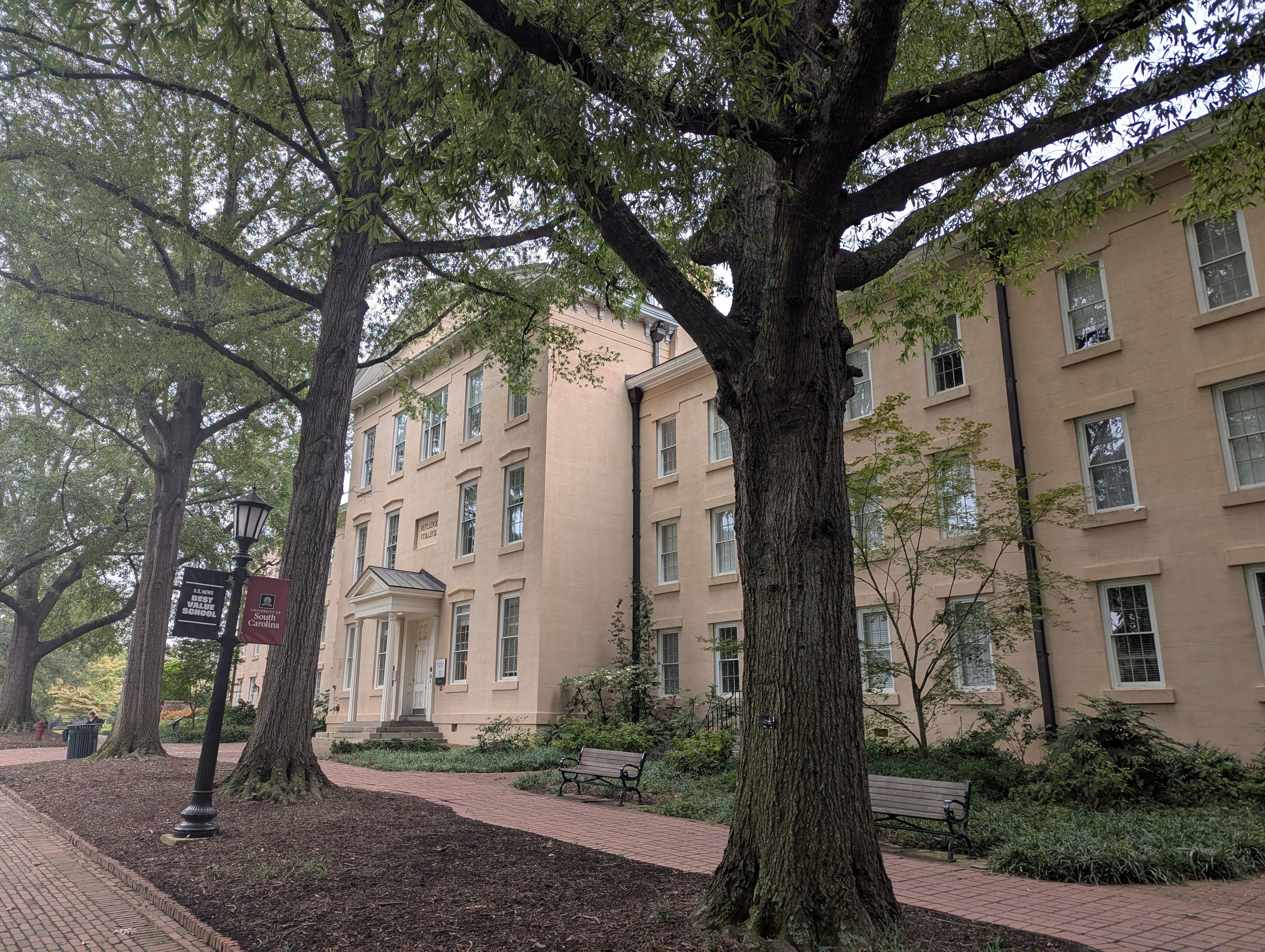
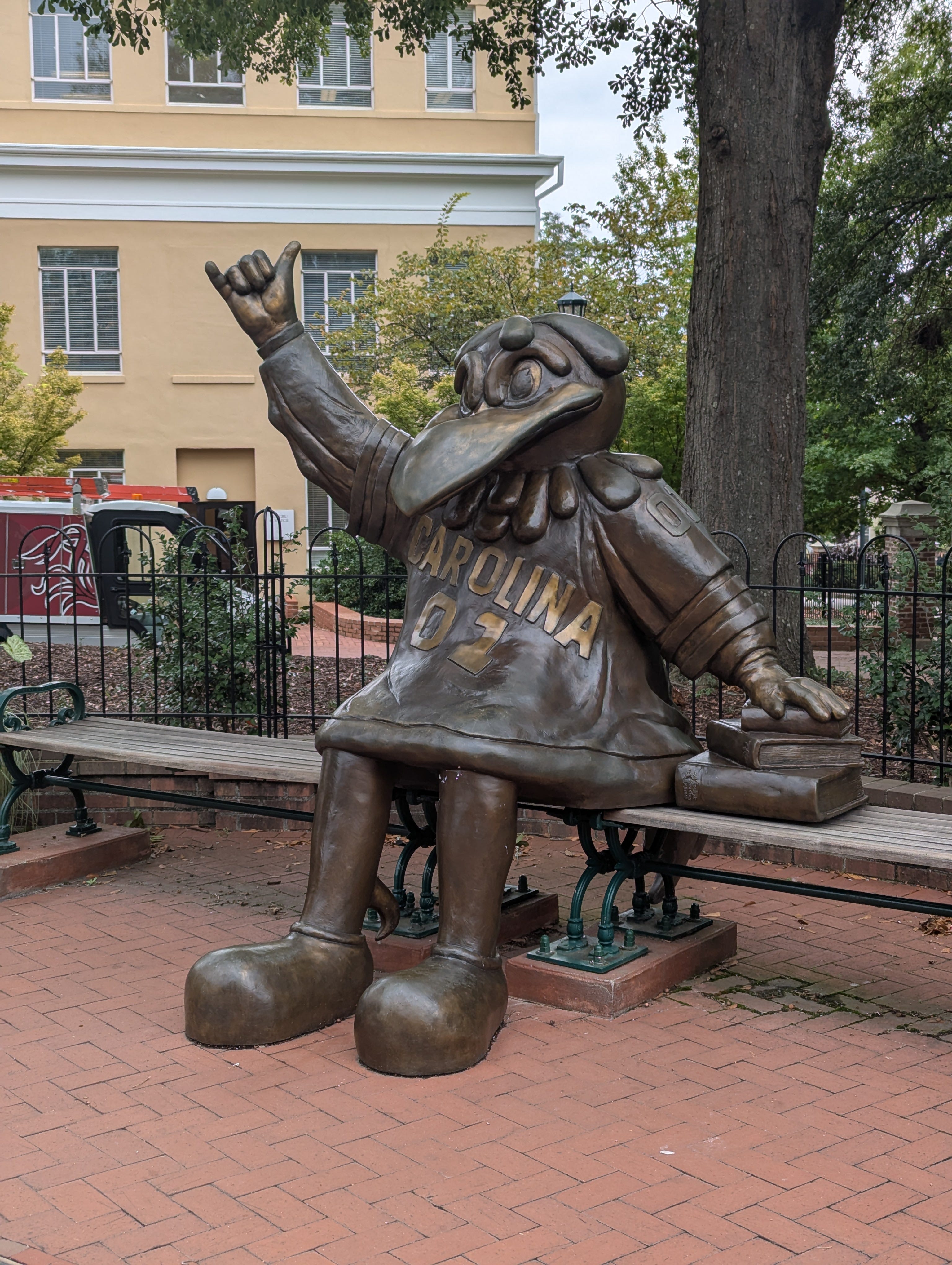
That evening, I went to the Mounces’ house for a truly incredible meal and got to know some other couples associated with the centre and college. Travelling so widely, I am incredibly grateful for the privilege of getting to know some fascinating and inspiring people and ministries.
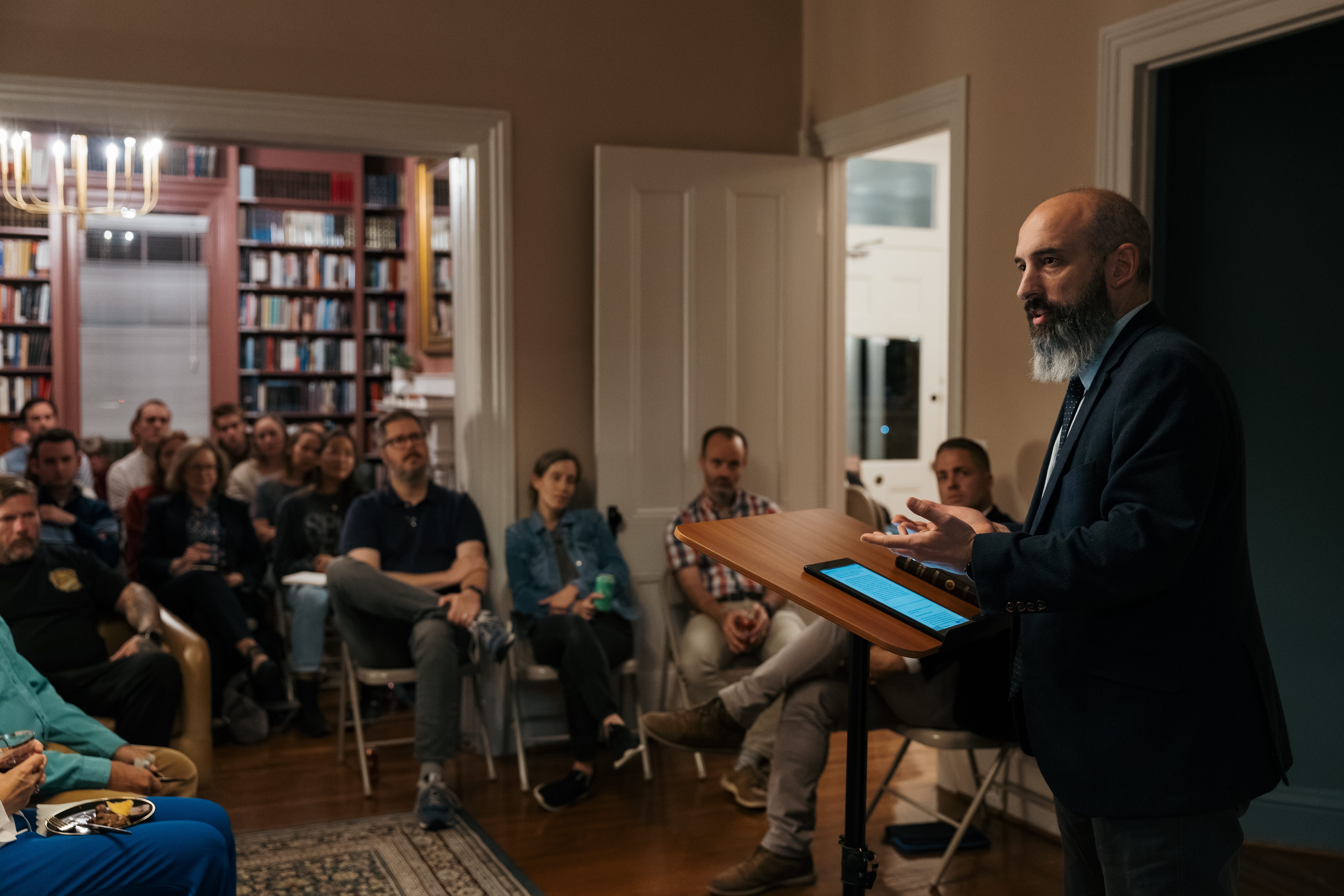
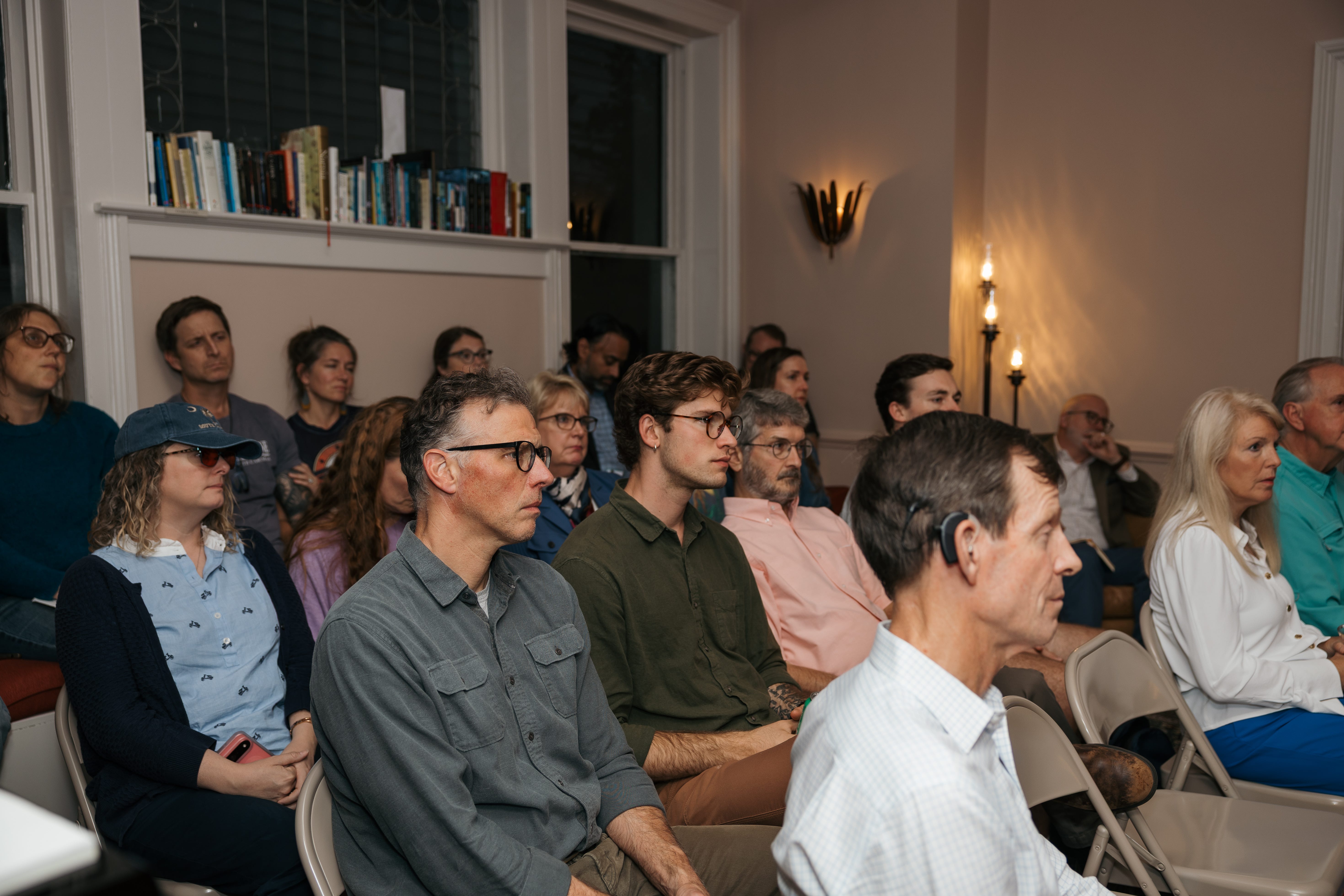
The next day, I went to the centre again, having a question and answer session over lunch, particularly focusing on questions of scriptural interpretation. I delivered a lecture on ‘Holy Scripture and the Modern Academy’ in the centre that evening, having some good conversation both before and afterwards.


I flew out the next afternoon, but was able to have another question and answer session over lunch beforehand. The next stop on my itinerary was Birmingham, where I arrived the day before the colloquium I was attending started, giving me a little time to catch my breath. I stayed with some good friends of ours, enjoying their hospitality and the chance to catch up with them.
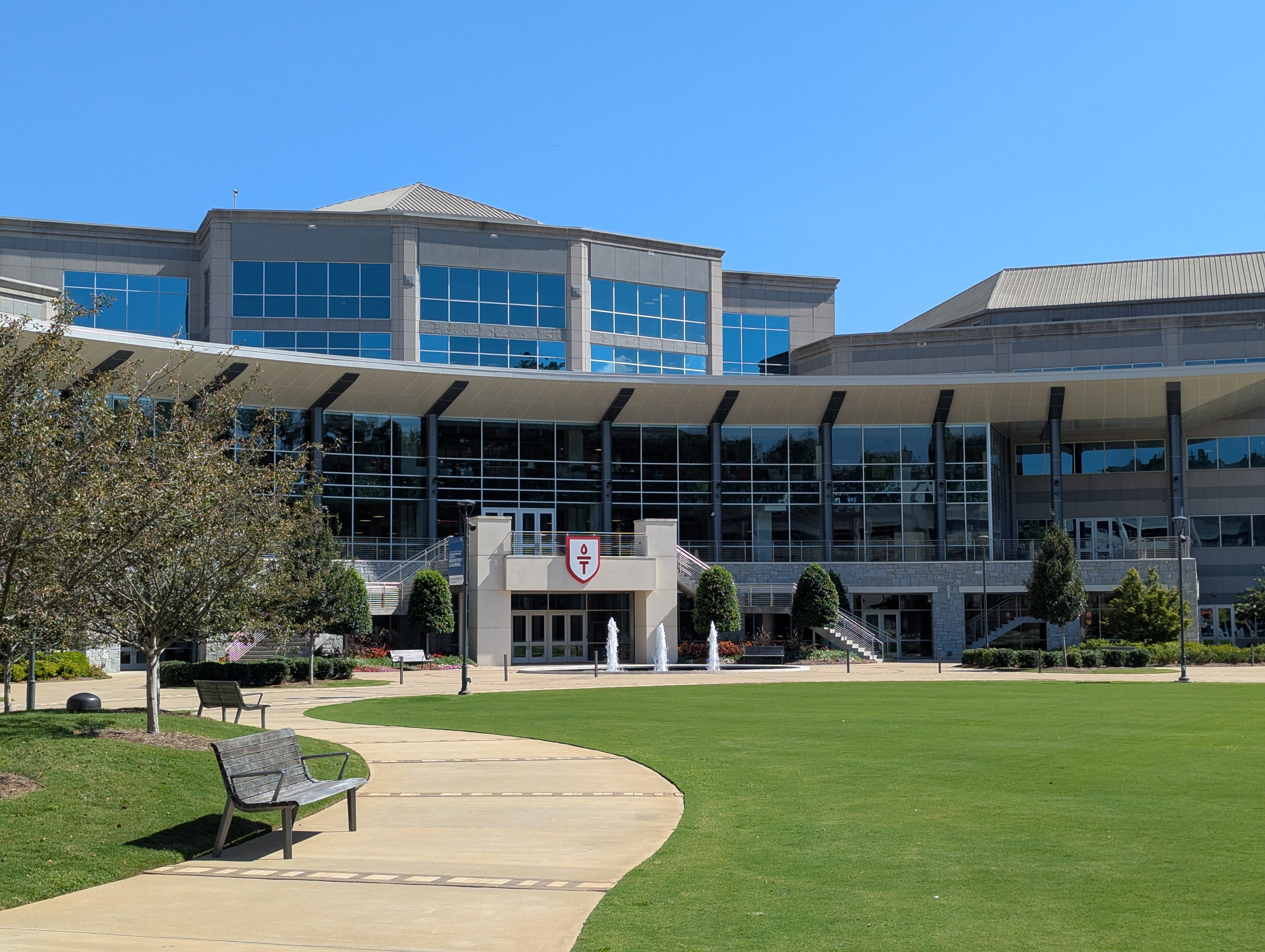
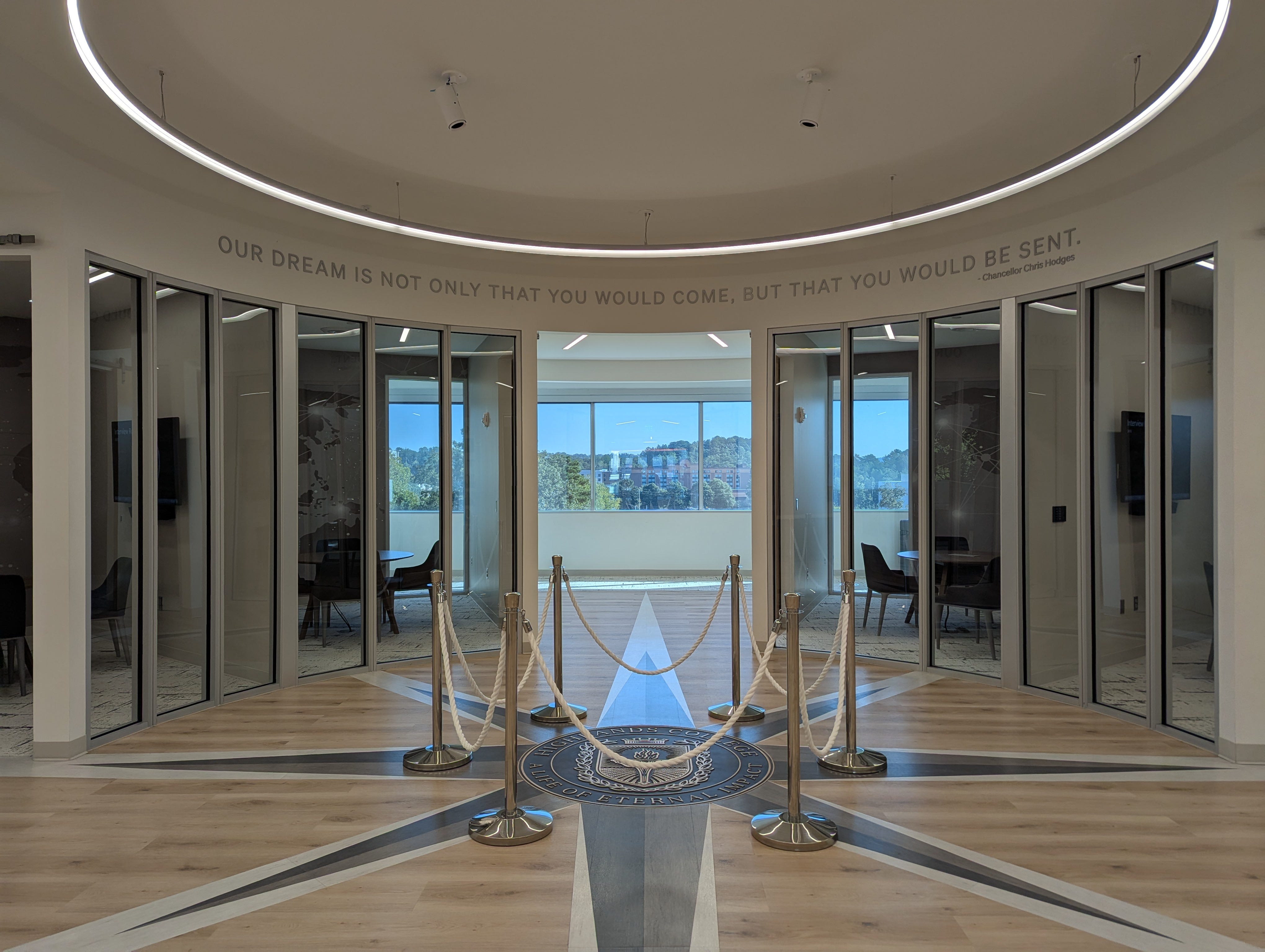
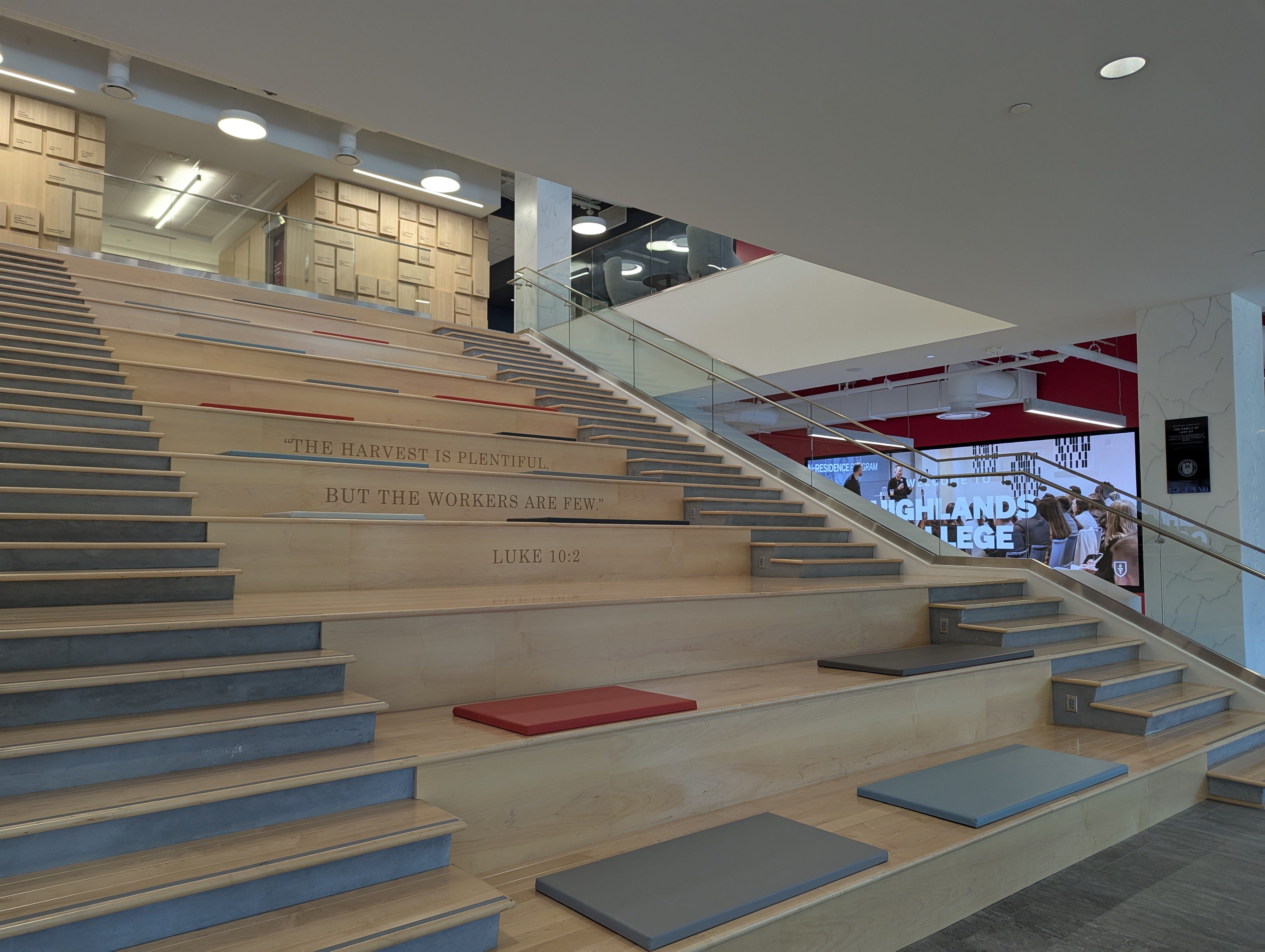
The next day I was picked up first thing in the morning by someone who had gotten in touch with me a while back, hoping to meet up with me the next time I was in Birmingham. He works at Highlands College, associated with Church of the Highlands, one of the largest churches in America, averaging 60,000 weekly attendees at its various campuses. This is a radically different theological and ecclesial world from my own, to say the least, but it was very encouraging to meet several of the faculty and to see something of the work that they are doing.
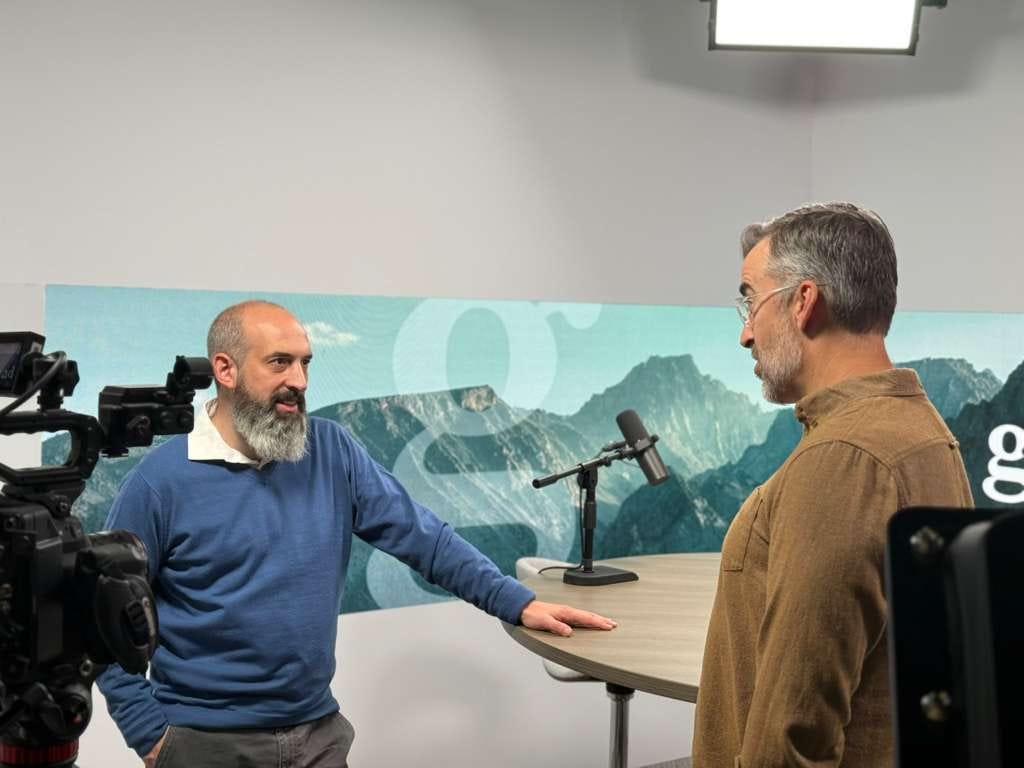
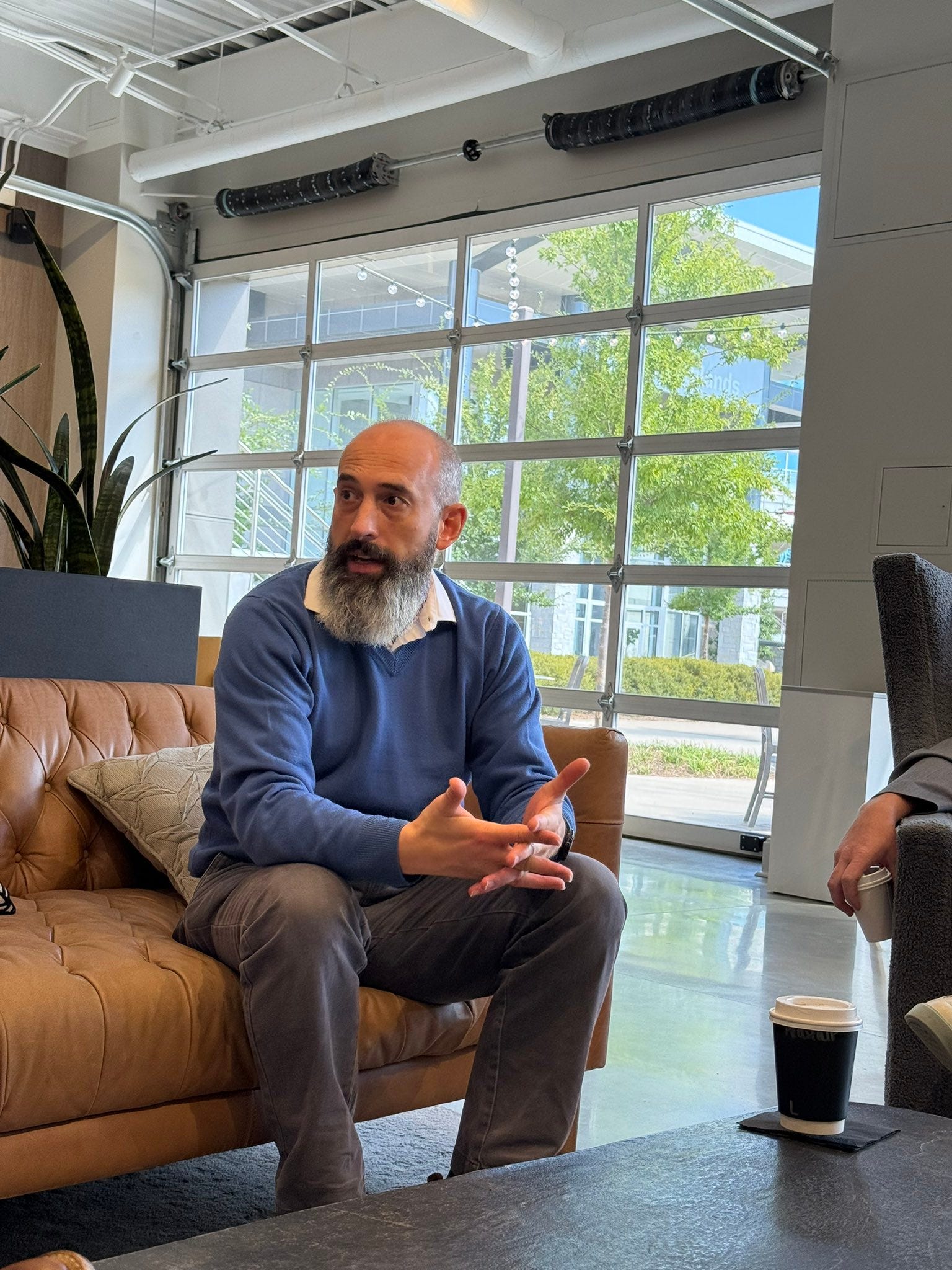
Everyone was astonishingly generous with their time, showing me all around the college, introducing me to many people, and letting me sit in on a class. It is always inspiring to be around people who love what they are doing and who are pursuing excellence in it. Exploring the college, I was struck by the sense of a strong shared vision, by the quality of the relationships between faculty and students, and was also impressed hearing several students deliver class presentations. Towards the end of my time there, several of the faculty discussed various theological questions with me over coffee. Several of them were appreciative listeners to Mere Fidelity: it is always an encouragement to meet people who listen to our podcasts. One of the faculty then kindly took me out for a meal in Birmingham. I came away very impressed.

My Birmingham trip was for Theopolis’s Civitas group, a twice-yearly colloquium, within which we discuss political questions and also reflect theologically upon them. I have been participating in the colloquium since 2019; Susannah joined the group a few years later. For each gathering, we read several essays or books and discuss them over a series of sessions, each of an hour and a half. This time we discussed Liah Greenfeld’s Nationalism: Five Roads to Modernity, Ernest Gellner’s Nations and Nationalism, and Sam Haselby’s The Origins of American Religious Nationalism. The goal of the group is to expand our knowledge of the literature, pushing us all to read books we likely otherwise would not read, and to bring us all into stimulating conversation with scholars outside of our various fields. The sessions are always very sharpening, offering a pleasant change from the tenor and quality of much of the general conversation on the issues we are discussing. One of the very best things about Civitas has been the opportunity regularly to think in company with scholars I deeply enjoy and greatly respect. The Civitas group now has a podcast and has released a short book.

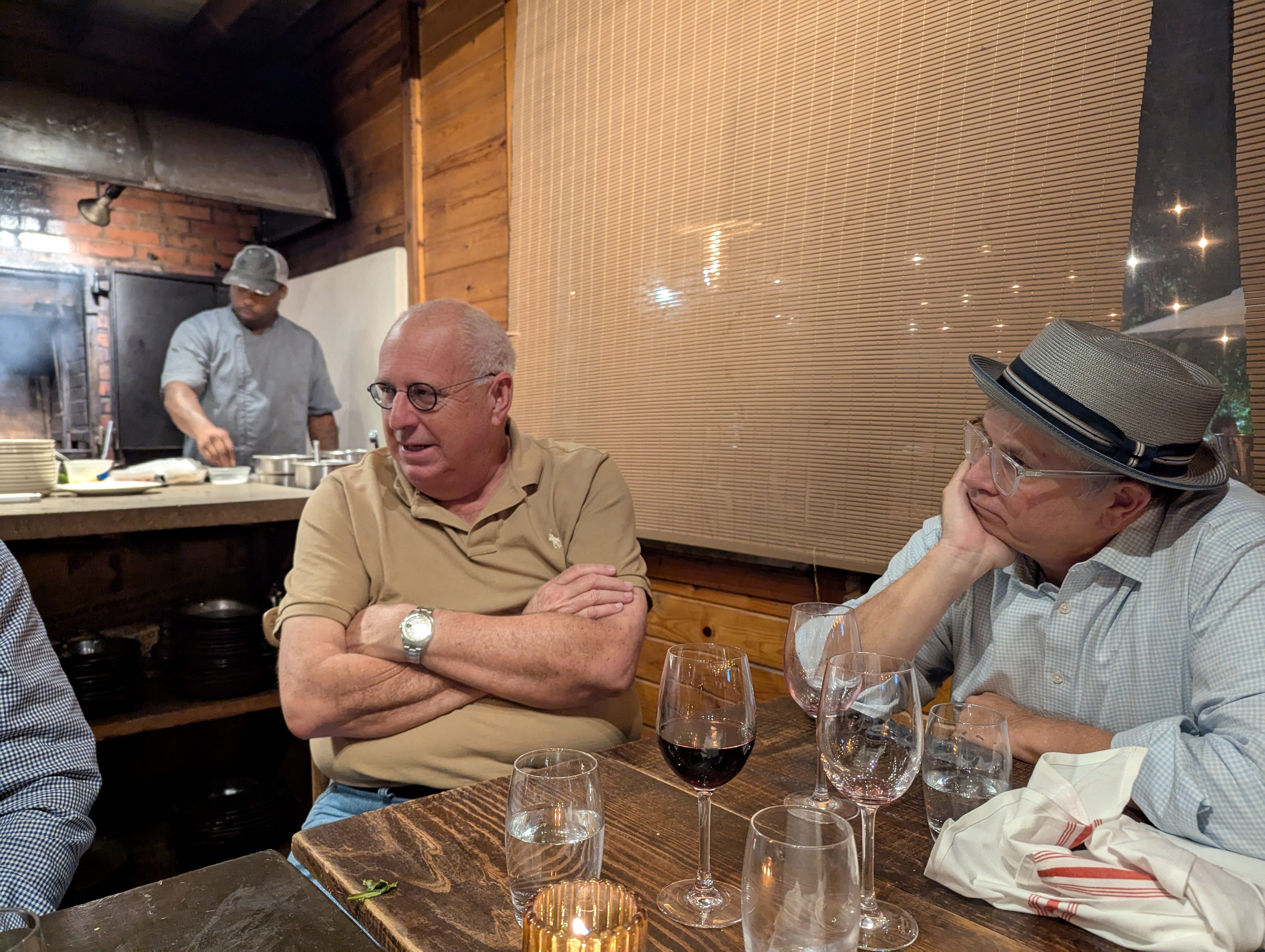
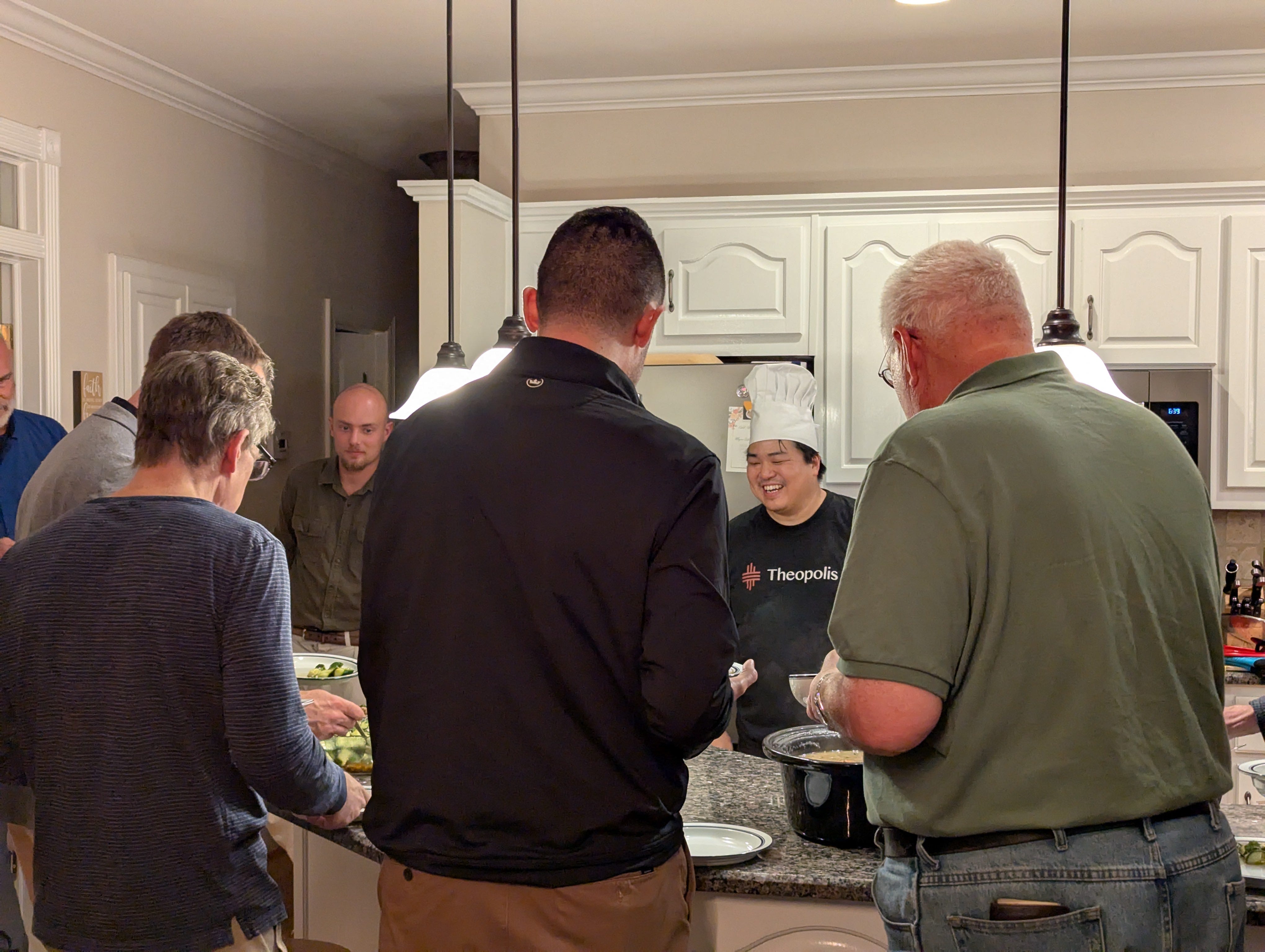
This gathering was opened with a meal in a restaurant on the Thursday evening. On the Friday evening, we went around to the Leithart’s house for another amazing meal, prepared by my friend Chris Kou and his wife.

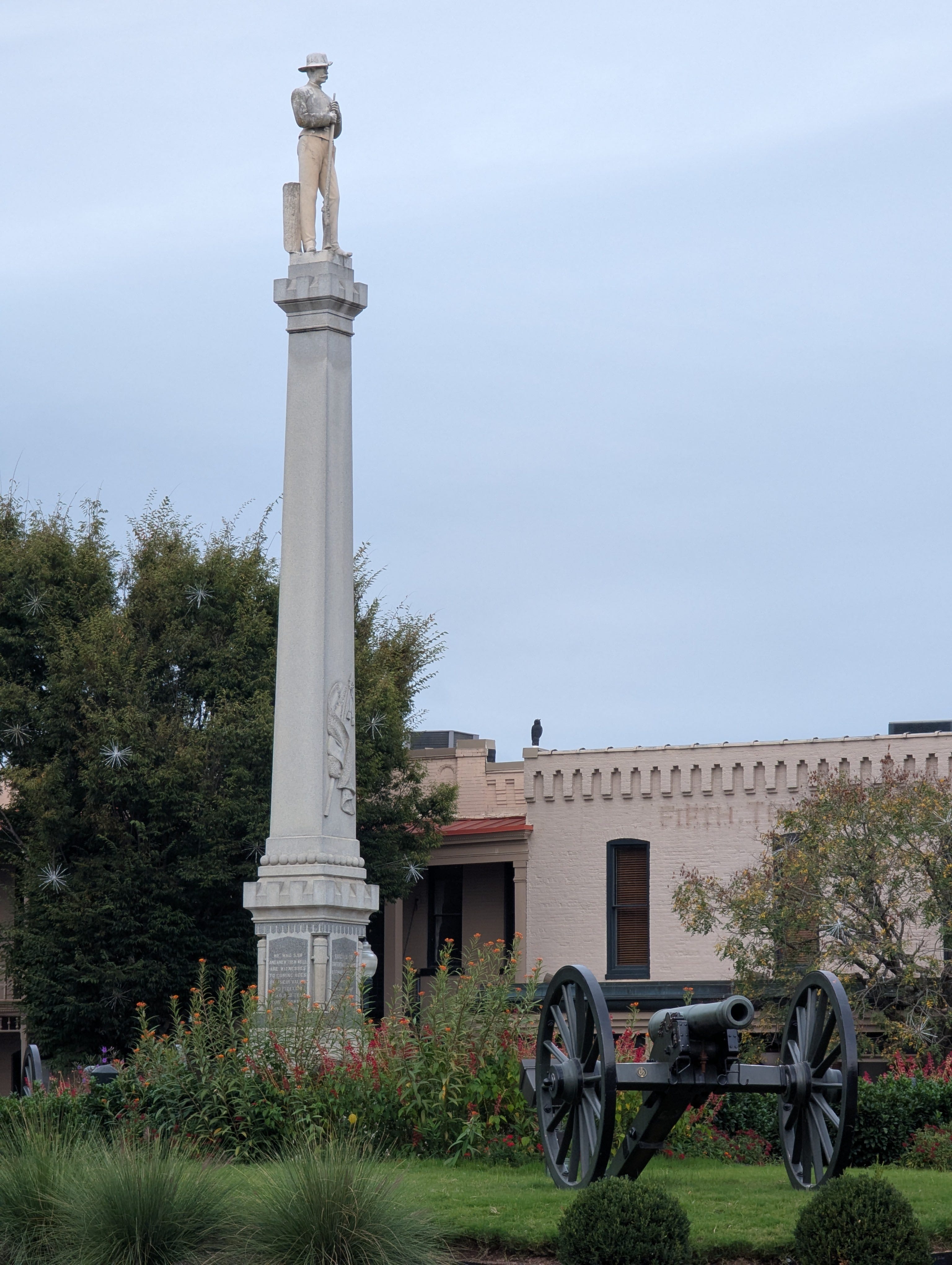
Before flying out on Saturday afternoon, my friend Kody and I went to a bakery and up to a viewing point over the city of Birmingham. He then drove me out to the airport. My next stop was Franklin, Tennessee.


I had met a couple of members of my host family in Franklin at my previous visit to New College back in January. They had generously invited me to stay with them on my next visit, offering me the use of a small house they have behind their home. They picked me up from Nashville Airport. After my previous visit, and over the course of this visit, we discovered that we had several friends in common.

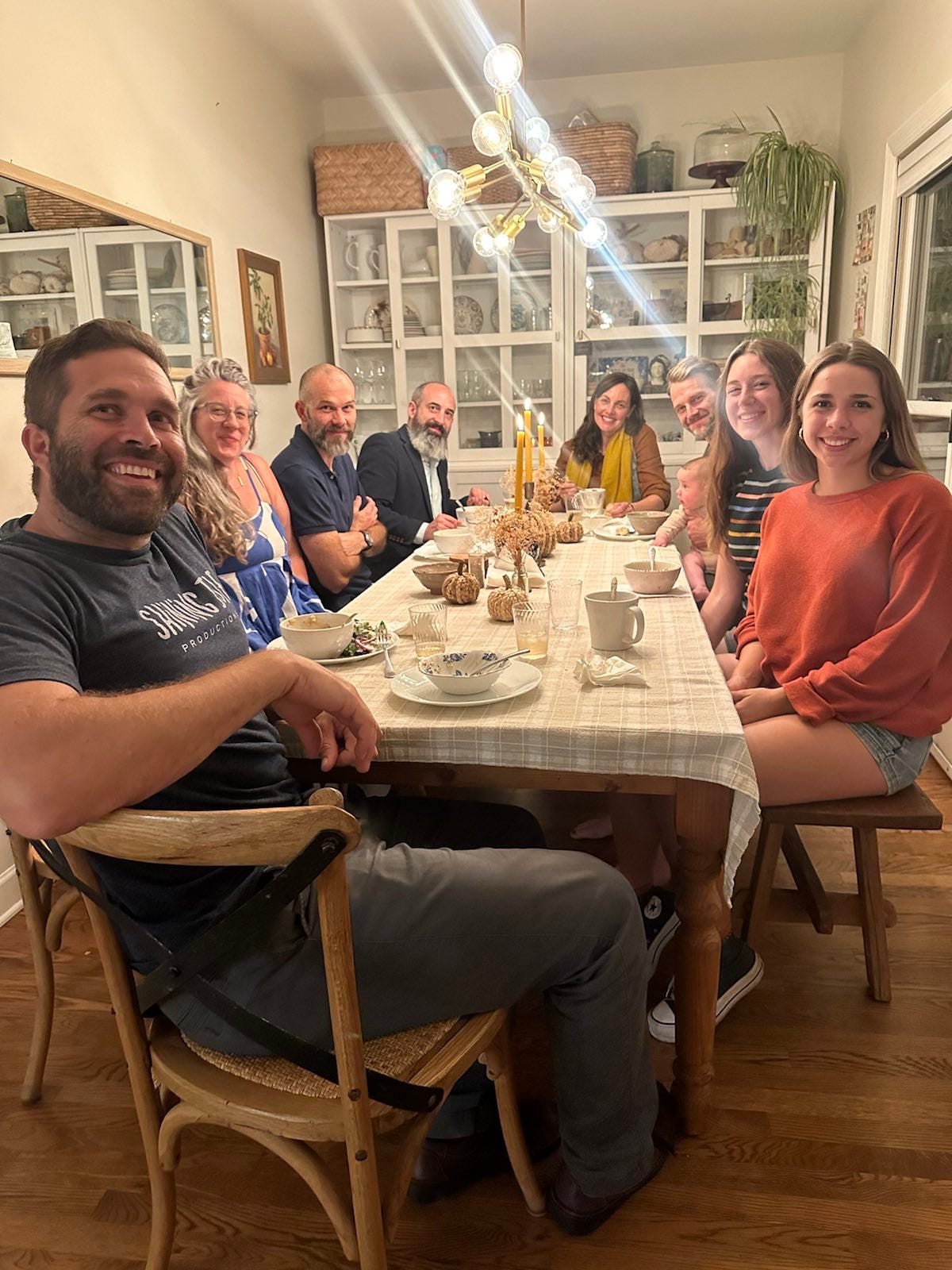
On Sunday morning, I attended Cornerstone Presbyterian Church. My host family invited several members of the New College faculty and some friends around after church. We spent the afternoon enjoying a feast, making music, having conversation on a host of topics, and playing games. It was such a wonderful time. Being treated to such incredible hospitality and kindness, and having the chance to make new friends, really is one of the things I most love about my work. While all the travelling is gruelling and exhausting, being blessed by the kindness and friendship of so many amazing people, and inspired by what they are doing in their contexts, makes it all so much more than worth it.
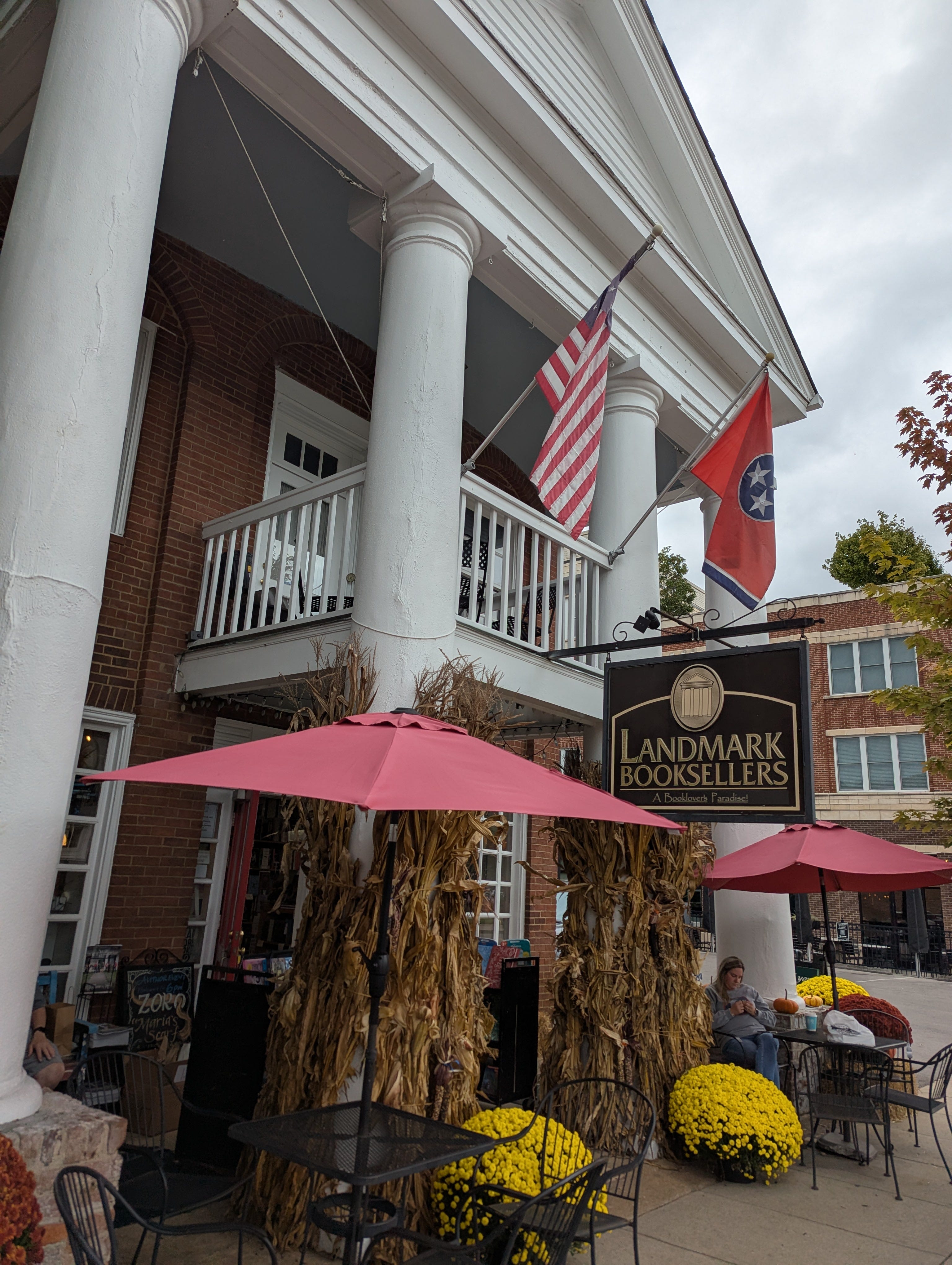
Much of Monday morning and early afternoon was spent working. In the mid-afternoon, we went into Franklin and looked around, spending much of our time in a wonderful local bookstore. I later connected with my friend Nathan Johnson and a few other members of the New College faculty for a meal. I delivered a lecture for the college that evening.
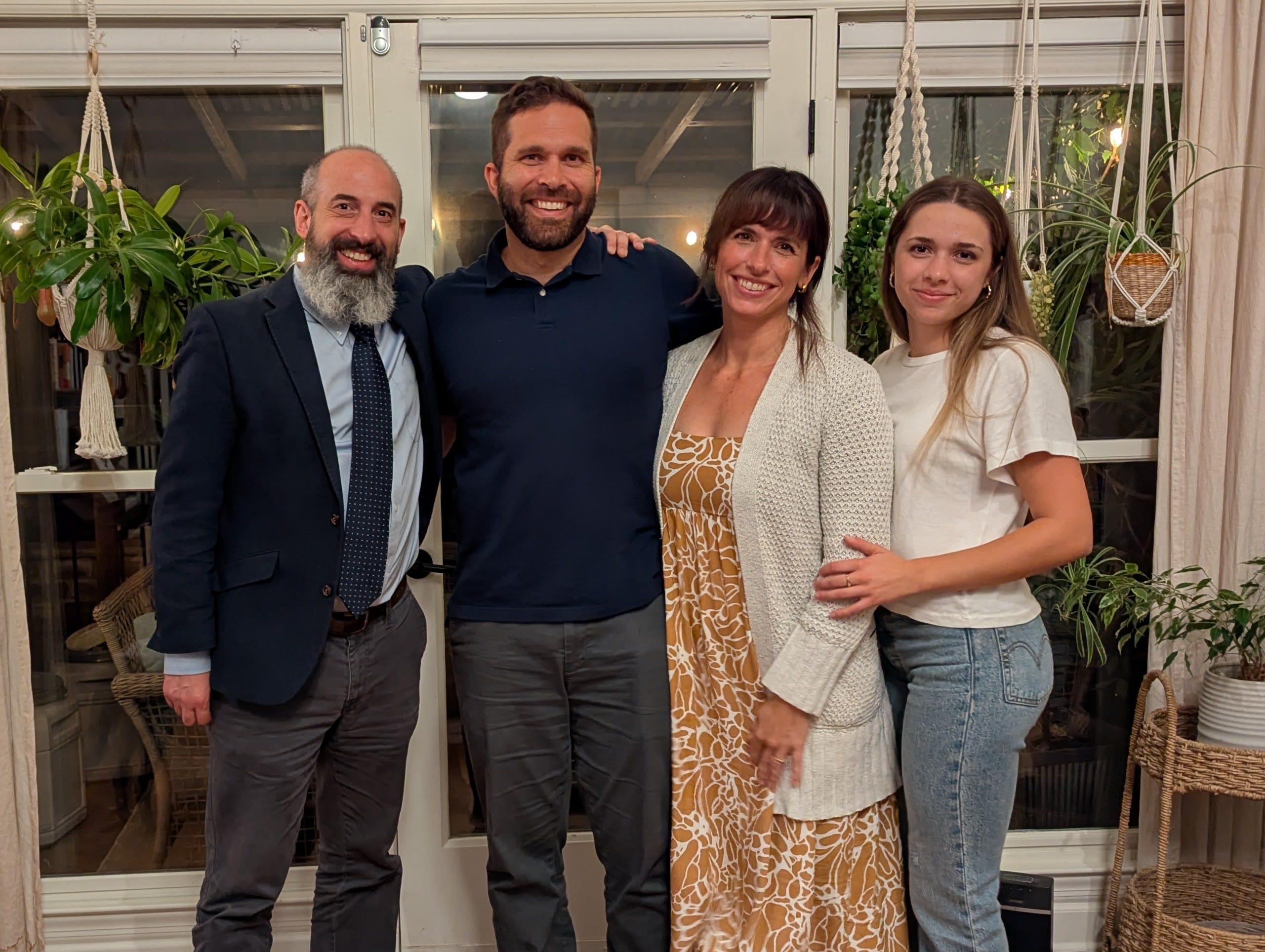

We left for the airport at 6:30am the next morning. Susannah and I had considered a games evening, hoping to spend some time with some friends before returning to the UK, but left the planning and invitations too late, so it did not work out. We had a quieter evening together instead and I wrote a piece for publication.


The next day was our last in New York until January, so we went to the Union Square Greenmarket to get some cider donuts, concord grapes, and other items that Susannah misses while in the UK. She really has been itching to get back to Stoke, wanting to monitor the foraging situation, but there are lots of things that we will wish we could be enjoying in New York City over the coming months.
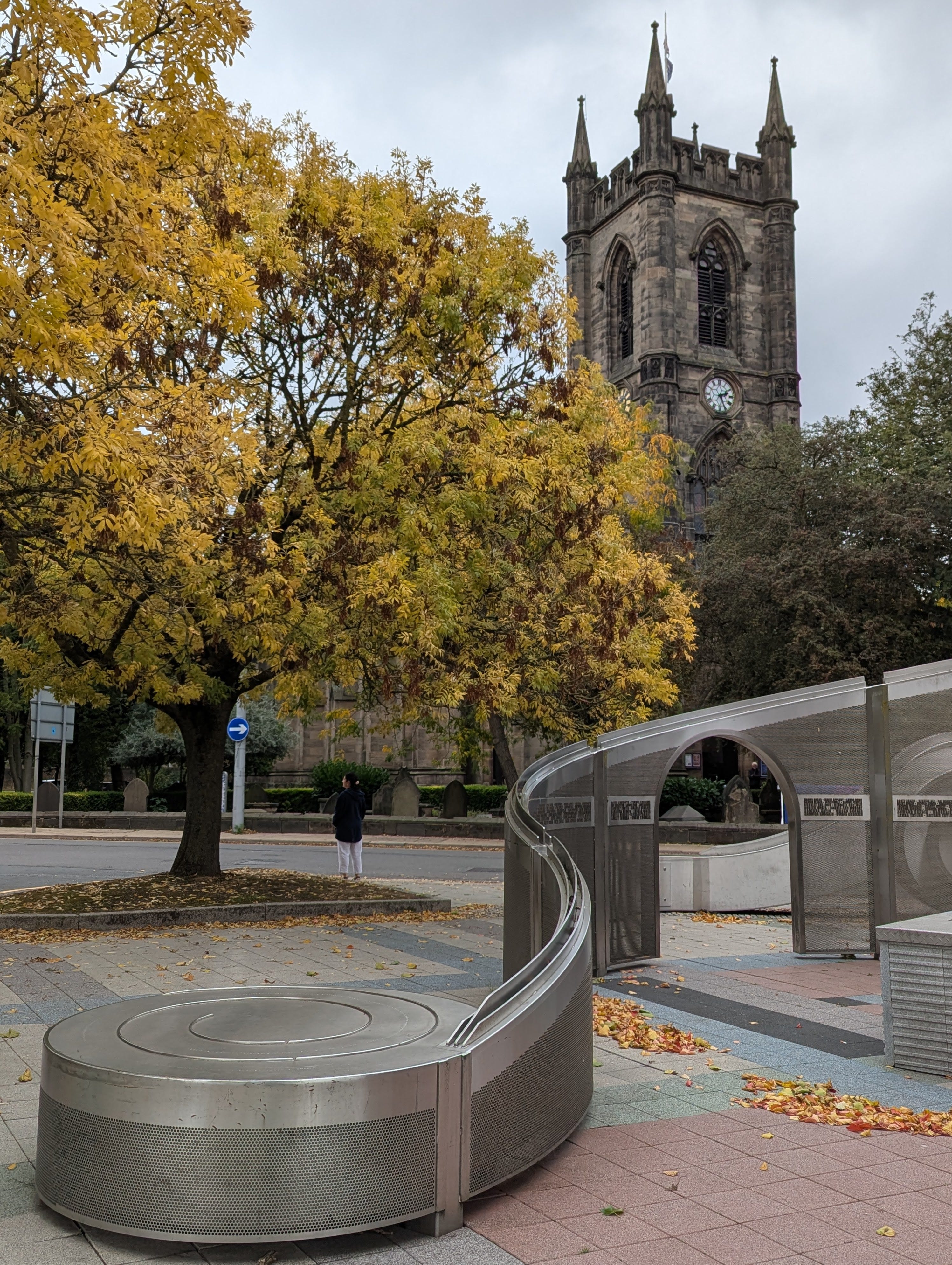
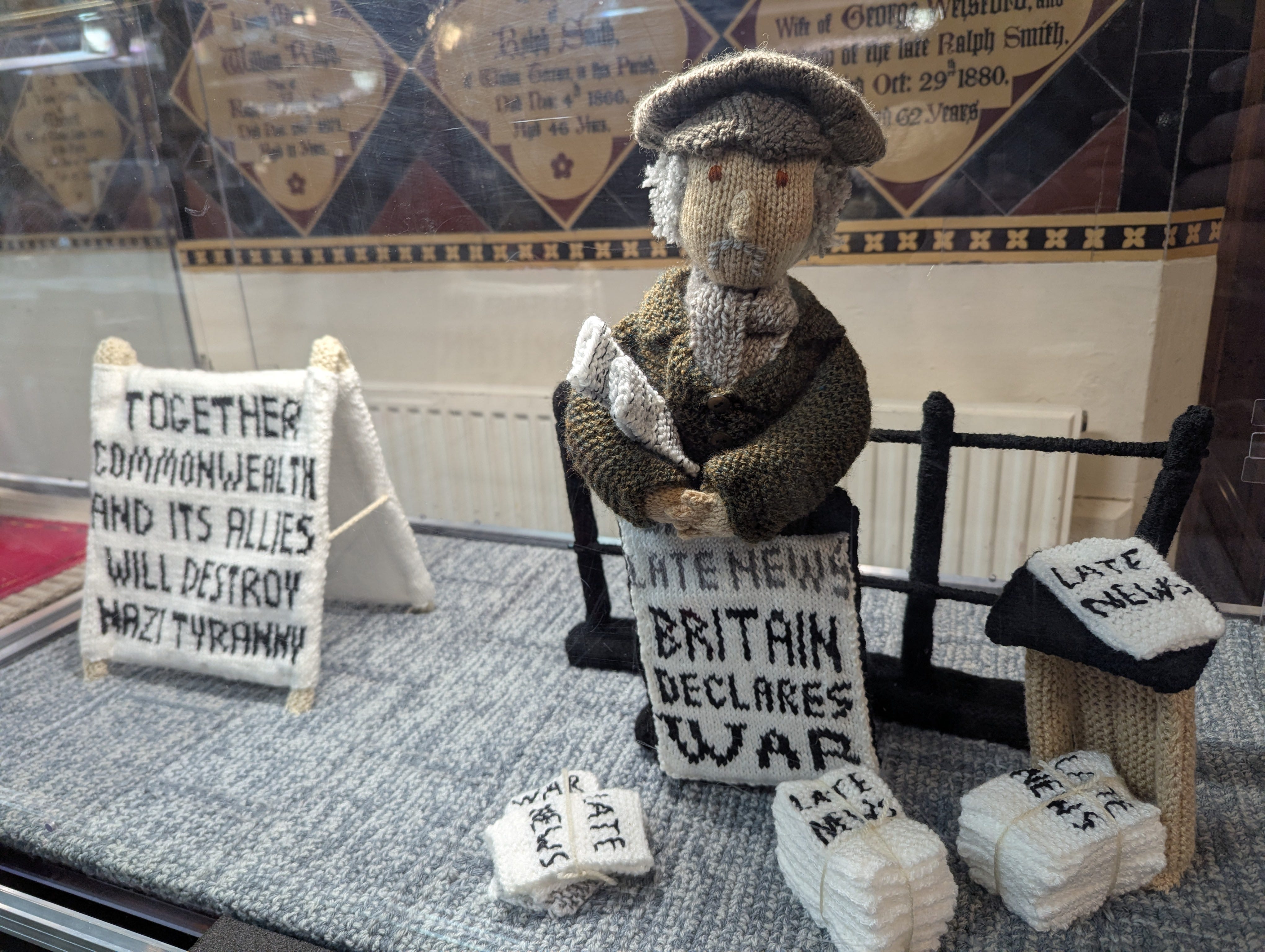
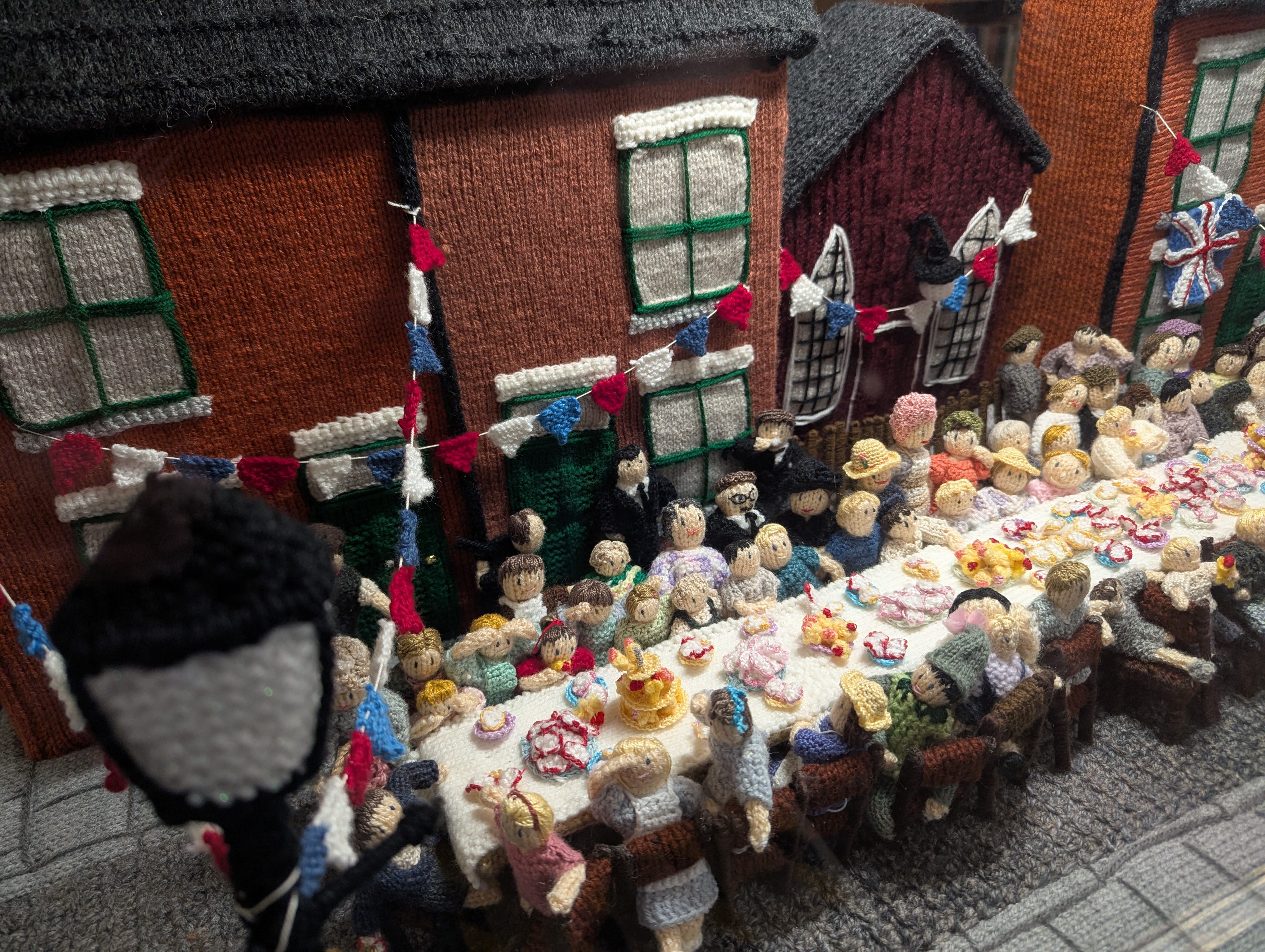
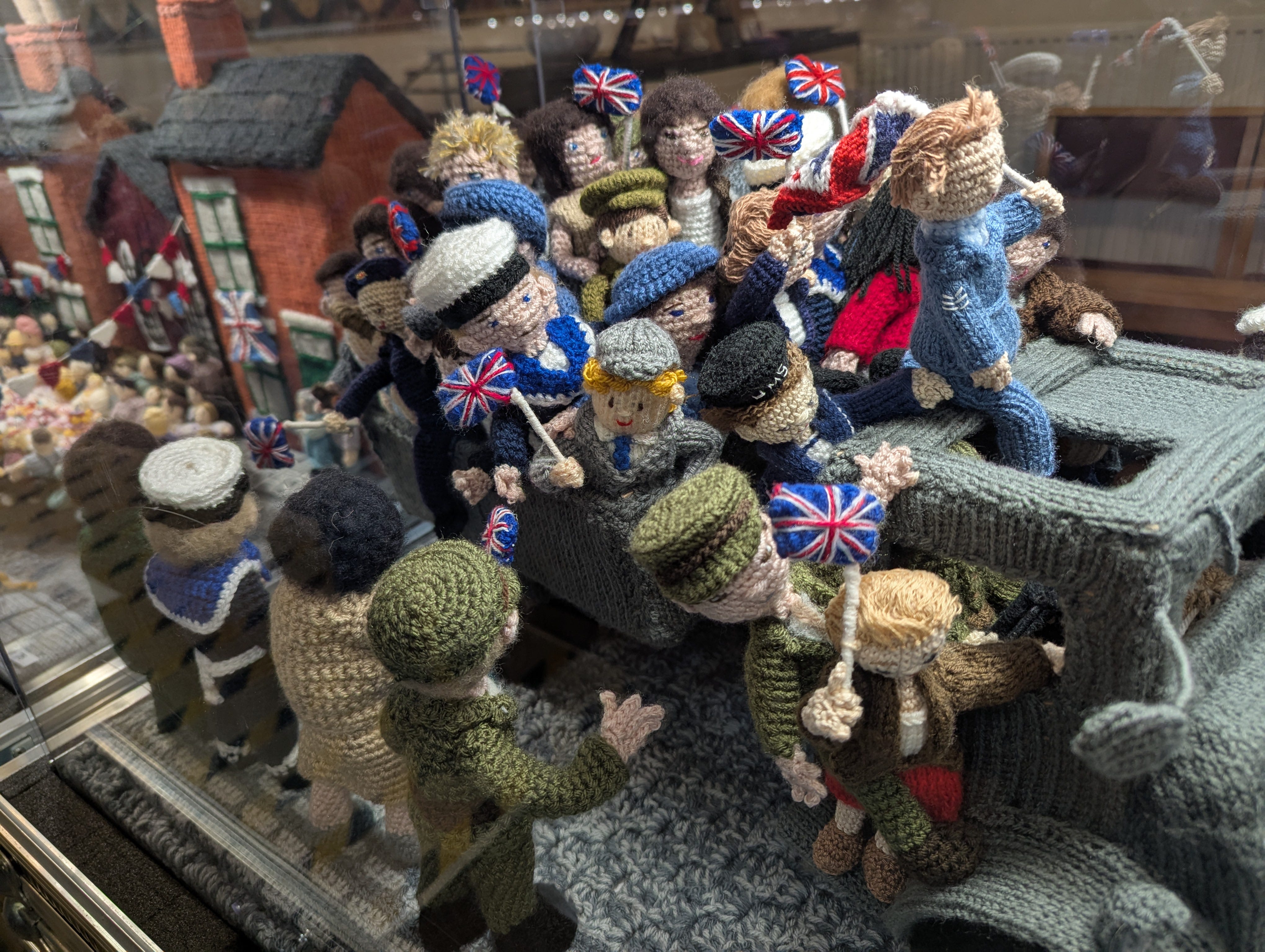
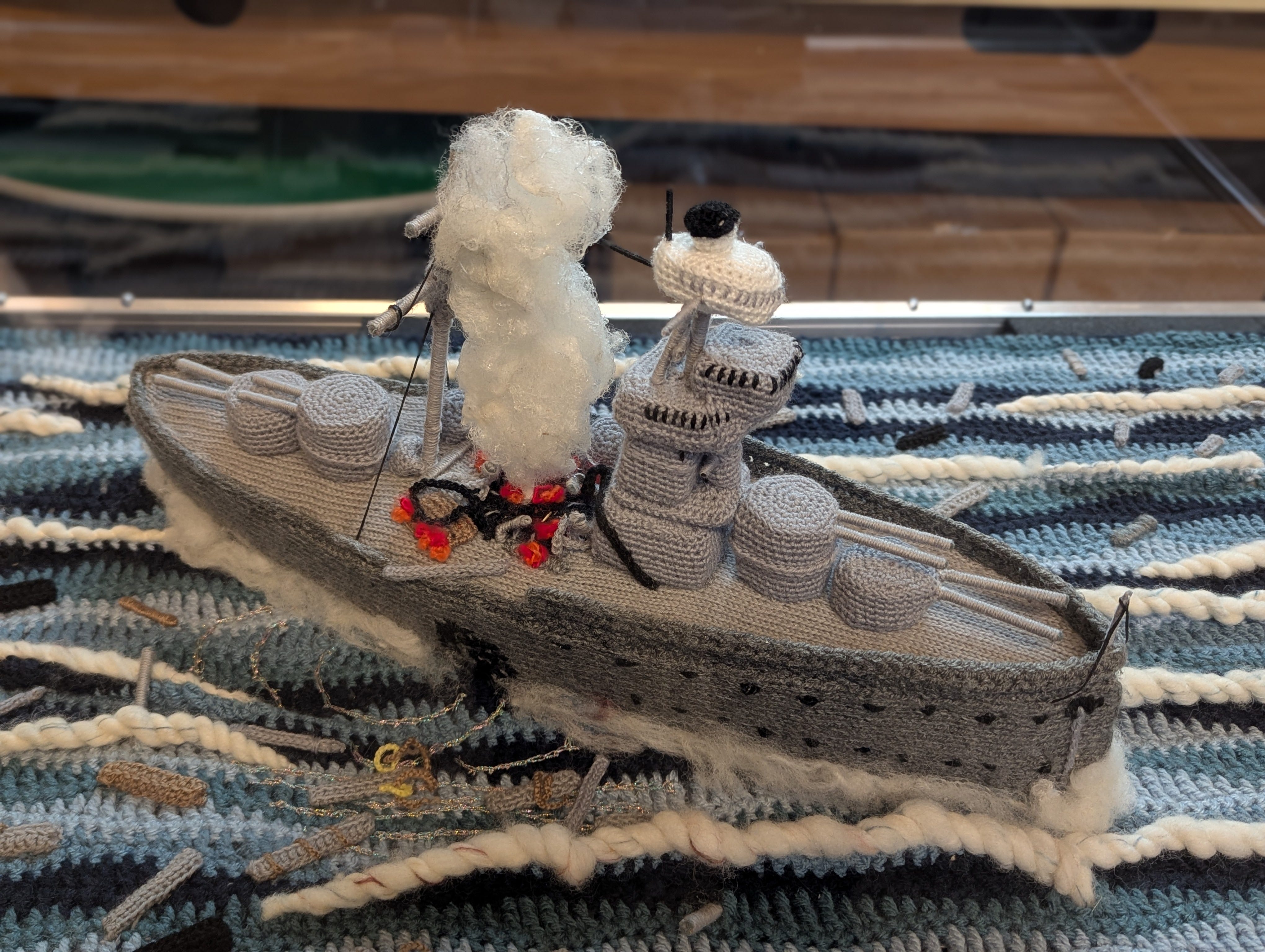
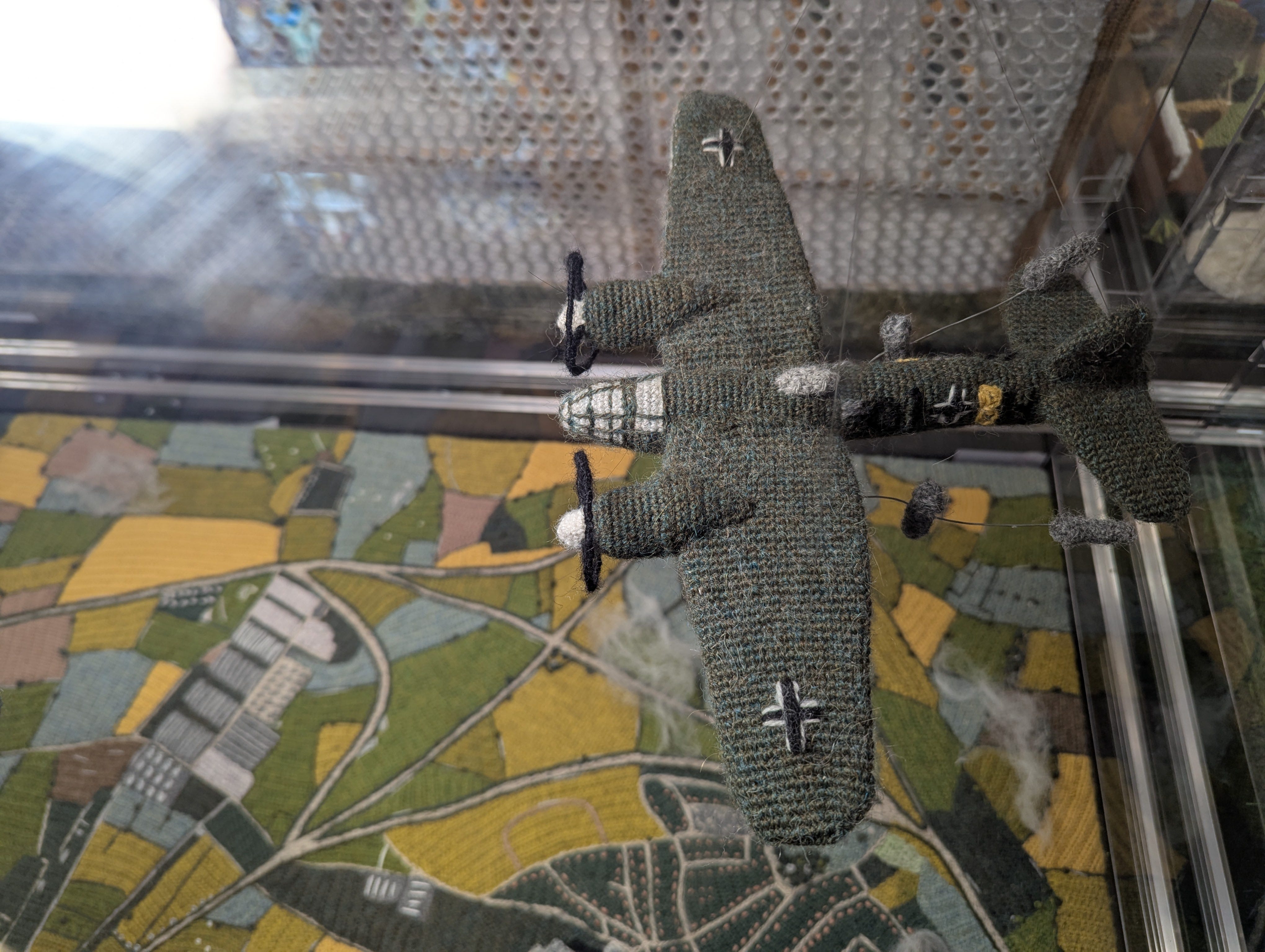
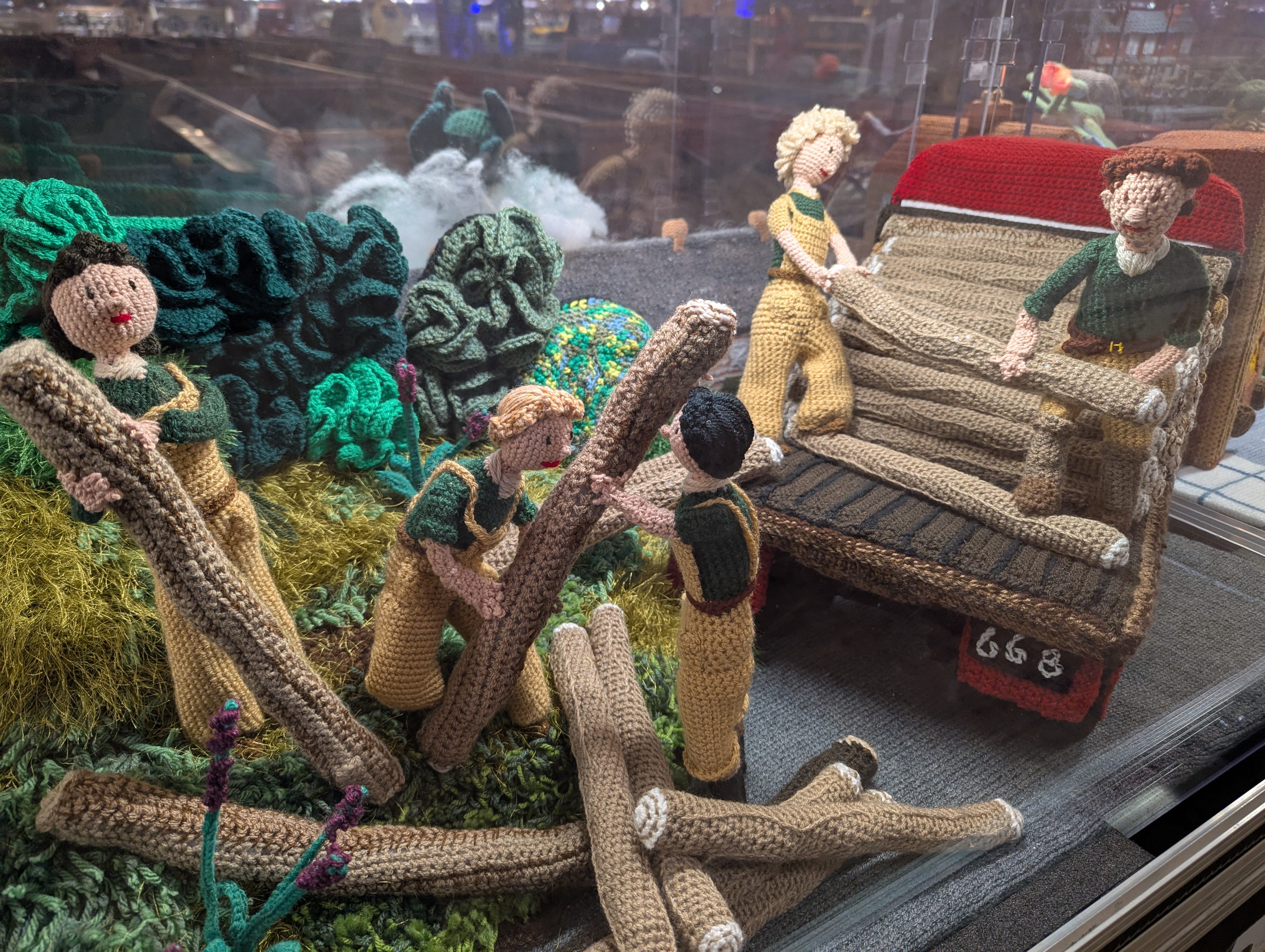
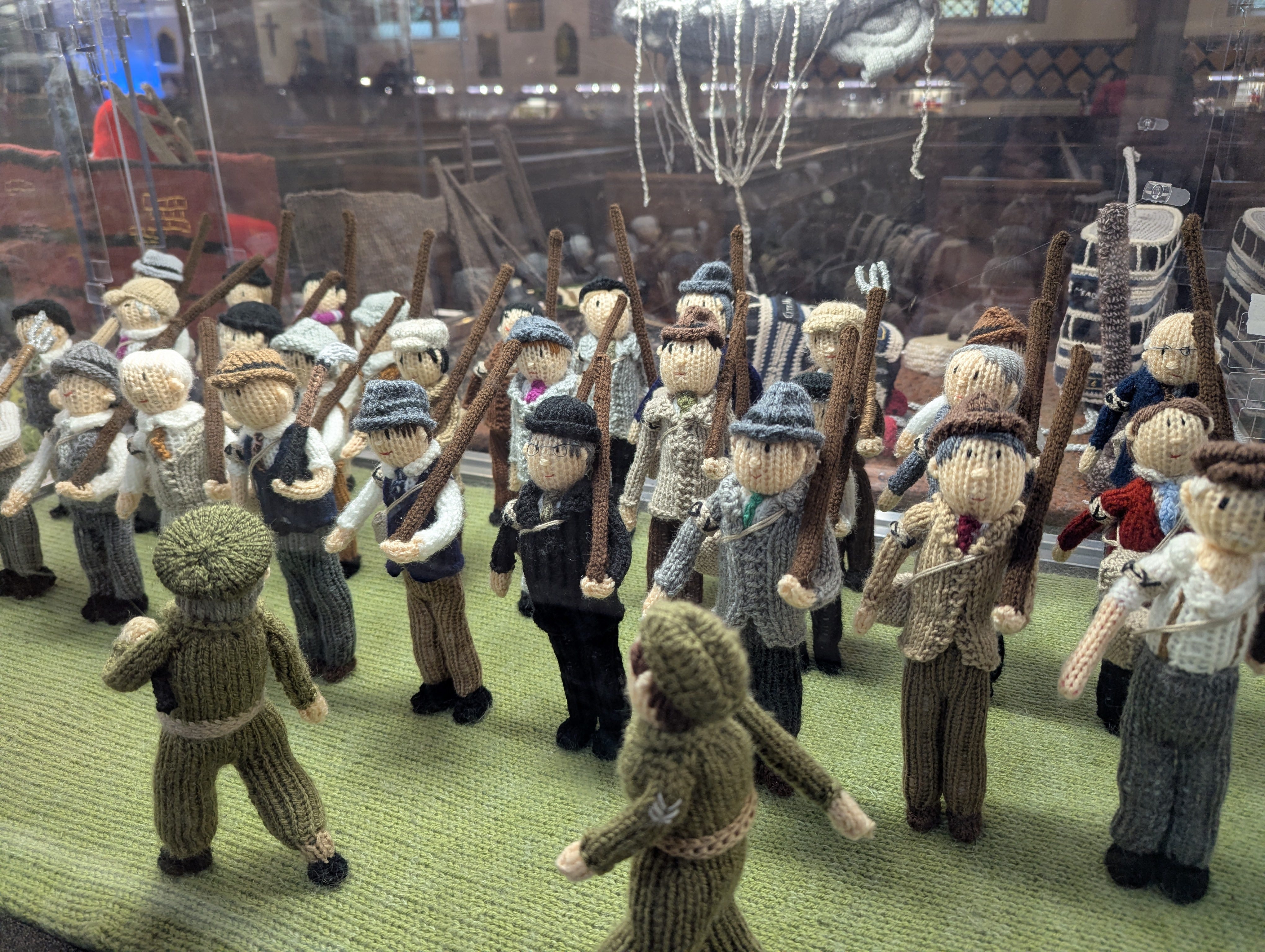
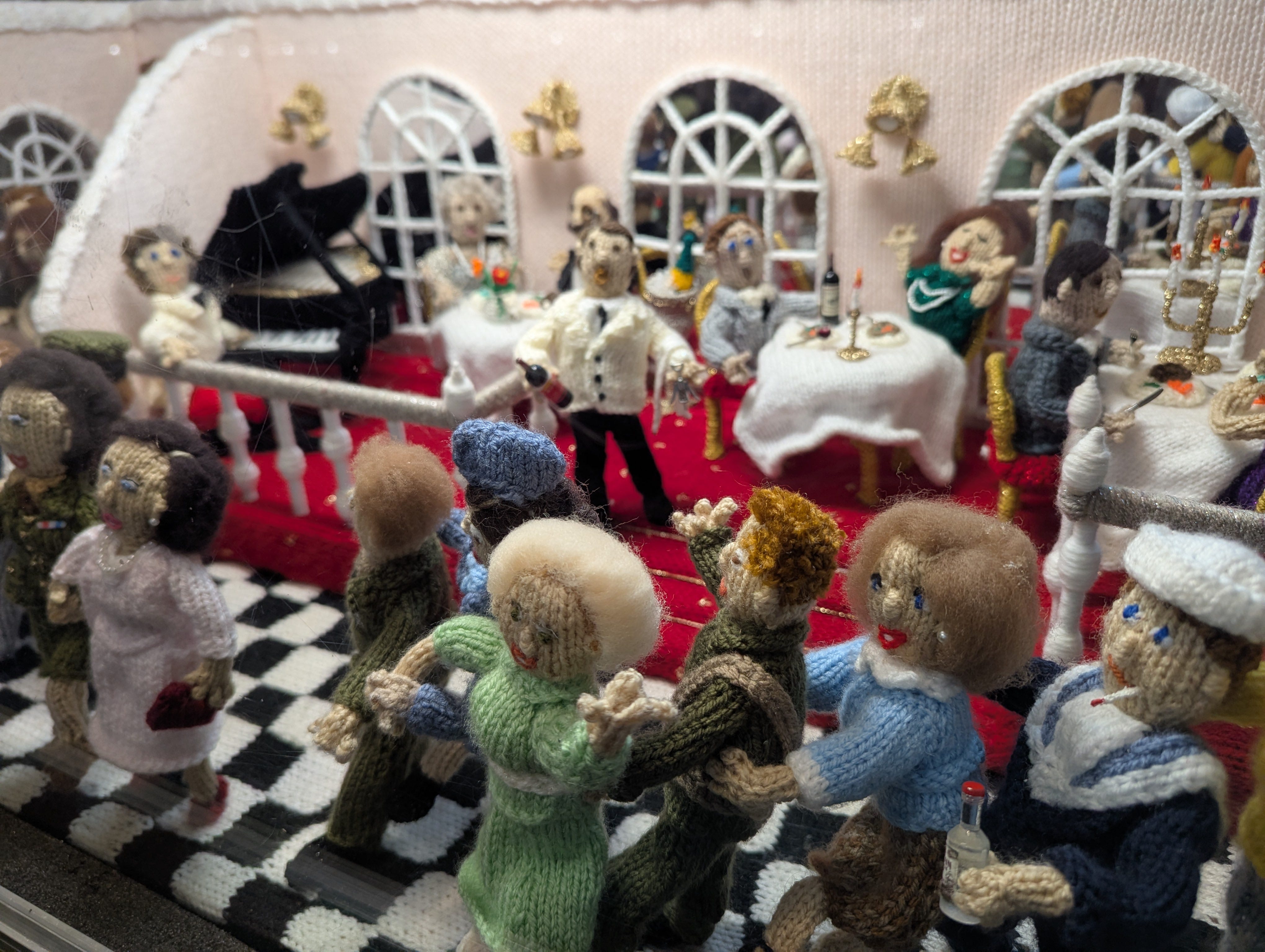
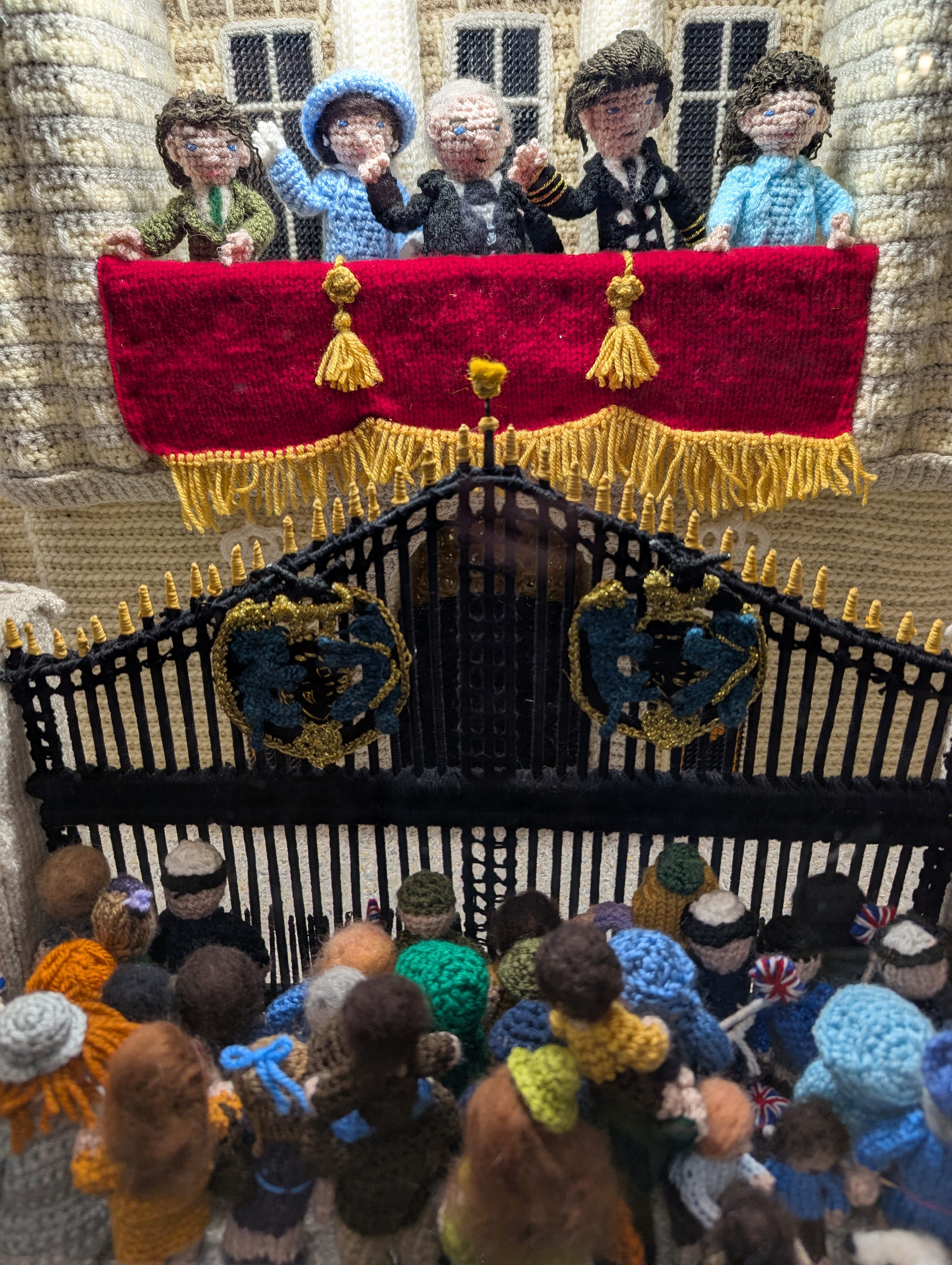
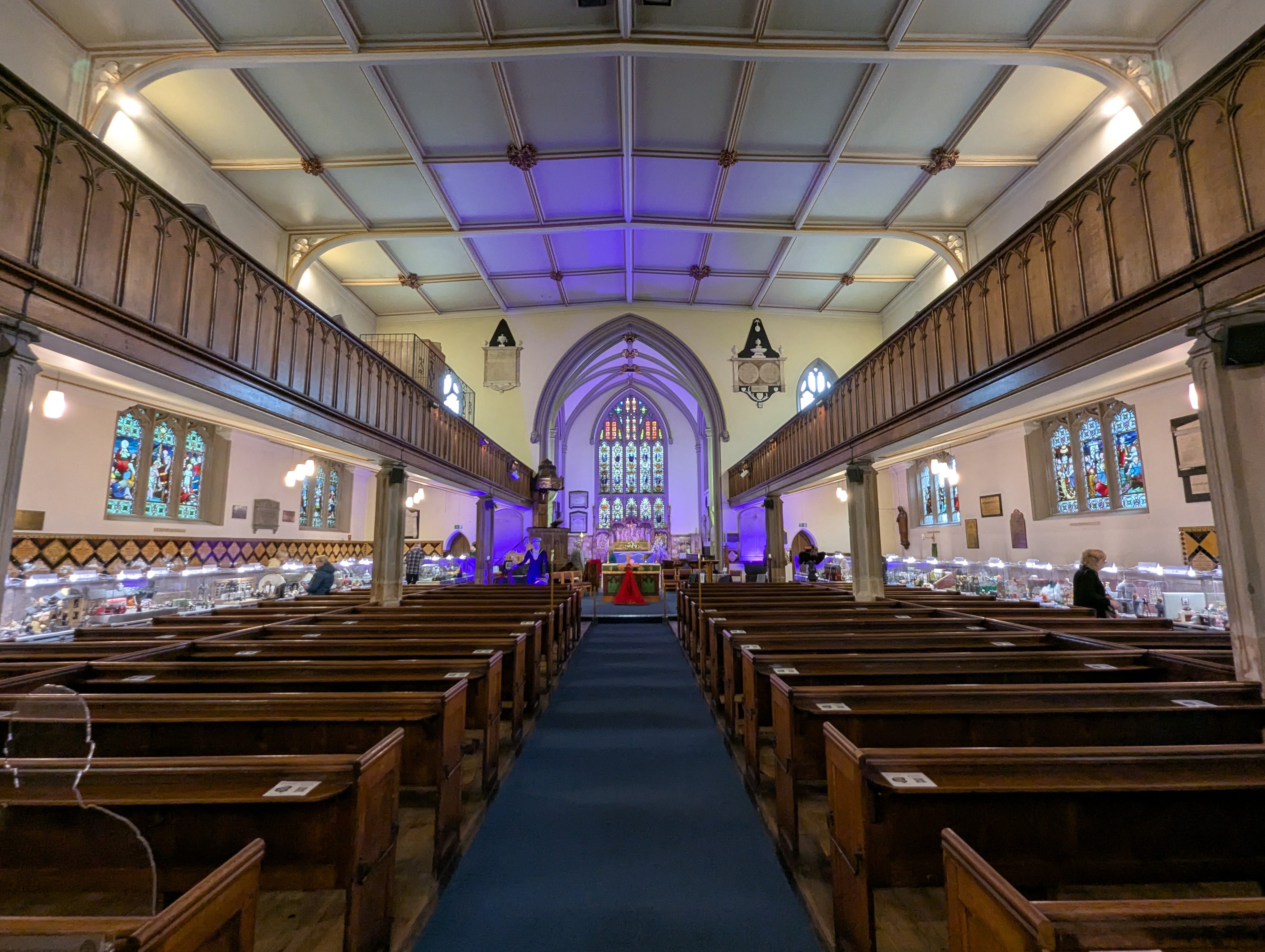
The flight went smoothly, and we arrived back home by around 9am, collapsing into bed soon after. In the afternoon, we wandered into town, visiting Stoke Minster, which is currently hosting The Longest Yarn, an epic telling of the story of the Second World War, especially that of the home front, through knitting.

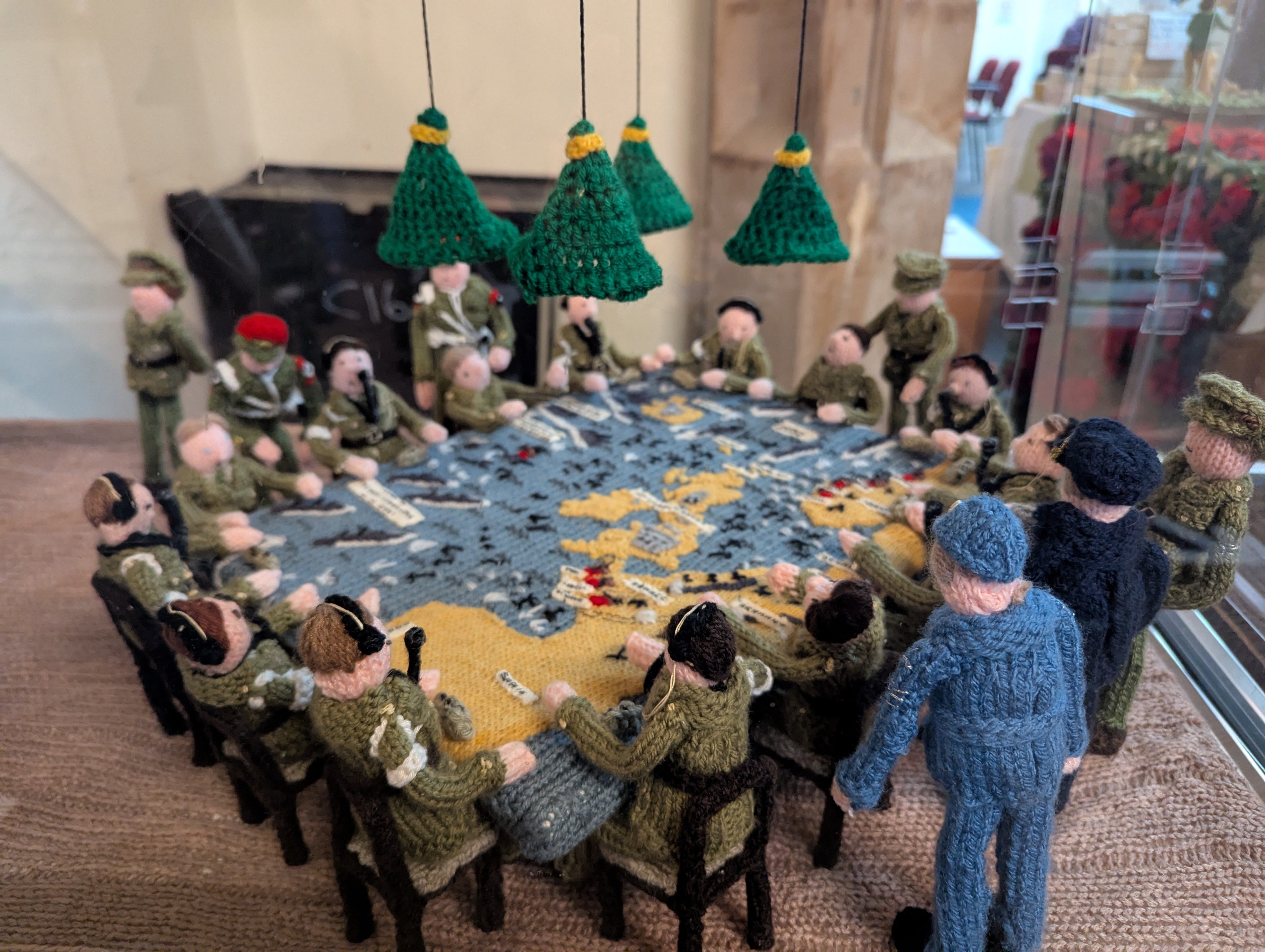
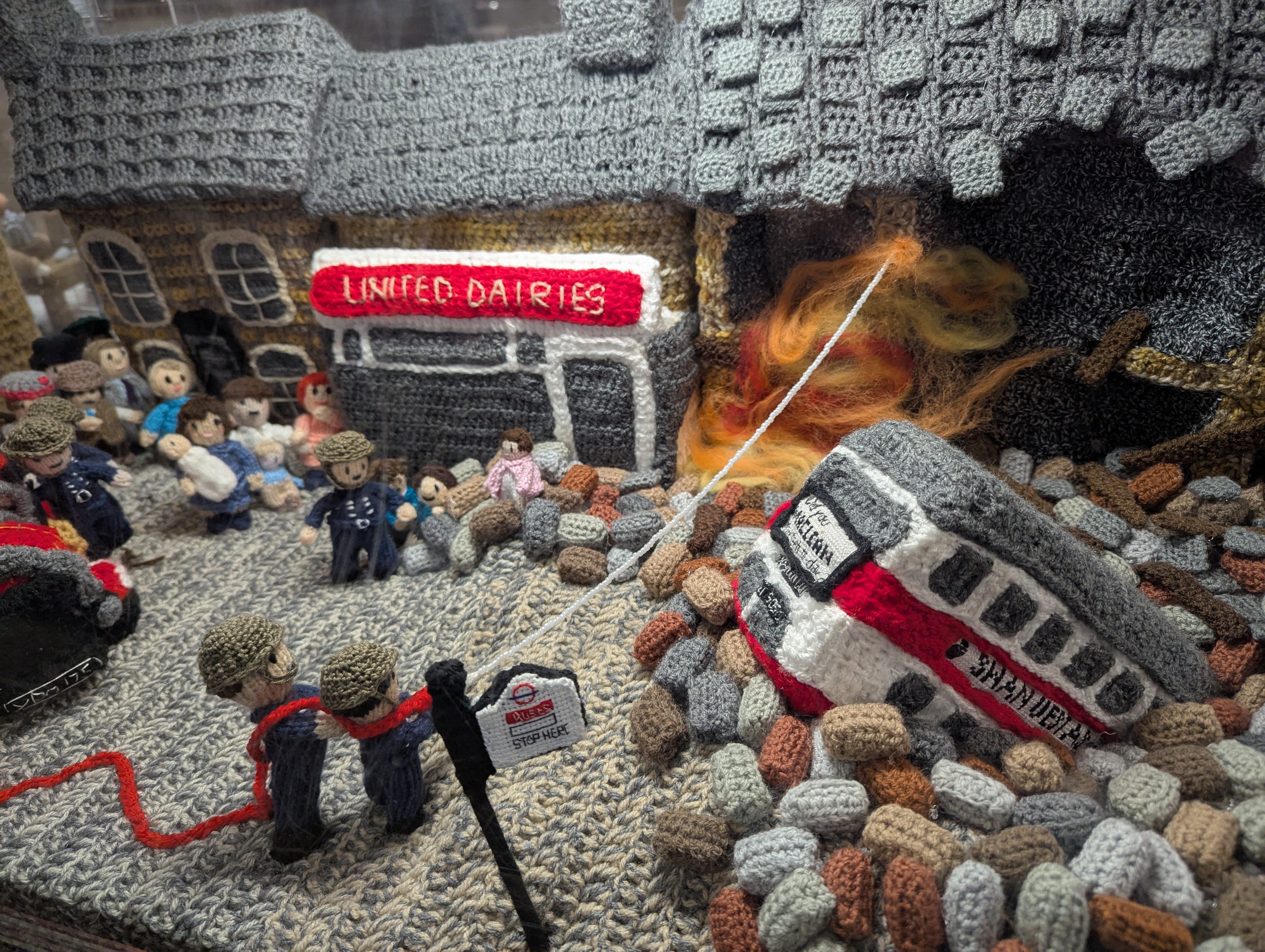
It is a sort of contemporary Bayeux Tapestry, whimsical and charming, yet ambitious in its goal and impressive in its execution. It has about eighty iconic scenes from the war, recreated in knitted form, covering its entire course, from the breakout of war to the celebration of VE Day.

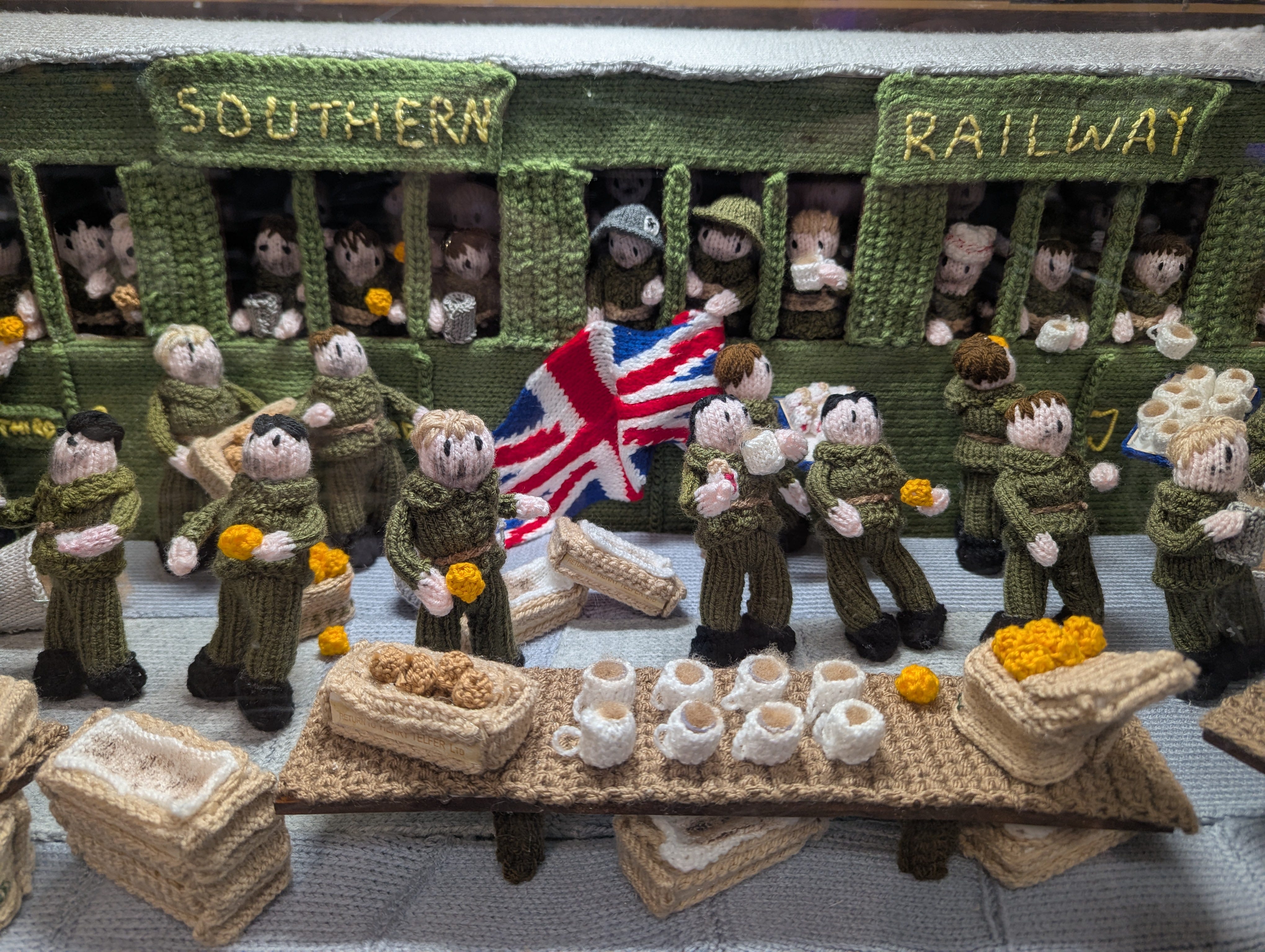
Susannah and I were still extremely dazed from our jetlag and the red-eye flight, but walking around the displays, we were captivated by them. We are hoping to visit it again tomorrow evening with my parents, as I am sure that my father in particular would love it.

The next few weeks are also going to be intense. Tomorrow evening, after a meal with my parents, we head down to Oxford for a day, where we will be staying overnight with some university friends of mine, and then spending time with Brad Littlejohn and his family the following day. The next week, Susannah’s brother will be visiting with his family. We will probably be over in Dublin that weekend for a wedding. We will then be down in London early the week after that, for a Plough event. We then fly over to Marseille for a week and a half of a working holiday with my brother and his family.
Susannah: To Alastair’s ten flights I’ve had only two over the last three weeks: to and from New York from Manchester. While he was off on his flying lecture tour, I spent several days at our family place in Mystic, Connecticut, with my mother, who over Covid bought a small but snug cabin on the same lake as the big(ger) house which we’ve had in the family for going on six generations now.
The main house has only two electrical outlets, and is lit by kerosene lamps and heated by fireplaces; we spent a cozy couple of days cooking and going to the cider mill and so on. It always feels impossible to leave the place at the end of the summer, and one year I just… didn’t; I announced that I was planning to get a job at Mystic Seaport, where my cousin Dean was the head of the shipyard, and stay as long as I could at the house. This was before I’d gotten my driver’s license, and so I hitchhiked to and from the seaport every day.
As September gave way to October and the nights got longer and the days colder, I developed a routine: get home, bring in enough wood for the night, start a fire, start water heating in a big kettle on the stove for a bath and washing up, start some sort of a meal — I tried to cook over the fireplace a couple of times — trim and refill the kerosene lamps, and so on. Staying warm, fed and clean was a lot more challenging than one would think. I loved it, and only several weeks after we’d had to turn off the water to prevent the pipes freezing did I give way and rent a room in the town of Mystic, walking distance to the seaport and shockingly fitted with all mod. cons.
Back from Mystic, I had some lovely times with friends and met up with my dad and stepmother for breakfast. On Thursday, Plough and First Things joined together to launch my friend Leah’s book The Dignity of Dependence, and then, on Friday, went up with a handful of friends to Fox Hill, the Bruderhof community where the Plough offices are. We hadn’t had a Writer’s Weekend this year, only the Young Writer’s Weekend, and so the less-young writers among us decided to foist ourselves upon Bruderhof hospitality for a DIY event. After this had been planned, my Plough colleague Alan Koppschall announced that his wedding was going to be on October 5th, the Sunday of the weekend we’d planned to be there, and so it became a Wedding Visit Weekend as well. We rented an airbnb and took the Metro North up the Hudson to Beacon, had dinner and sang around a campfire with the community on Friday night.

We’re mostly fairly hardcore New Yorkers, and none of us has a car, and so on Saturday, when we woke up, the process of figuring out how to obtain coffee before heading back over to Fox Hill was brutally difficult. It turns out that in the country, you can’t just walk out the door and go find a Starbucks and only become conscious after that, after the caffeine hits your bloodstream: instead, you have to actually know where you’re going and make plans to get there, which before coffee is remarkably challenging. We ordered an uber to take us to a place that called itself a cafe but it turned out to be a gas station and there was only about a quarter of an inch of gas station coffee left in the bottom of the pyrex carafe. We wandered out and came to a bakery, which theoretically served coffee but had not brewed any yet.
After googling again, we got our bearings and a new destination, and set off for another possible coffee place. There were no sidewalks, and so we stumbled along the shoulders of roads and through parking lots until we came to a Dunkin Donuts inside a Stewarts, ordered coffee, pulled ourselves together, and got another Uber to Fox Hill.
As there were a couple of our group who had never been to Fox Hill before, my colleague Sam Hine gave us a tour of the community. We had lunch, and spent the afternoon picking the last of the sweet pepper crop in the large community vegetable garden, followed by coffee — good, plentiful coffee; Irish if you wanted it Irish (personally I was just glad for the renewed infusion of caffeine) — at my colleague Maureen and her husband Jason’s coffeehouse made out of a renovated old school bus.
It’s called The Busted Bean, and is one of many Jason Swinger projects which have gradually mushroomed up around Fox Hill. When I first met Jason he’d just finished building a harp for his elder daughter Marlys; the next project, just before Covid, was an elaborate Tolkien-inspired treehouse. Over Covid they started a farm stand; the Bean came after that, and I don’t know what the Swingers are up to at the moment but I am quite sure there is more to come.
After another night at the AirBnB, we ordered an Uber to the Woodcrest Community, about half an hour away from Fox Hill and the first Bruderhof in America, founded in 1954. The guy who came to pick us up was another New Yorker, up from the City because someone had hired him to take them upstate. He was extremely freaked out by the countryside, and kept saying, of the Upstate landscape we were passing through, “What IS this place… it’s like a movie set… I bet these people all have guns.” We told him the story of our coffee saga from the day before, which only made him more certain that the Country was a strange and uncanny place, and asked him to stop at a different Dunkin Donuts, which we found along the route to Woodcrest. Fortified, we arrived well in time for the wedding, which started at 11 am.
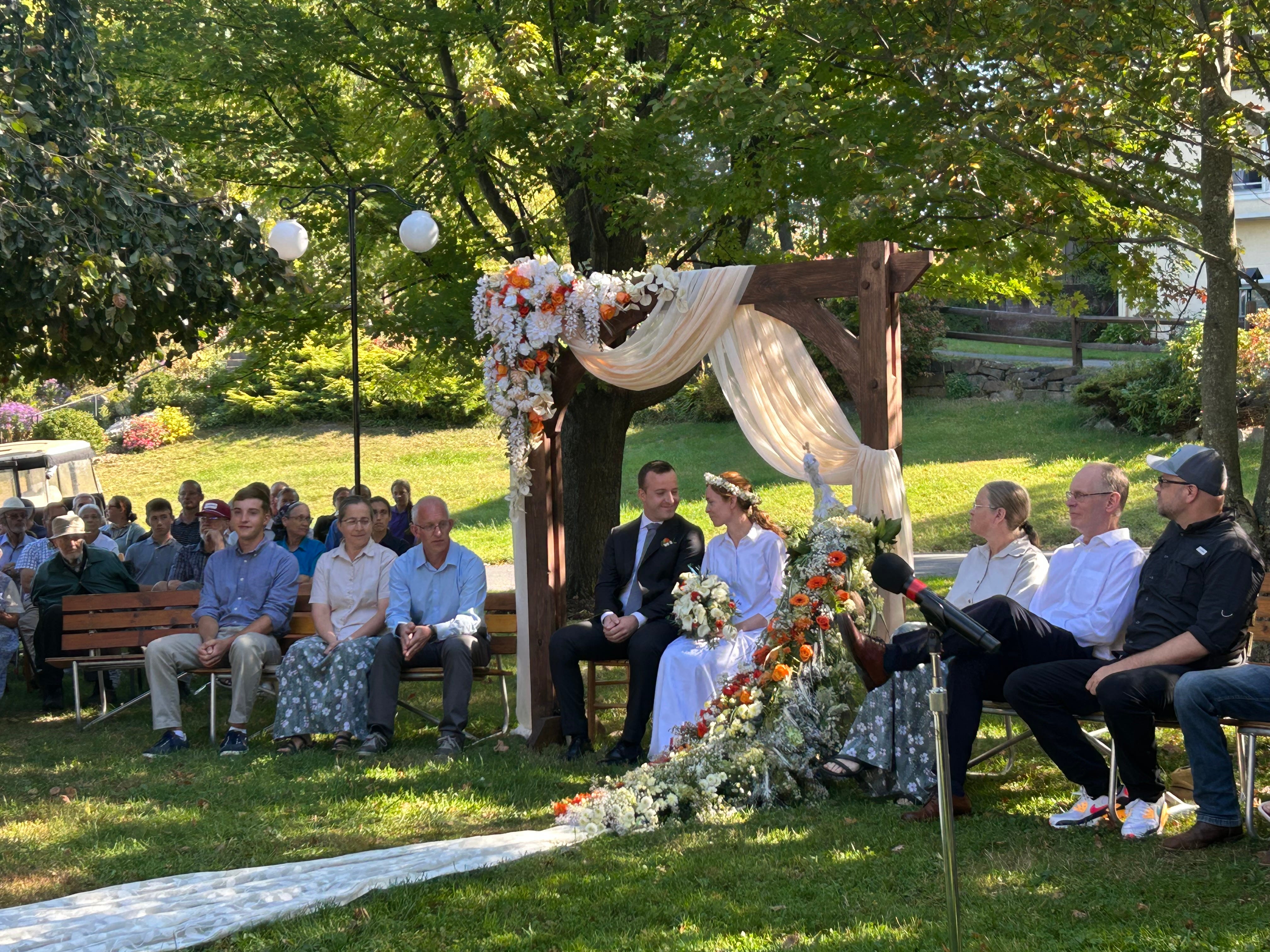
It was the first Bruderhof wedding I’d ever been to, and it was wonderful: the vows were modeled after traditional 16th century Anabaptist vows, and as well as all the usual speech acts of a wedding service by which the couple ministers the sacrament to each other, it also included a promise made by each spouse that they would not follow their spouse into wickedness or apostasy, “even if confronted by state authorities.” I did not think I would cry. But I cried. Alan and I have schemed many a scheme together — he does events for Plough and has also had various other editorial roles — and I can’t wait to see what schemes he and Marilyn get up to.
The following is from a wedding sermon that Eberhard Arnold, the founder of the Bruderhof and founding editor of Plough, preached in 1934, in Liechtenstein. Many of the community had fled there that year, accompanying all the community’s children, because the Nazis had insisted that the children go to state schools where they would be subjected to Nazi propaganda; it would not be until 1937 that the Gestapo finally raided the community and the remainder of the members fled to Liechtenstein and then to England. The question of submission to unjust state authority, of loyalty to Christ and to one’s spouse coming into conflict with the power of the state, was thus a live one for the couple who were hearing this sermon.
Just because the smaller unity between you two is subordinated to the greater unity of Christ’s church, the unity between you is steadfast. This is something very remarkable to the nonbeliever. He would think that the more independently a marriage unity is built upon the natural unity of two the firmer it is. That is an error. Nothing is firm but the eternal. Everything else is uncertain. Only when we make our marriage bond part of the eternal order is it a firm bond.
Thus we come to a surprising paradox. We put the question: if one of you were to be unfaithful to the Church, would the other one then remain in the Church and not follow the unfaithful one? It is clear to us that just this radical question constitutes the deepest security of a marriage bond founded in the eternal order. It places each of the marriage partners completely into the unity of the spirit of the Church, and in doing so, into unconditional faithfulness to one another. Merely to look at modern marriages attests to this truth. Marriages that are built purely on mutual inclination and attraction so often end in divorce nowadays, more so than in previous centuries.
The conclusion to be drawn from this whole concept of marriage is that unity of faith is the only possible basis for the whole of life, and this includes marriage. From this we see clearly that in marriage the most important thing is not the marriage as such, but the unity of God’s kingdom in Christ, in His Holy Spirit… It is just as Jesus says, “Strive first for the Kingdom of God and His justice, and everything else shall be given to you”— for the married or the unmarried. Marriage is only one example from actual life; the same is true of everything else.
***
As Alastair said, I have been absolutely itching to get back to Stoke, to my canning supplies and my Singer heavy duty sewing machine. I had also, just before we left, put a couple of pots of herbs into a planter in our garden area outside. These were herbs that I’d bought at Sainsbury’s about six weeks ago and left out on the courtyard table where they had been thriving except for occasionally falling off the table because of wind or the investigations of a very affectionate neighborhood calico cat who likes to visit us, and I figured they’d do better if in a larger amount of dirt and with no danger of falls. This act of gardening flipped yet another switch in my head and I have spent the last few weeks contemplating how to turn our outdoor spaces, including the courtyard and a little sunken garden area lined with bushes, which has a nice birdbath in the middle of it, into some sort of raised bed or container gardening situation. I also have bought several books on the topic.
What with sticking the mint and parsley into the dirt of the planter and picking the peppers at the Bruderhof, and ownership of the books, I was feeling confident in my farming skills, and so yesterday I found tools and a single gardening glove in our shed and attacked the area with vigor, pulling up weeds and possibly a couple of things that were not weeds, assessing the planter situation, and making plans. Follow this Substack closely for further adventures in small plot gardening.
Good Authority in Deuteronomy
Near the beginning of Deuteronomy, Moses recalls the appointment of the elders at Sinai (Deuteronomy 1:9-18; cf. Exodus 18). The prominence given to this incident in the ordering of Deuteronomy hints at the importance of the figures of elders and rulers in the book more broadly. The book of Deuteronomy is in no small measure concerned with accomplishing the transition from the prophetic leadership of Moses to that of Joshua and the elders. The book also explores the character of authority more broadly and equips the elders in the judgment required for their task.
Moses had intermediated between the Lord and the people. As Moses was removed through death, the people would be able to mature and the office of Israel’s elders in particular would come to the fore. The removal of Moses was essential for Israel to attain a greater stature, as their elders began to act as the people’s representatives.
In recalling the appointment of the elders, Moses outlines the character of their judgment in verses 16 and 17:
And I charged your judges at that time, ‘Hear the cases between your brothers, and judge righteously between a man and his brother or the alien who is with him. You shall not be partial in judgment. You shall hear the small and the great alike. You shall not be intimidated by anyone, for the judgment is God’s. And the case that is too hard for you, you shall bring to me, and I will hear it.’
The Law of Sinai is addressed to the people as a body, not merely to detached individuals. The elders would have a peculiar responsibility to interpret, to teach, to administer, to uphold, and to judge according to the Law. If the Law were to have its proper centrality for the people, the ministry of the elders would be essential. The Law is certainly not exclusively addressed to rulers; it speaks to every member of the covenant people and all are encouraged and charged to meditate upon it. It is no mere dry legal code for judges, being presented as a source of wisdom and life for all. The whole people are responsible to uphold the Law, both collectively and severally, not merely their authorities. Nevertheless, it has an especial importance for the elders.
There is much to be learned from the ordering of the commandments. The Ten Words are refracted in the case law that follows in chapter 6 to 26 of Deuteronomy. I would order the material as follows:
The first word (no gods besides the Lord): Deuteronomy 6-11
The second word (not making a graven image): 12-13
The third word (not bearing the name of the Lord in vain): 14:1-21
The fourth word (Sabbath): 14:22—16:17
The fifth word (honouring father and mother): 16:18—18:22
The sixth word (do not kill): 19:1—22:8
The seventh word (do not commit adultery): 22:9—23:14
The eighth word (do not steal): 23:15—24:7
The ninth word (do not bear false witness): 24:8—25:3
The tenth word (do not covet): 25:4—26:15
Meditating upon the interplay between the core principle of the Ten Words and its refracted and contextual applications in the case law that follows is a means by which one attains literacy in the Law and learns wisdom and jurisprudence.
The literary structure of the material invites and facilitates such meditation. By juxtaposing the core principles in chapter 5 with their refracted expansion in the chapters that follow, the attentive hearer or reader will be caused to reflect upon the illuminating character of the relationship between the two. Neither the Ten Words nor the case law are mere random aggregations of miscellaneous laws; both are highly structured bodies of material, whose ordering and intertextual relations serve to disclose something of their deeper grammar.
Many have debated the ordering of the Ten Words. The division of the Ten Words into two ‘tables’ is a common approach, with a strong pedigree. The summary of these two tables with the first and second great commandments—‘You shall love the Lord your God with all your heart and with all your soul and with all your strength and with all your mind, and your neighbor as yourself’ (Luke 10:27)—seems quite reasonable.
However, the exact location of the division is disputed. There are literary reasons that might suggest that the division belongs after the fifth commandment (in the Reformed ordering), the command to honour father and mother. The first five commandments all contain the name of the Lord. Each commandment of the first five commandments also has an accompanying rationale, warning, or promise. By contrast, the second five commandments are short, with no such rationale, warning, or promise. The problem is that the fifth commandment does not neatly seem to fit under the heading of the greatest commandment: ‘You shall love the Lord your God with all your heart and with all your soul and with all your might’ (Deuteronomy 6:5). To many, honouring father and mother would more naturally fit under the second great commandment, concerning loving our neighbour as ourselves.
The material concerned with the fifth commandment in Deuteronomy, surprisingly, has little to say about our duties to father and mother. Rather, it concerns judges and officers, priests, kings, Levites, and prophets. The principle of honouring father and mother largely focuses upon the duties of authority figures and of those subject to them.
In describing the duties of these figures, it is judicial rather than executive functions that are emphasized, even in the case of the king, who is charged to write out a copy of the Law and to meditate upon it. Israel’s government, as envisaged in Deuteronomy, is one in which the power of the executive and sovereignty is downplayed, and the task of judgment is elevated. Judgment must be an expression of truth and goodness. It must be righteous judgment, not just an expression of the autonomous will of the sovereign.
In emphasizing judgment according to the Law, Deuteronomy accentuates that authorities are under God. They are authorities who are submitted to the Law, who are subject to the Law, and who must enact and establish and enforce the Law in the life of Israel. Like fathers and mothers, these authorities are authorities under God’s authority.
Ultimately, the authority is God’s alone. Moses’s charge to the elders in 1:17, wherein he reminded them that ‘the judgment is God’s’ should be remembered here. This both exalts and humbles those exercising judgment in Israel. On the one hand, they must be confident in the act of judgment, as it is grounded upon God’s own authority. On the other hand, they must minister judgment as those who themselves are under and answerable to the Law.
Perhaps the most striking manifestation of this is seen in the treatment of the king’s relationship to the Law in 17:18-20—
And when he sits on the throne of his kingdom, he shall write for himself in a book a copy of this law, approved by the Levitical priests. And it shall be with him, and he shall read in it all the days of his life, that he may learn to fear the Lord his God by keeping all the words of this law and these statutes, and doing them, that his heart may not be lifted up above his brothers, and that he may not turn aside from the commandment, either to the right hand or to the left, so that he may continue long in his kingdom, he and his children, in Israel.
Israel’s king is not to be a god-king like those of some other Ancient Near Eastern kingdoms. Nor is the king the law himself. The king is not even the lawgiver, the one who makes up the laws and teaches the laws as his own wisdom. Rather, the Law is the Lord’s and the king comes under that Law. He is a servant of that Law, someone who is responsible to study the Law, to understand it deeply, and then to rule in terms of it. Besides placing checks upon sovereignty through the separation of powers between king, priest and prophet, there is also a challenge to unchecked sovereignty in the way that the king comes under the Law of God.
The king is not elected by the people. He is a servant of the Lord. He represents the Lord’s authority in his Law to the people. He is supposed to be a minister of the Law of God to the people of God, but he is supposed to remain one of his brother Israelites, and that will happen as he is humbled by submission to the Law. He is neither over the Law nor the source of it. As he rules by and in submission to the Law, the king is a sort of everyman, not lifted up above his brethren (in the portrayal of him in the psalms, David appears as such an everyman who delights in the Law of the Lord).
The king is required to write his own copy of the book of the Law for the purpose of his own meditation throughout his life, something he must do this under the supervision of the Levitical priests, the stewards of the house of the Lord. The supervision of the Levites is a further sign that the king comes under the authority of another. The king is not the absolute authority within the land of Israel, but both priests and prophets can represent the authority of God relative to the king. The prophet can rebuke the king, challenge the king in the name of the Lord, as we see Nathan challenging David after his sin with Bathsheba.

The king’s relationship with the Law is even more intimate than that of the typical Israelite, as he is supposed to write it out all for himself. These are all ways in which the king is supposed to take the Law into himself, to internalize in himself the Law that he will rule in terms of. The king’s self-mastery according to the Law is the basis by which he will rule the nation.
In places like the Psalms and the book of Proverbs, we see the result of this. The faithful king is the archetypal Israelite, who has become wise through meditation upon the Law day and night. He can think and speak about the world with wisdom as he has internalized the principles of wisdom in the Law. Earlier in the book of Deuteronomy, we were told that the peoples around would see the wisdom of Israel in the Law and come to hear that wisdom. We see that happening in the story of Solomon, someone who meditated upon the Law, and as a result could speak with wisdom into the world, so that people would come to hear Israel’s king. Now ideally, what was true of Israel’s king would become true of the people as a whole. The king then is a model for the rest of the people.
We see the same thing in the Psalms. The Psalms are the songs of the king, the king who has meditated upon the Law of God day and night. He is like a tree planted by streams of water giving forth its fruit in season (Psalm 1). He is wiser than all his teachers because he meditates upon God’s Law (Psalm 119:99). And, as the Law has been taken into him, he can be someone who rules wisely within the world in the name of the Lord. If the priest is a steward and a servant, the king is more of a son.
Returning to the question of the ordering of the Ten Words, I think that, if we follow the literary indicators for their division, classifying of the fifth commandment under the heading of the great and first commandment (cf. Matthew 22:36-38) is not difficult to understand, especially when we consider the broader unpacking of the fifth commandment in the case law, in its treatment of figures such as the king. If the great and first commandment concerns our loyalty and submission to the Lord, placing the fifth commandment under its heading underlines how divinely established authorities manifest and mediate God’s authority in our lives. In relating to such authorities, we are not merely relating to our neighbours, but also to God.
The placing of the fifth commandment under the great and first summary commandment highlights the derivative character of human authority and, consequently, both its weightiness and its responsibility. If you have been given authority, you have been called to symbolize and enact the judgment of the Lord. To exercise authority is a fearful responsibility, one in which you are charged to minister the Lord’s judgment, rather than to serve your own ends. The other side, of course, is that, where you are yourself under human authority, you must relate to such appointed authorities as ministers of the Lord’s own authority (even where such authorities are unfaithful, you must show honour to their appointed office).
Faithfully to minister the Lord’s judgment, you must yourself be subject to it. Such submission to the Lord’s judgment on the part of authorities ensures humility and unites the good authority figure with those over whom they have been given rule, instruction, or oversight. A good parent must, like the king, first devote themselves to the Law of God, allowing themselves to be mastered by and instructed by it. Authority flows from submission, as the Law of the Lord is internalized in obedience, delight, wisdom, and authorization.
From such a posture of humility and submission, authorities will be equipped to exercise effective and good rule over others, the sort of authority that does not vaunt itself over others, seek its own ends, or act capriciously or autonomously, but ministers God’s life-giving rule to them. As the end of the authority they minister will be manifested in their own lives—as they have subjected themselves to it—their effective exercise of authority more closely unites others with them, rather than heightening some hierarchical opposition. So understood, faithful ministering of authority is grounded in and can also produce a sort of brotherhood.
In placing the fifth commandment under the heading of the great and first summary commandment, the weightiness of authority will better be understood. All authority flows from God. Faithful exercise of authority requires humble and attentive submission to divine authority. True authority comes through submission. Indeed, true leadership is found where authority and submission meet.

Recent Work

Alastair:
❧ On the Mere Fidelity podcast, Derek, James, Joseph, and I had a conversation about the assassination of Charlie Kirk. Brad and Derek also had a two-man show on penal substitution. I would have loved to have been able to join that one, but was occupied with speaking commitments.
❧ The Theopolis podcast series on Hebrews continues, with the following episodes: I Will Put My Law on Their Hearts (Hebrews 10:15-21) and The Full Assurance of Faith (Hebrews 10:2-26).
❧ My New College Franklin Collegium lecture, ‘Back to the Garden: Male and Female from the Beginning’ can be watched here:
❧ I preached on John 3:22-36 at Christ Covenant Church in Langley, BC.
❧ I delivered a lecture entitled ‘Holy Scripture and the Academy’ at the South Carolina Study Center in Columbia, SC.
❧ I also gave a question and answer session at the South Carolina Study Center.
❧ A few months ago, I recorded a commendation for the work of my friends Michael and Lynette Hughes and their new venture, House Beautiful.
❧ While on the subject of endorsements, I wrote a blurb for Tyler Wittman’s forthcoming book, Creation: An Introduction.
As depicted in Psalm 148, creation is a vast yet ordered antiphonal choir, the creatures of the heavens and the earth arrayed in their distinct groups, each with a unique voice, united and harmonizing in a single song of praise. Wittman offers us an exhilarating exploration of this pregnant image for our understanding of creation, Christ’s redemption, and our calling. His stimulating articulation of the doctrine moves his readers seamlessly into doxology.

Upcoming Events
❧ At the end of October and beginning of November, we will be in Marseille in the South of France. During this time, he will be preaching at a church in Marseille and may also be delivering some talks in Aix.
❧ Alastair will be speaking at L’Abri in Liss on November 21st. He will probably also be preaching that weekend in Salisbury.
❧ He will likely be preaching in Newcastle-under-Lyme—not -upon-Tyne—on November 28th.
❧ Next June, Alastair will probably be speaking in Oregon. He will then be visiting and speaking in Sydney and Perth in Australia.
❧ Much of Alastair’s work is as an independent scholar, funded by Patreon donors. His primary goal is to create thoughtful yet free Christian material for the general public, most notably his largely-completed chapter-by-chapter commentary on the whole Bible (available here and here). If you would like to support his continuing research, teaching, writing, and other content production, you can do so here.

Much love,
Alastair and Susannah
Love the anabaptist language in the wedding vows.
Working at Mystic as a kid would've been a dream job.