
№ 66: Susannah's Broadway Debut
Slop, how the eighth commandment challenges private property, the musicality of chiasms



Biblical Law
Alastair: My next Davenant Hall course is on the subject of Biblical Law. Starting with the narrative backdrop to the gift of the Torah and the relationship between Law and the stories of the Pentateuch, over eight weeks of classes, this course will investigate biblical Law from several perspectives.
We will consider the Ten Words of the covenant, the sacrificial system, the jurisprudence of Deuteronomy, the relationship of Law with the psalms and wisdom literature, the prophetic use of the Law, the Torah in the teaching and actions of Jesus, the Pentecostal writing of the Law upon the heart, Paul’s handling of the theme of the Law, the relationship between the Torah and natural law, and the uses of the Law in the lives of Christians, the Church, and society.
Along the way, we will engage with several great interlocutors, among them Michael Morales, Peter Leithart, Dru Johnson, Paul Sloan, and Richard Hooker.
If you have ever wanted to investigate this huge, extremely important, yet widely misunderstood biblical topic, this is the class for you!
As usual, anyone signed up for the course will have exclusive access to recordings of each class and office hour. I occasionally get asked whether exceptions can be made, by people who very much want access to material in past courses. Unfortunately they can’t.
Register here!

Alastair: At the very end of April, as I mentioned in our last Substack post, we spent a few days in upstate New York with Susannah’s father and stepmother. We returned for a very short visit, little more than an overnight stay, on May 18th.


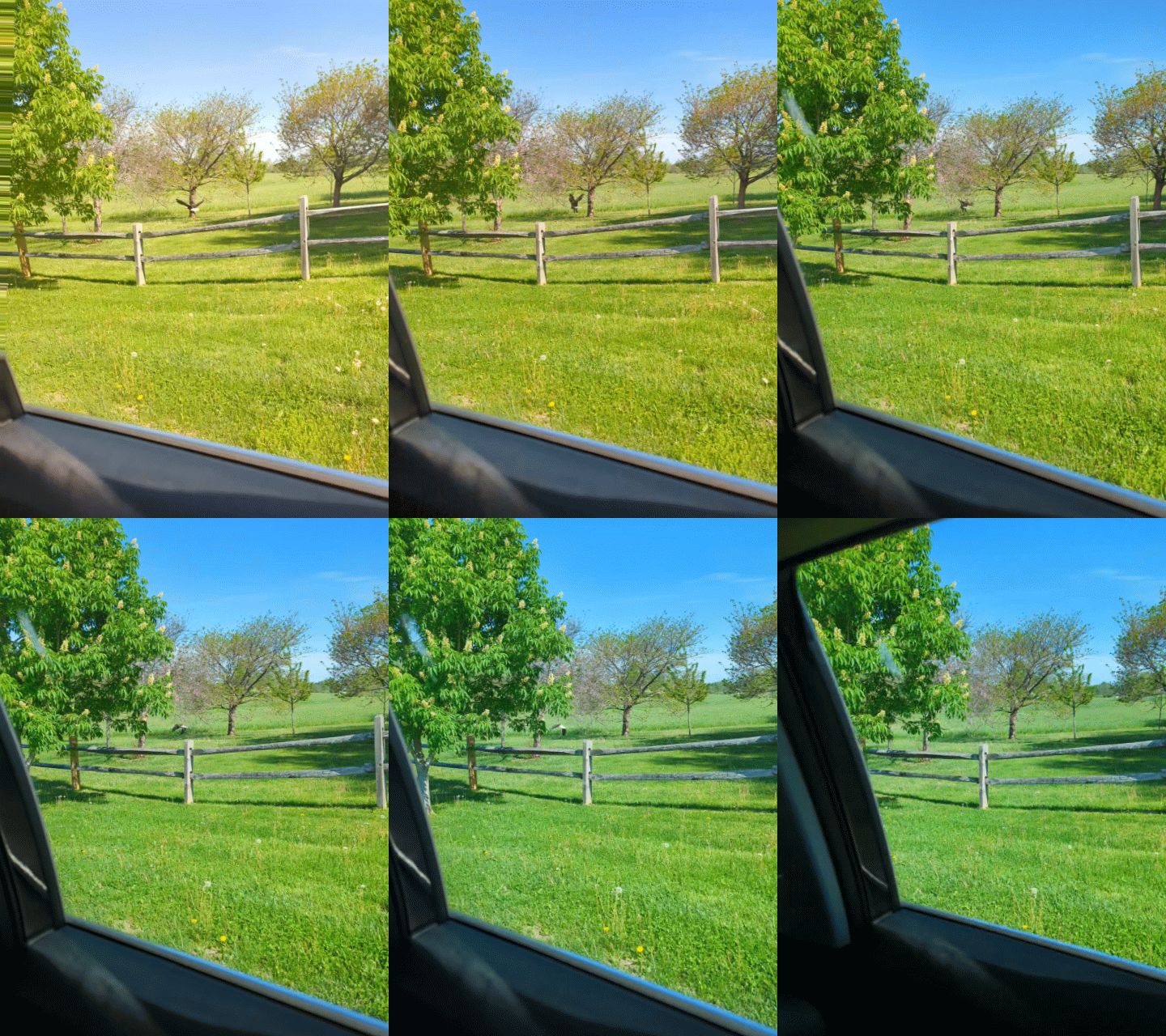
As Susannah’s stepmother was driving us to the train, not long after we had left their house, I saw a bald eagle standing on the ground, next to their neighbour’s shed. Neither Susannah nor her stepmother had seen it when we passed it, so we turned around and went back. This time, they both saw the eagle, which had apparently caught a rabbit. As we passed, it flew away, before I could properly get a shot of it. However, I did capture a motion photo of its departure.

The next day, Susannah was a volunteer judge for the Billion Oyster Project, assessing various student projects on Governor’s Island. Liking the idea of visiting the island again, which I had only once visited, last year with some friends, I decided to join her, planning to look around and then get some reading and writing done somewhere on the island.
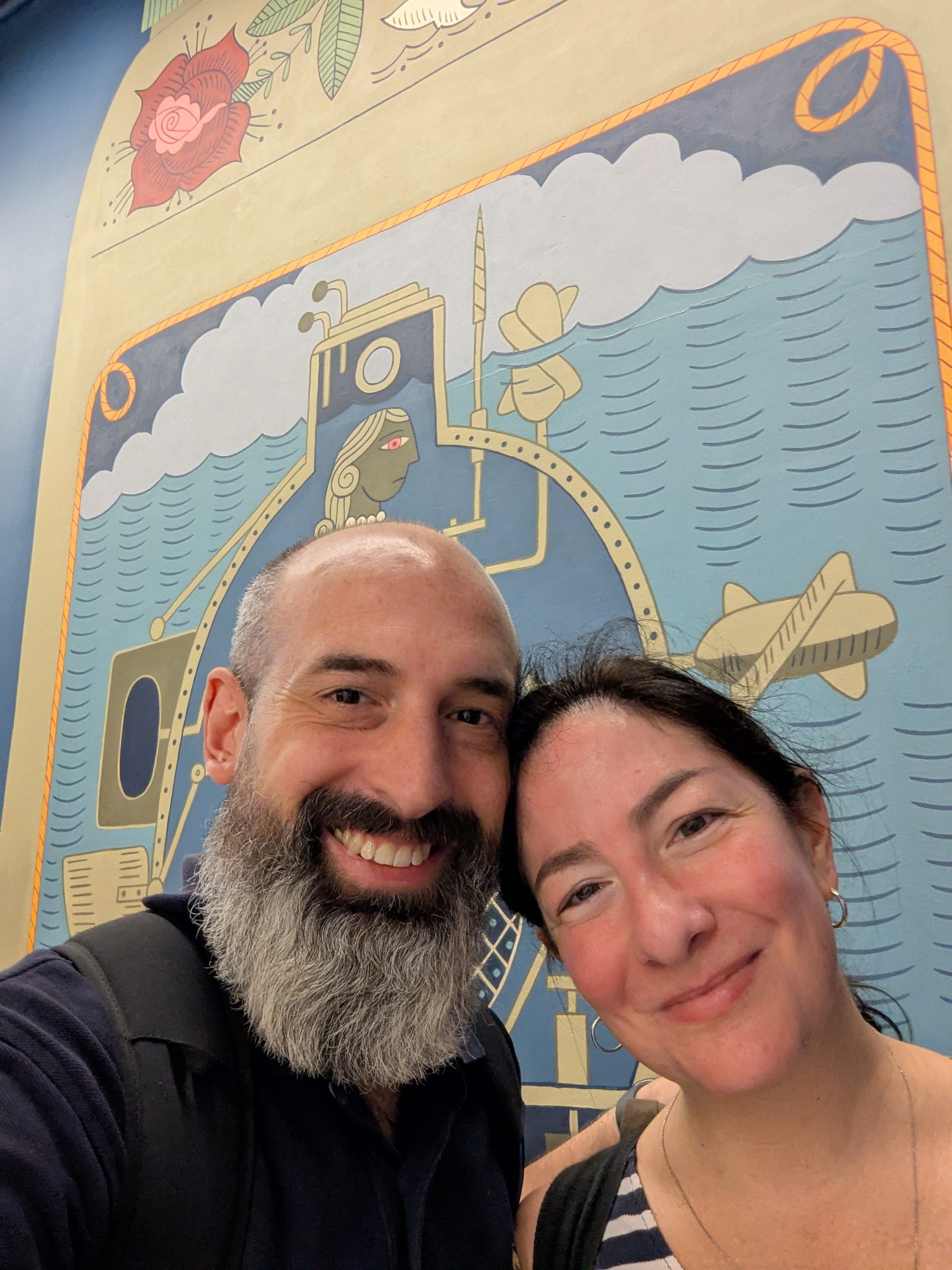

We left the apartment early to catch the ferry to the island. The day was already shaping up to be a warm and sunny one, perfect for Susannah’s event and for some exploration of Governor’s Island. After taking the slower train and hurrying to get to the ferry, we arrived within a comfortable time of its departure.


The ferry went from the Battery Maritime Building, with its attractive Beaux-Arts architecture, to Soissons Landing on Governor’s Island. Behind us was the Brooklyn Bridge and, on the port side of the vessel, we could see Brooklyn Heights. As we neared the island, the Hugh L. Carey Tunnel Ventilation Building came into clearer view and, past the side of Castle Williams, Lady Liberty herself.


Susannah and I parted ways, as she went to join her group for the Billion Oysters Project event. I went towards Castle Williams, joining the waterfront promenade, which affords some spectacular views of Lower Manhattan.
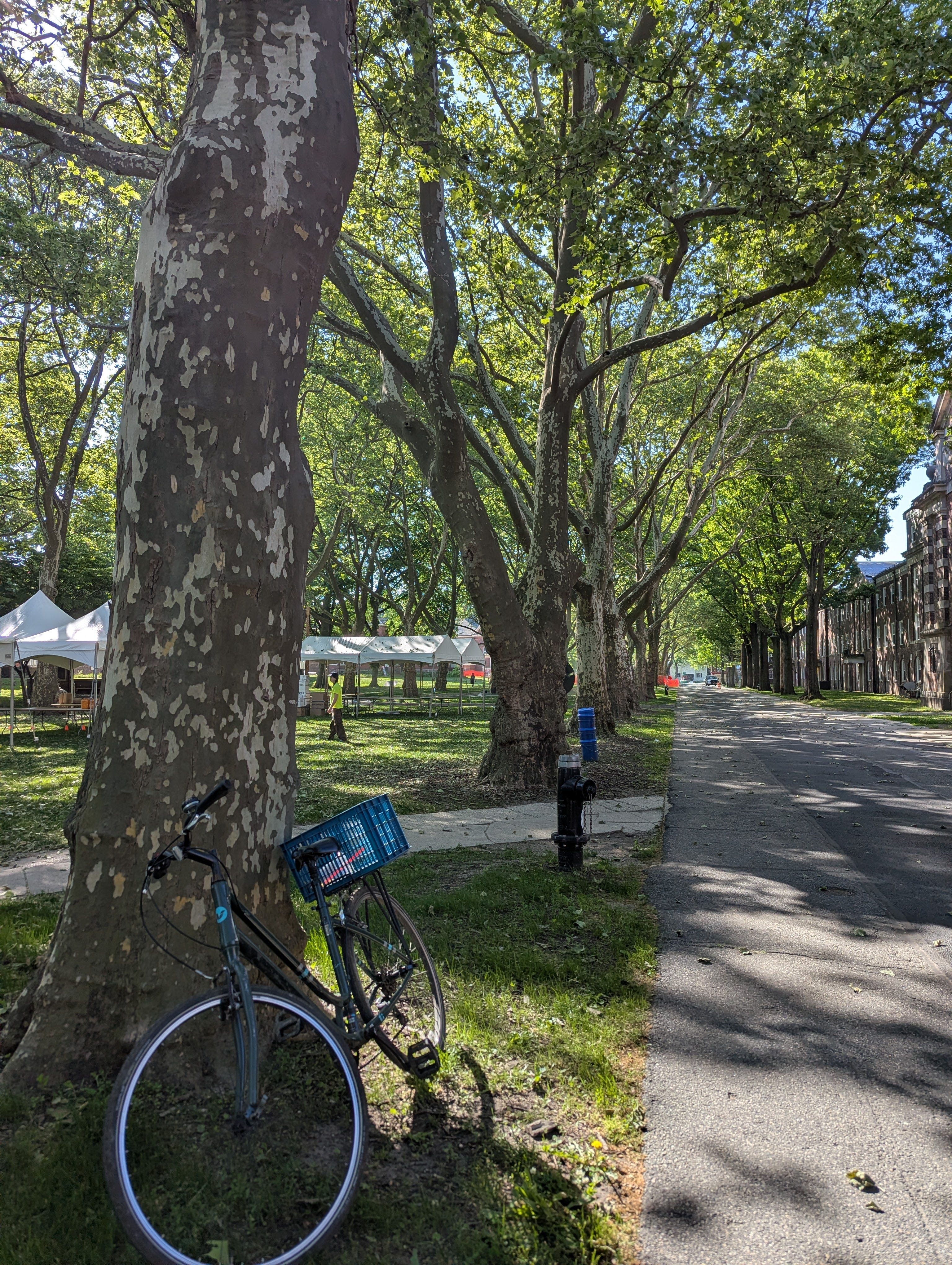
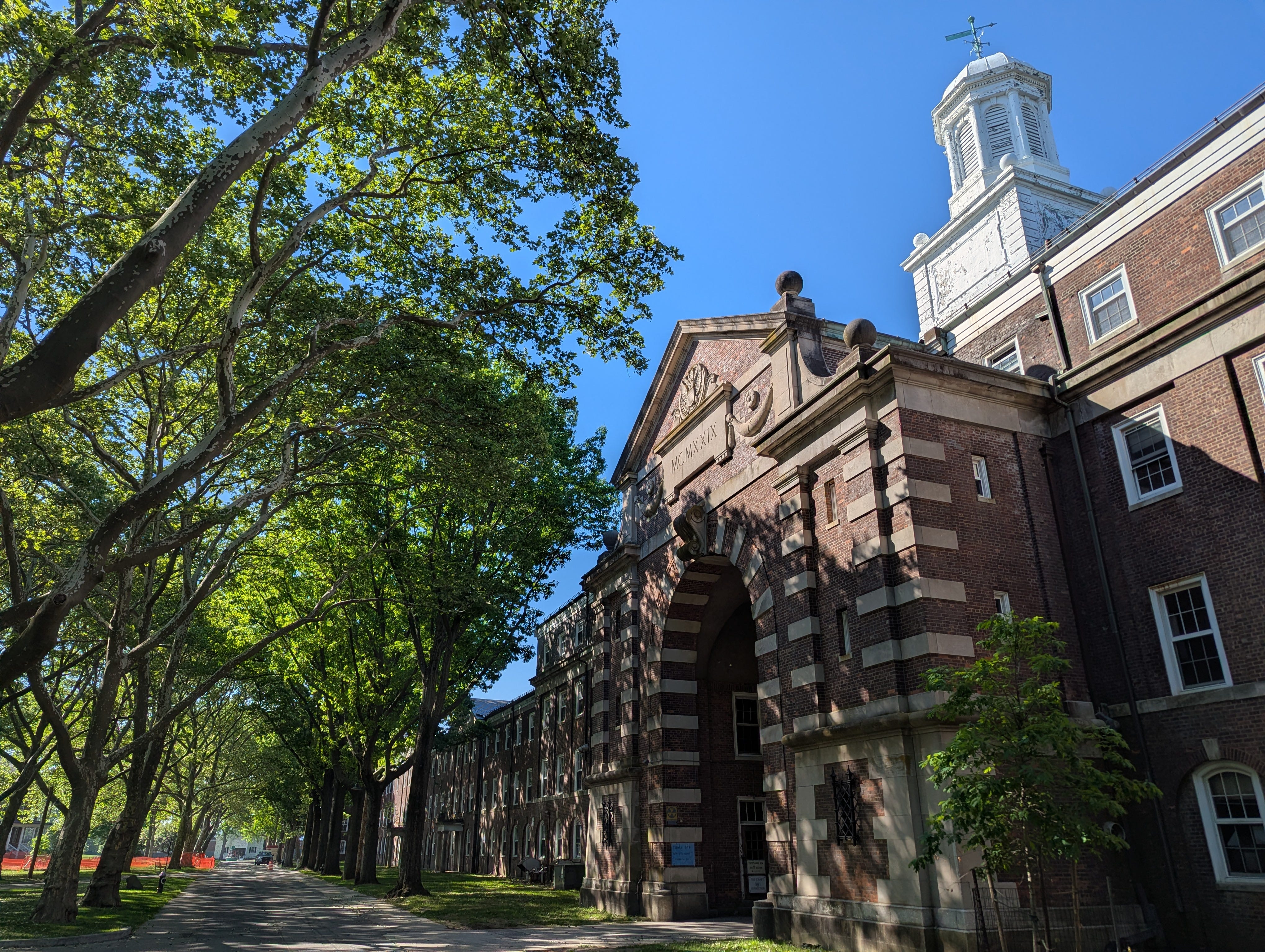
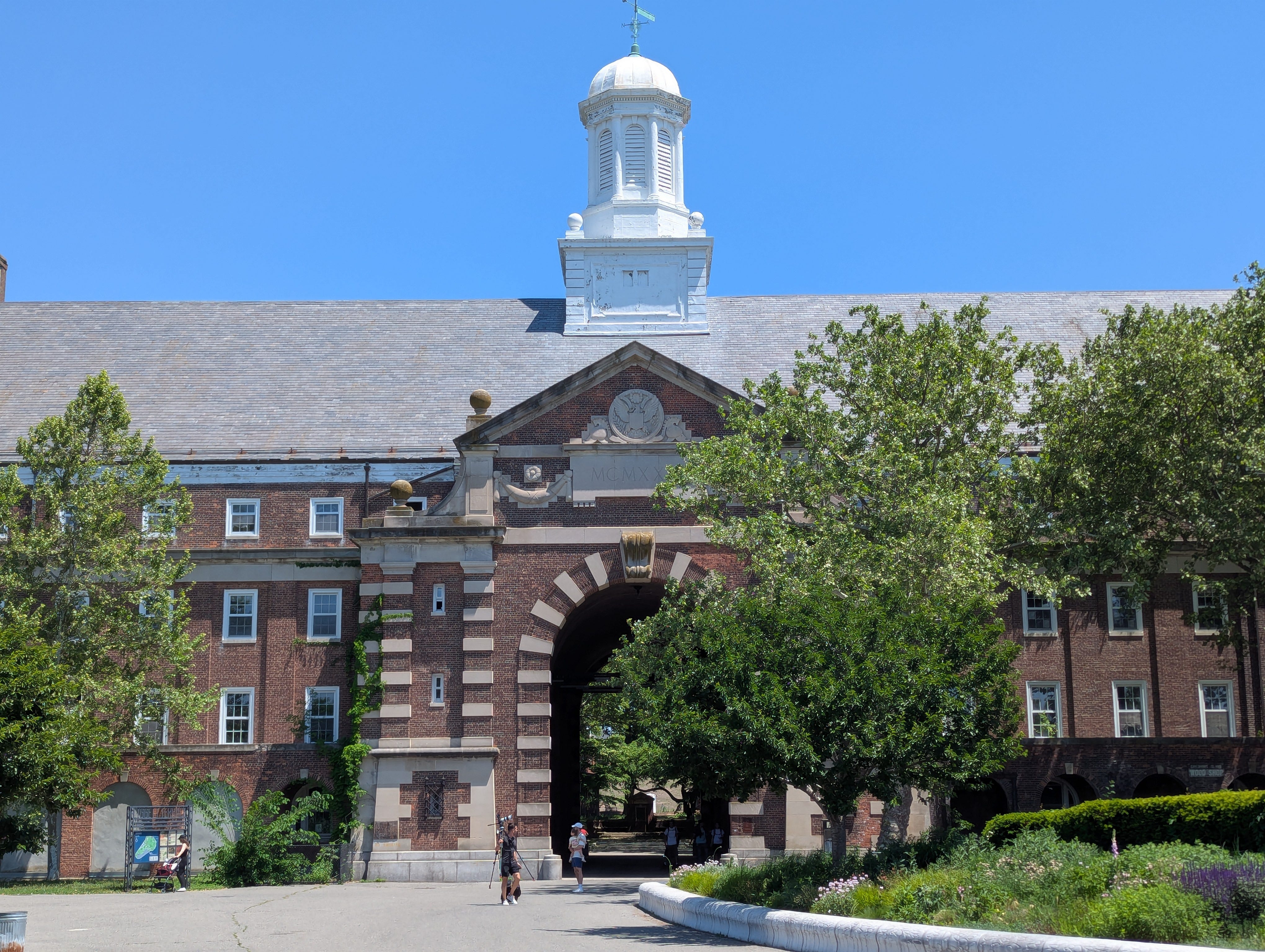
From there I walked past the New York Harbor School and down the side of Liggett Hall, an imposing Georgian Revival building that was formerly a barracks. Susannah’s event was on the green adjacent to the rear of the building, and organizers and students were already beginning to prepare in the tents that had been erected there.


I went through the passage at the centre of Liggett Hall and followed the paths further into the island. There I found some Adirondack chairs under some trees on a green, with a sightline to the Statue of Liberty. I sat there for the next couple of hours, getting some reading done and appreciating the tranquillity, with the warmth of the sun above, the sound of bird song, and no one else around.


Having read and then just lounged for some time, I rejoined the waterfront promenade, seeing the Statue of Liberty closer and watching yachts sailing towards Lower Manhattan.


From there I wandered back around the south side of the island, watching a cargo ship make its way up the Buttermilk Channel towards Red Hook.
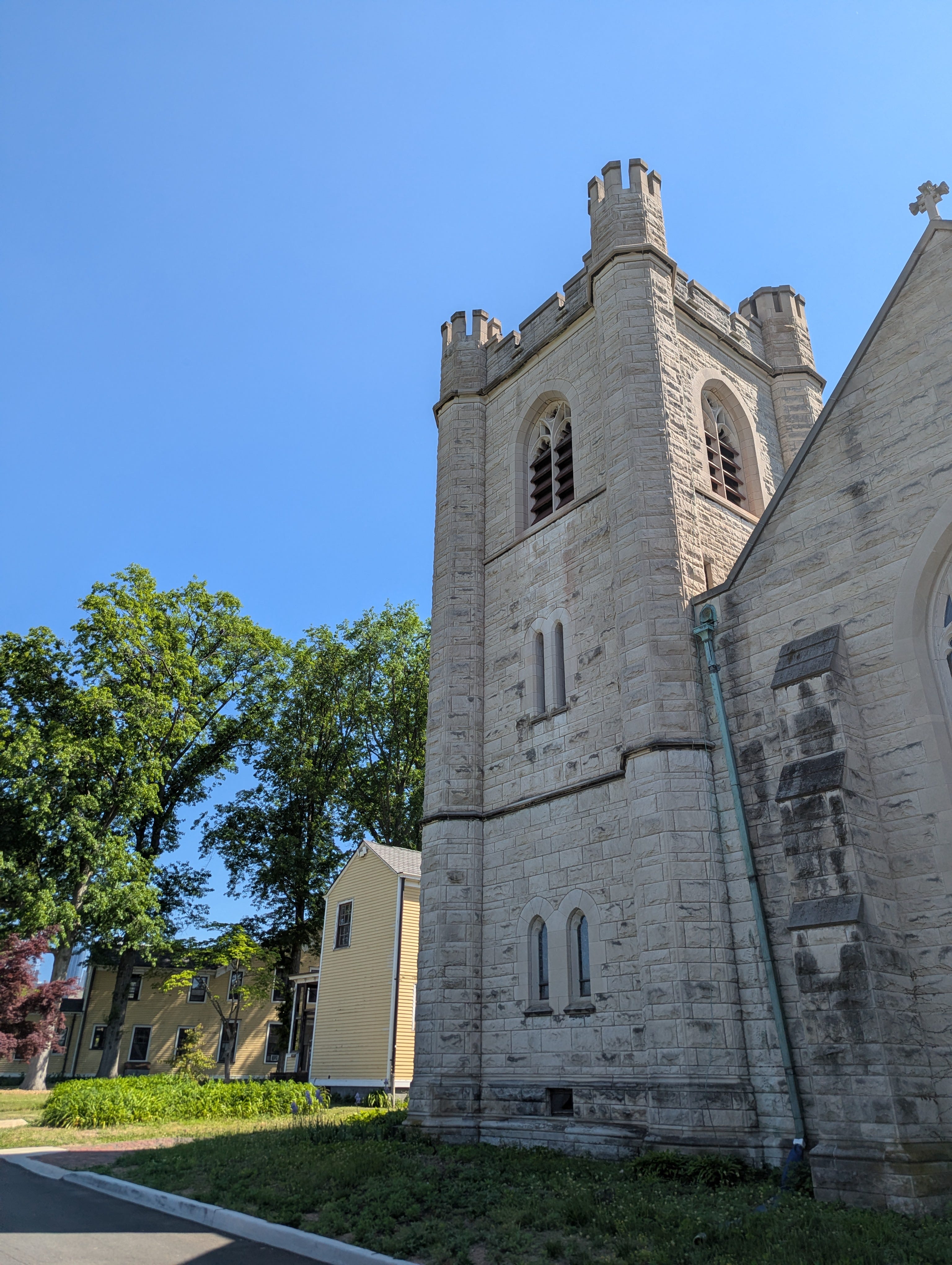

Turning off the waterfront promenade near St Cornelius Chapel, I went through Nolan Park, passing the Admiral’s House.
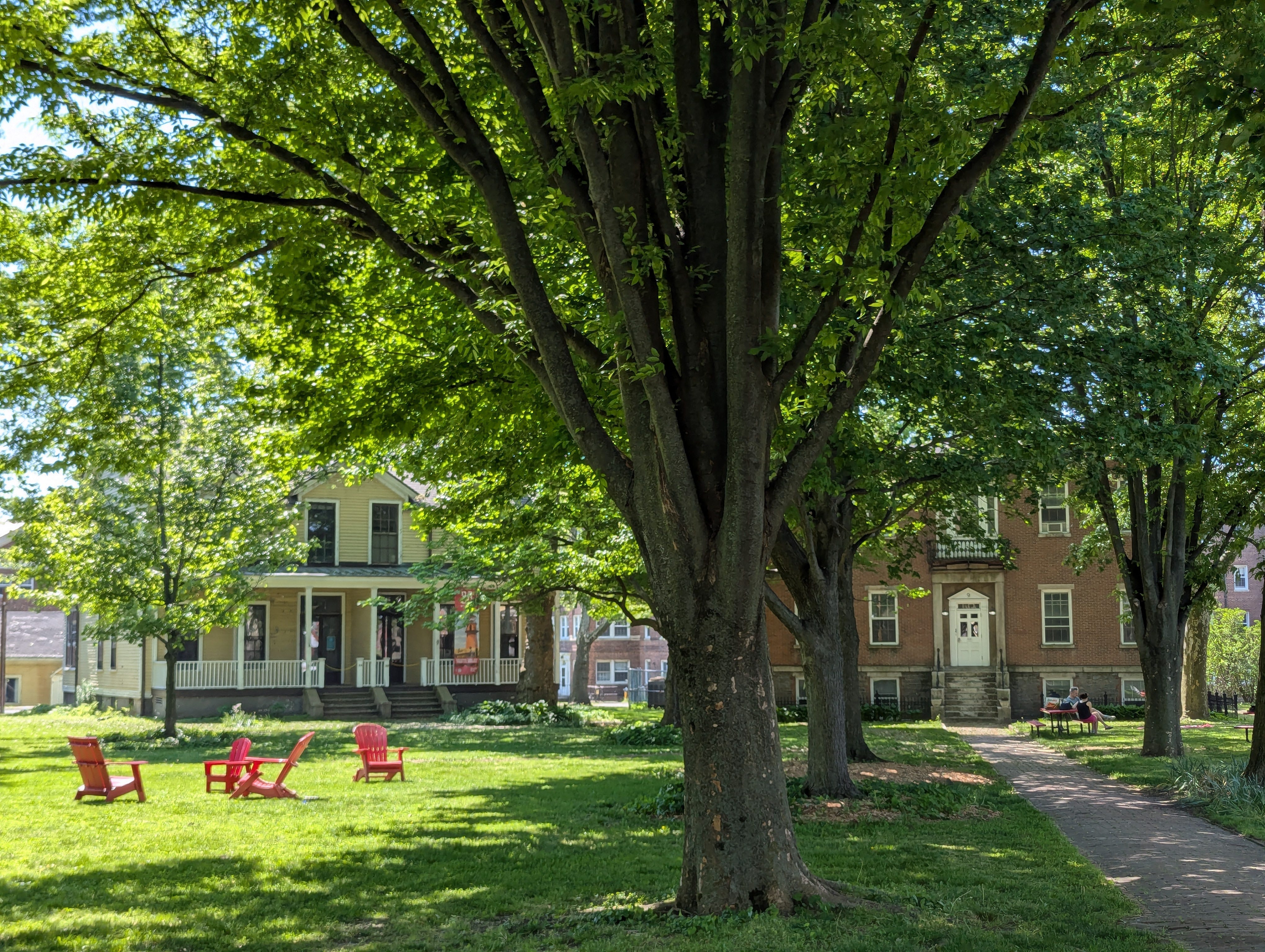

I then returned to Liggett Hall and saw that the students were starting to disperse, suggesting that Susannah’s event was concluding. I meandered down towards Soissons Landing, where, before long, Susannah met up with me.

Rather than leaving immediately, we stopped at a Mexican restaurant on the island to have a light meal, before heading back home. It truly was a glorious day, already I was rather sunburnt by the end of it.
An Oyster Excursus
Susannah: OK lemme cut in here to explain. Before I was at Plough, I did communications for a maritime education nonprofit that raised money for the New York Harbor School, a maritime-skills focused high school on Governor’s Island. The school has a project which serves as an organizing principle for all the various boatbuilding, sailing, SCUBA, aquaculture, marine biology and underwater robotics skills they’re building: the Billion Oyster Project, which aims to restore a billion oysters to New York Harbor by the year 2035. Oysters are a keystone species, both filtering the water and providing massive amounts of habitat for other creatures: the project has already radically improved water quality and biodiversity in and around the harbor, though it would not have been possible even to begin if it had not been for the Clean Water Act of 1973.
Anyway, the BOP has expanded past the Harbor School, and now many students from all across the city participate. Each year students are invited to take part in the Billion Oyster Symposium, where they present their projects — mostly science projects, though the occasional history project pops up — to an audience of adults.
This year more than 900 kids participated. Which meant that we needed a lot of judges. So I volunteered: back on Governor’s Island, with the oysters and the kids. It was absolutely wonderful to see all my old colleagues, and I even ran into one kid who said, casually, “Oh, hi, Susannah.” I’d known him from when he was 14 to when he was 18; he worked on the student newspaper for which I was the advisor. He’d gone off to college and finished and come back to the city and was now working on BOP himself as a staffer. Just amazing stuff.
The students and their projects were incredible too. All the way from 7 year old homeschoolers to high school seniors about to head to Ivies or to maritime work: a very very impressive gang.
/Oyster excursus ended

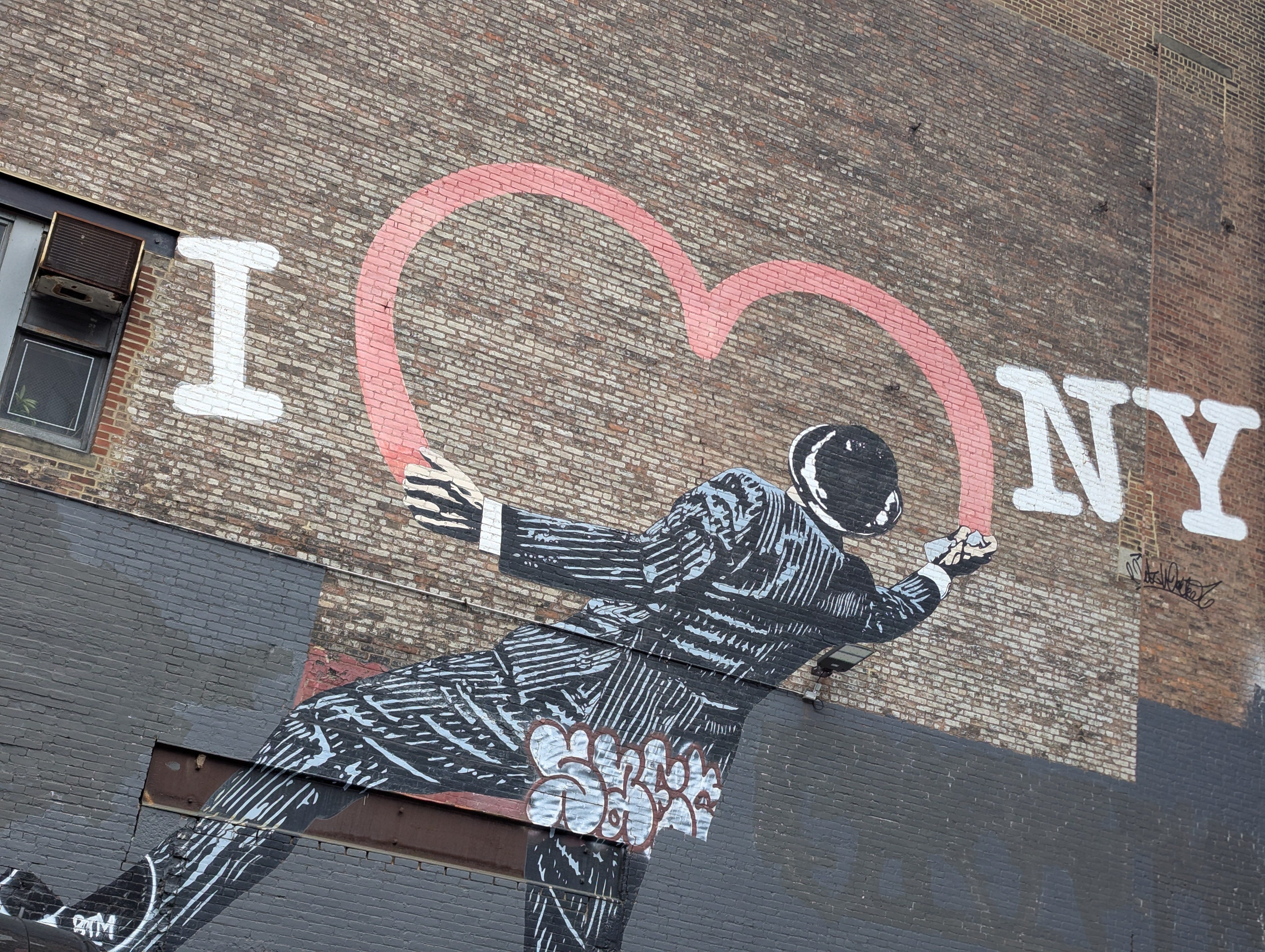
Alastair: The rest of the week largely followed a regular routine. I have office hours on Thursday mornings, teach on Fridays, and read, write, and record during the rest of the time.


On Saturday, Susannah’s uncle David picked us up in the morning and we drove up to the family house in Mystic, Connecticut, for Memorial weekend. About twenty members of Susannah’s extended family were gathering, among other reasons, to plant a tree in commemoration of Susannah’s first cousin once removed, Nancy (her mother’s cousin).


The weather was rainy for the entire weekend, with only a few periods of respite. We spent most of the time indoors, either in the family house, a delightful building from the late 1700s, which has largely been preserved without modernization and is still lit by kerosene lanterns. Doing repair work on the house a few years ago, they found a concealed shoe, a tradition that dates back many centuries.

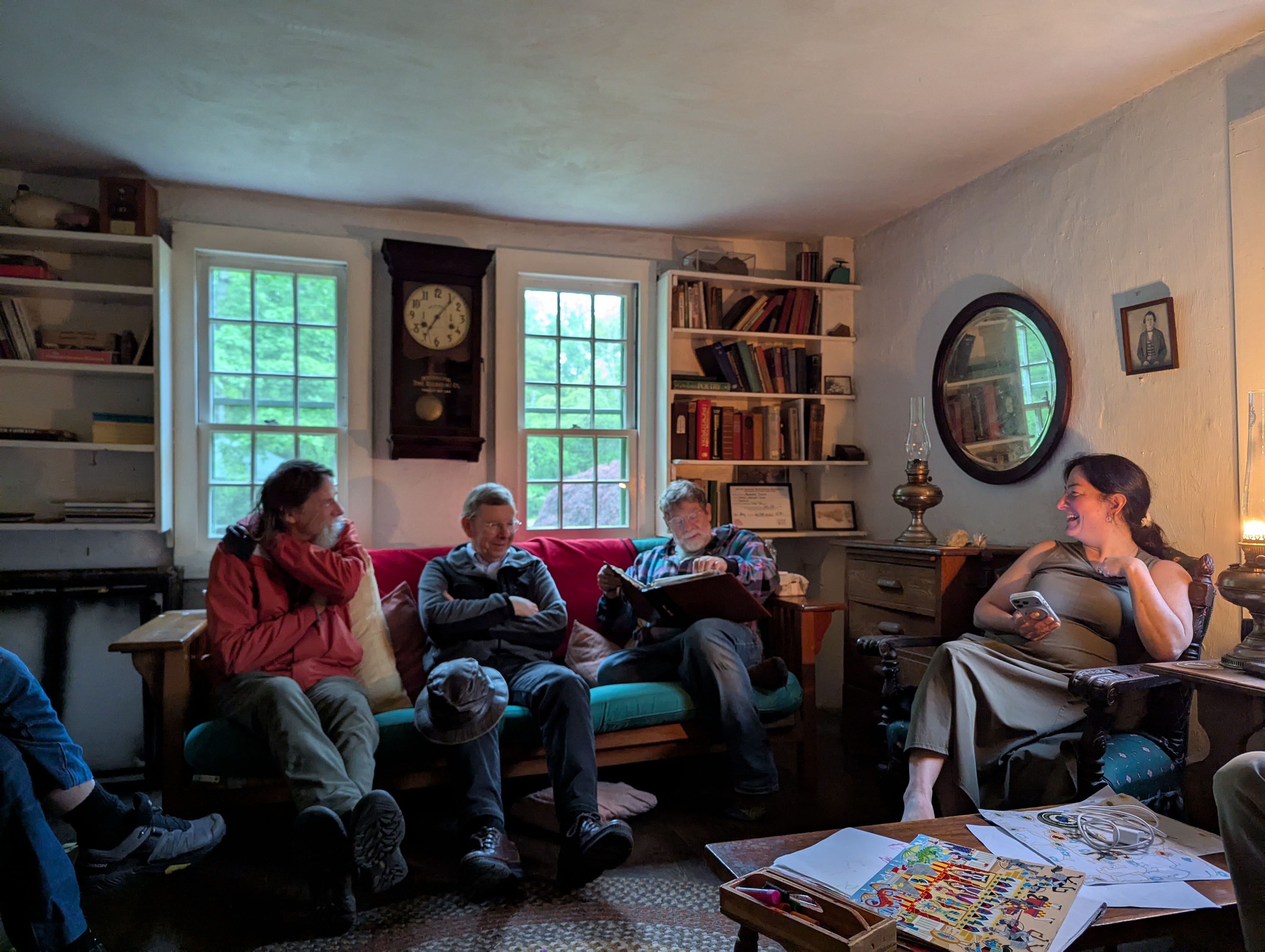
Susannah and I had originally planned to spend the night in the comfier conditions of her mother’s modern house nearby, but we ended up staying in the family house instead.
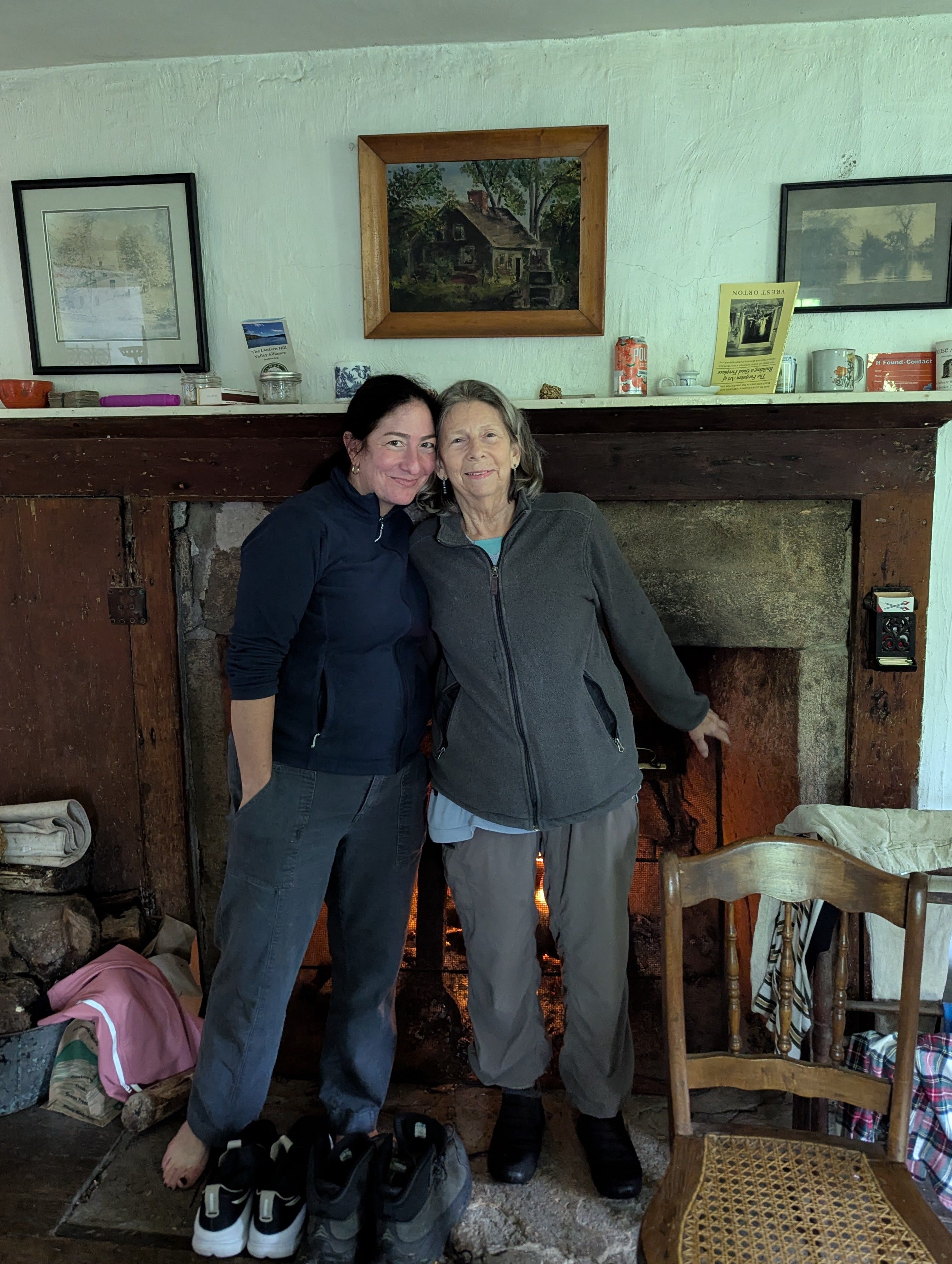

There were two babies and one four-year-old boy, Luciano, for whom this would be an especially formative experience of the family house. Susannah has an extremely tight-knit extended family, and the sharing of the house between several lines of a family over five generations has played a very important part in keeping them so close. Being able to pass on such a special place to a new generation, who will be forging their own early memories there, adds to its significance.
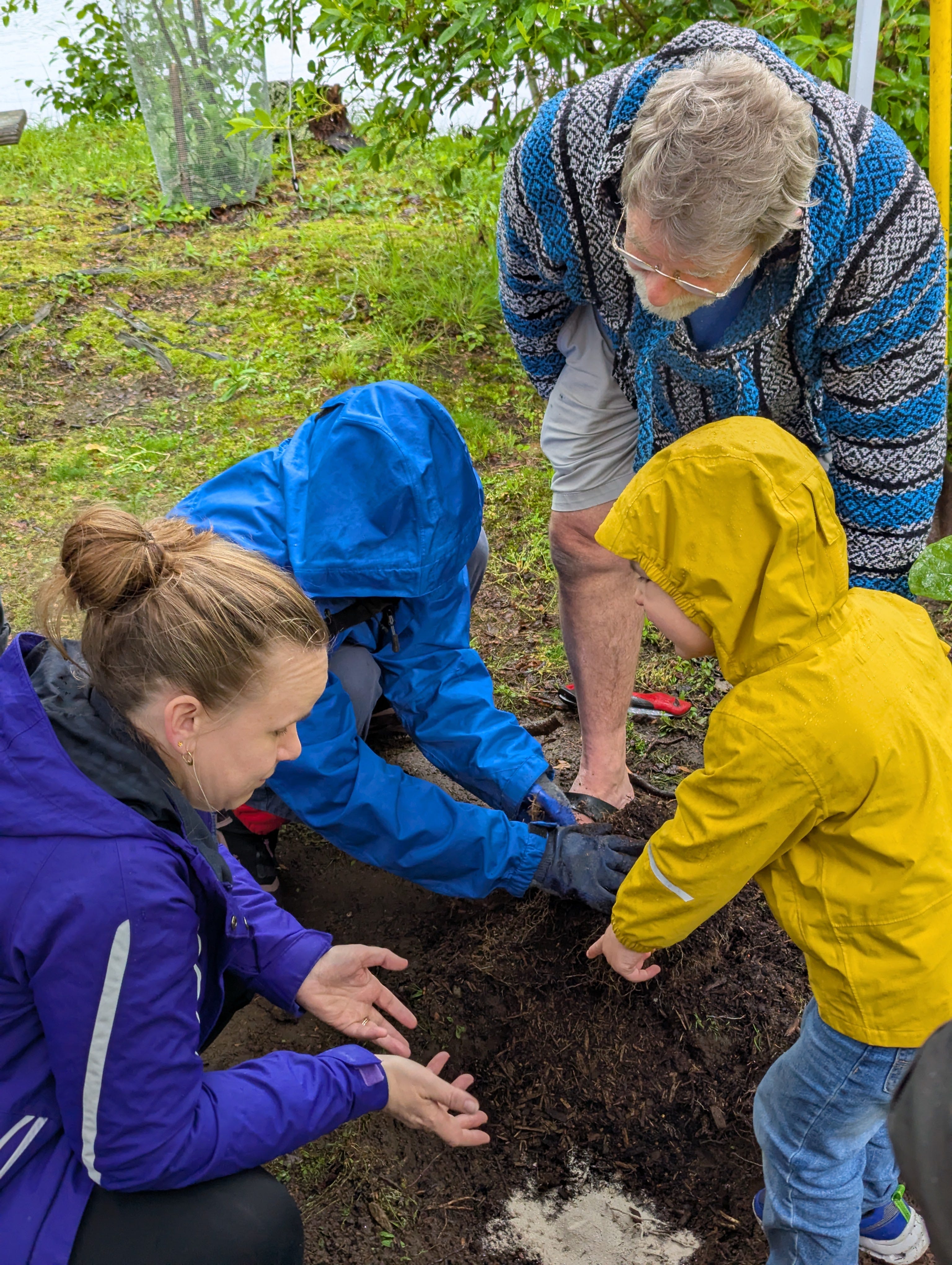

There are several memorial trees around the house, for various members of the family who have died and, on the Sunday afternoon, we planted a catalpa tree in memory of Nancy. The rain was still unrelenting, although much of the time it was light.

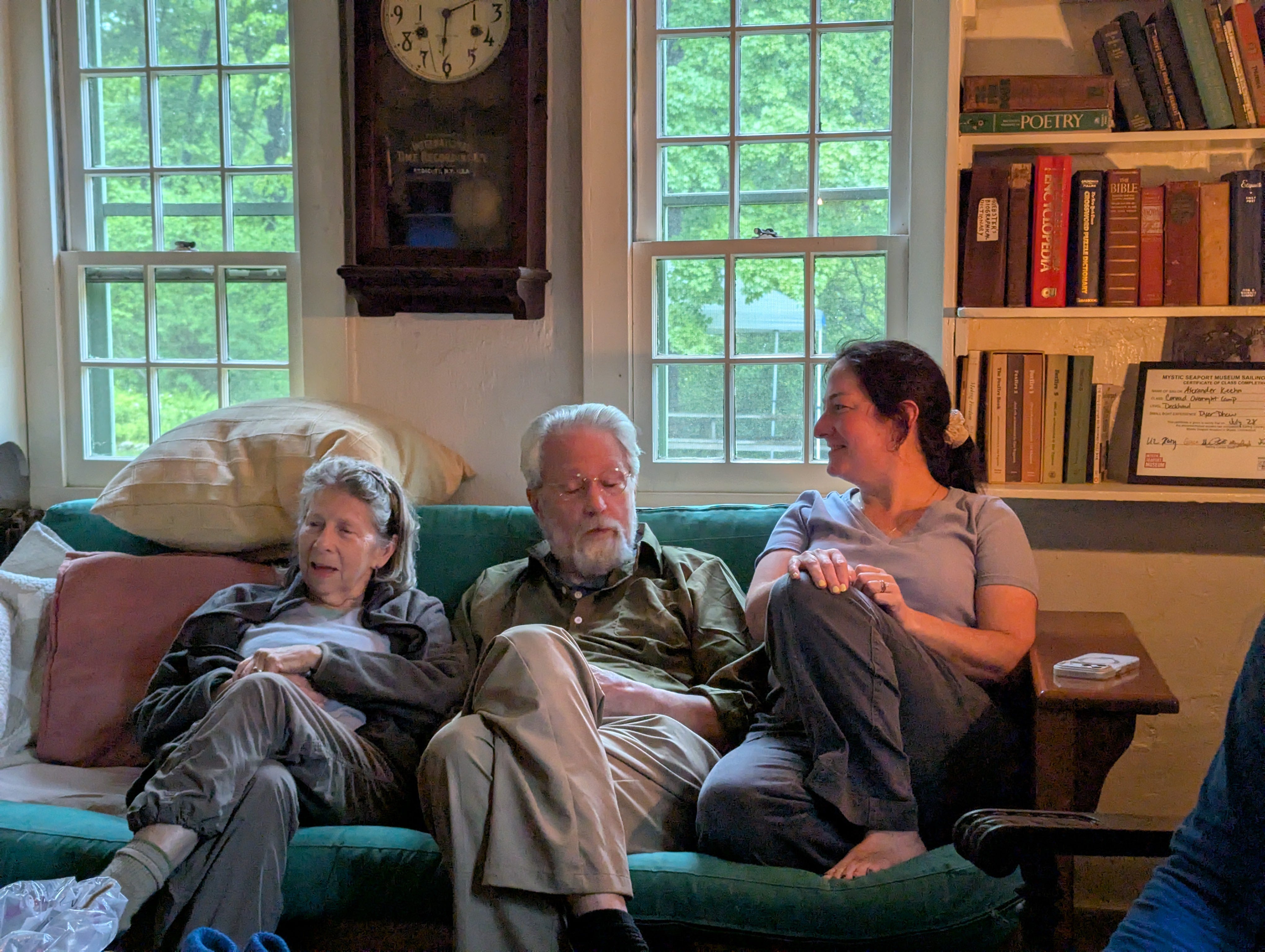
During our time in Mystic, Susannah’s fascination with her family’s genealogy went up a few gears. She spent much of the late afternoon researching it in her mum’s house, occasionally pausing to inform us of her latest surprising discovery. Ever family has some aunt or uncle who has studied the family history. Susannah is swiftly becoming that person for the McKees.
Genealogy Excursus
Susannah: I’ll get into this more later. Honestly it’s so embarrassing. I feel as though it is purely predictable that I would become one of those Genealogy People.
/genealogy excursus ended


Alastair: The next morning the weather was still wet, so we decided to go back home in the later morning, rather than waiting around. Most of the family were leaving around the same time. We shared a breakfast of bacon and pancakes around the fire; the combination of the dampness and drizzle outside and the warmth of the fire within increased the sense of cosiness.


Before we left, the drizzle was a little lighter, so we went outside, standing on the end of the dock and looking out. A light mist lay over the lake, giving it a moody appearance. We found a Baltimore oriole nest in one of the trees.
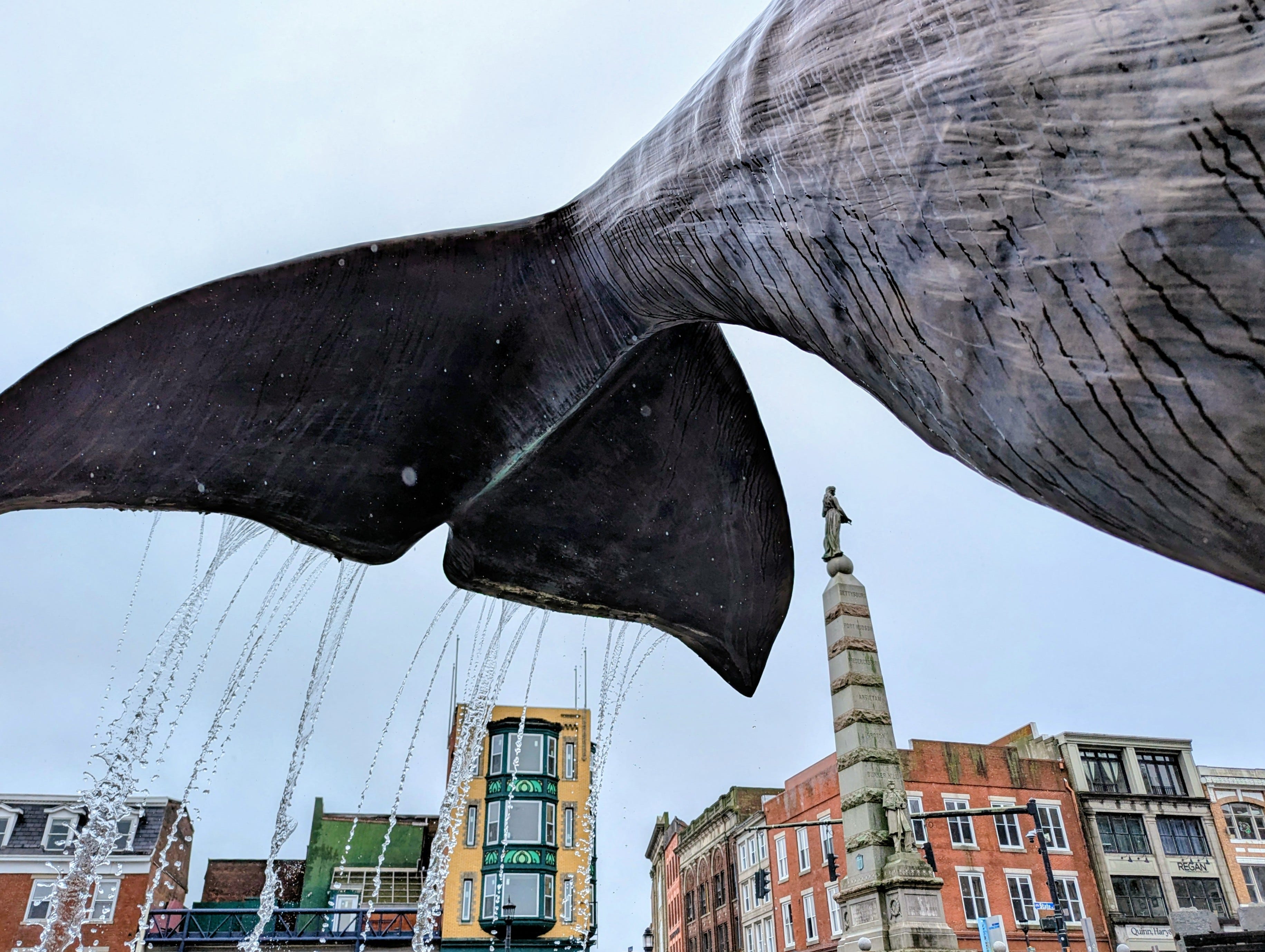
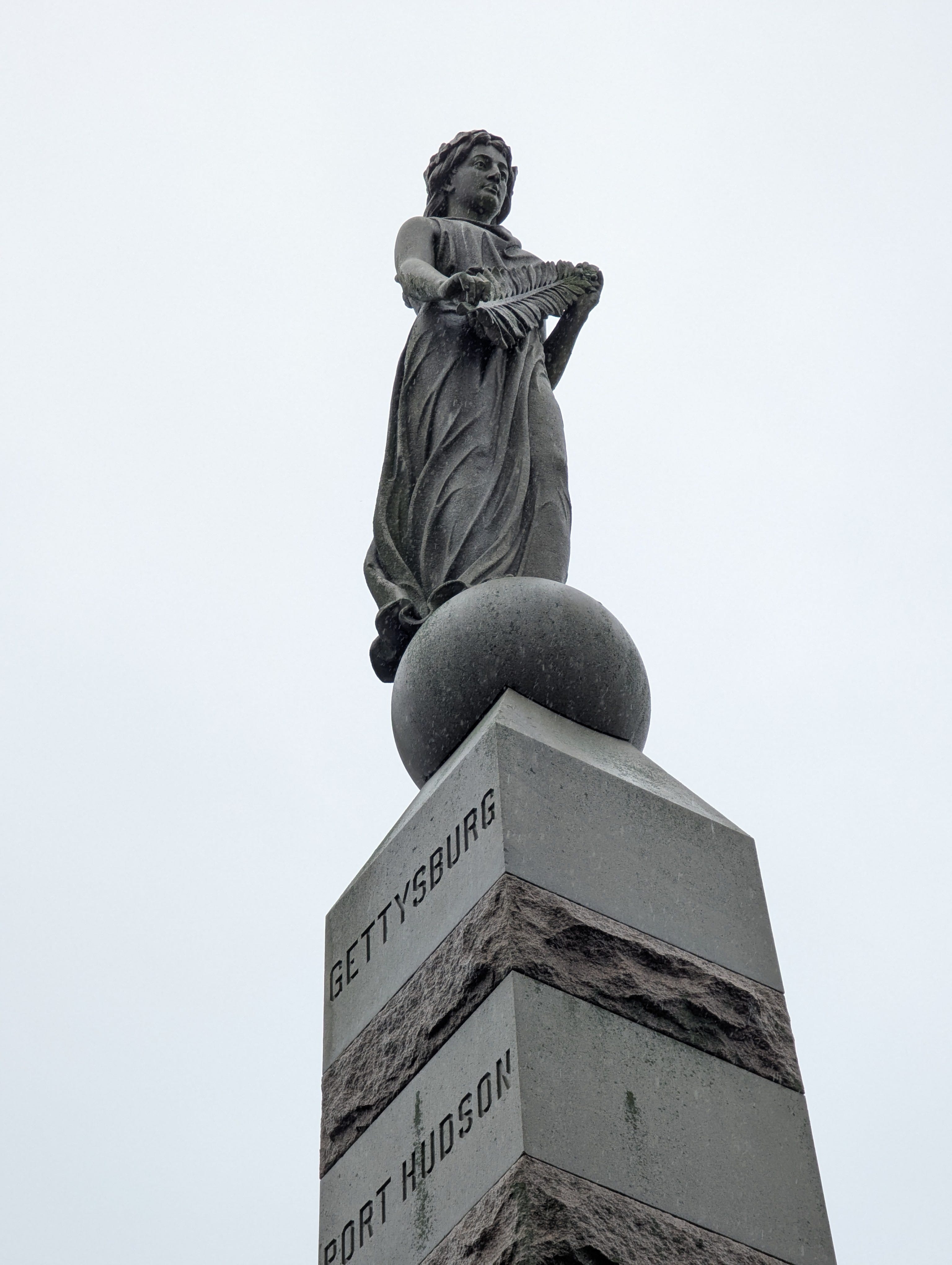
Susannah’s mum drove us to New London, where we caught the train.
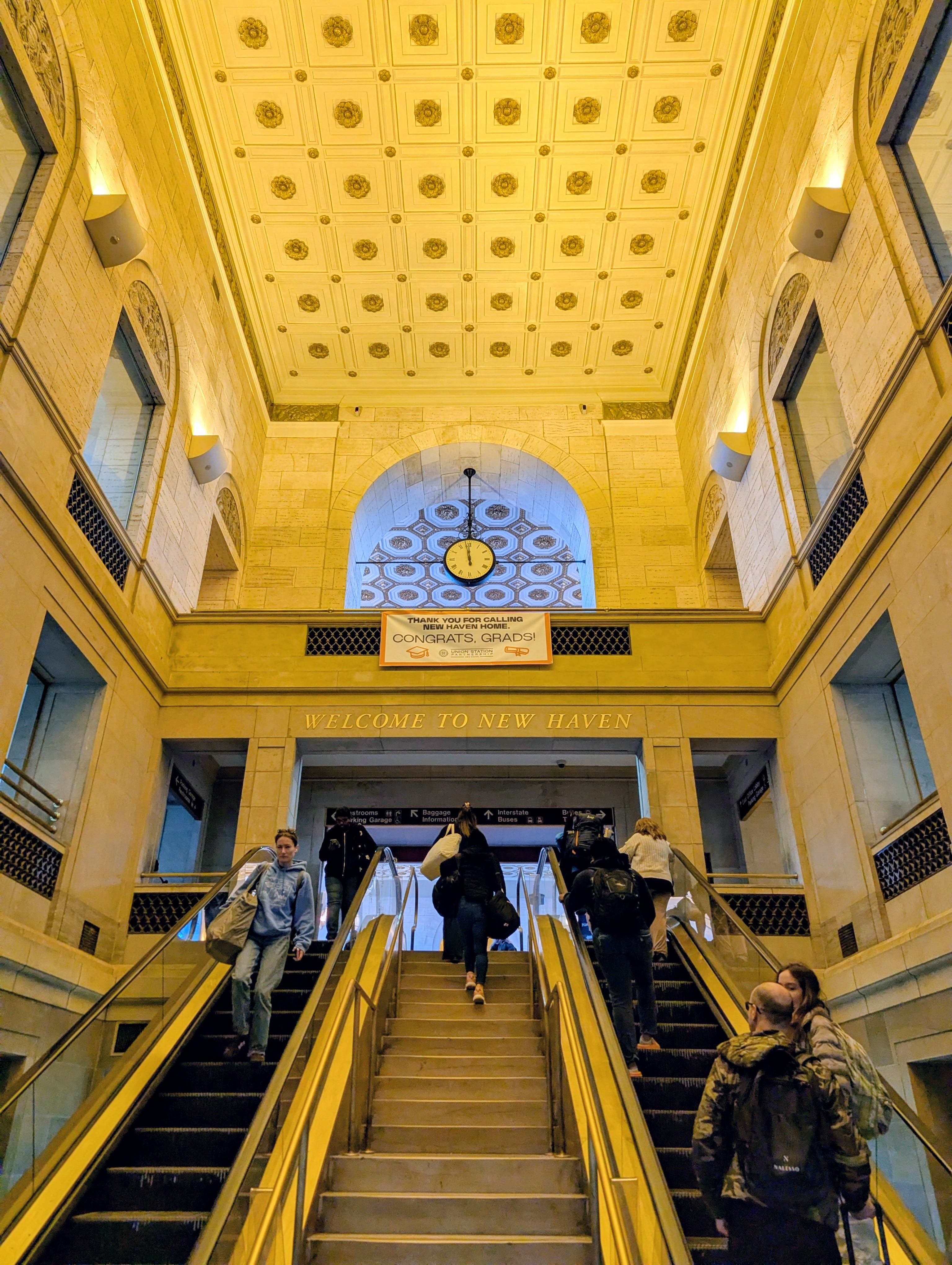

We changed trains at New Haven, where we bumped into one of Susannah’s godsons.


Our train arrived into Grand Central Station shortly after 2pm. Grand Central is one of the most imposing buildings in the city and I can never resist pausing to take in its architectural splendour when we pass through it.


The rest of the week was another routine one. Among other things, I have been preparing for my forthcoming travels. I will be preaching on Sunday, followed by a week teaching at a church family camp. I will then spend a couple of days in Los Angeles, from where I will fly to Sydney, Australia, where I will be for another two days, with a few speaking engagements. Then I have another week of teaching and speaking in Perth, on the west coast of the country. From there, I fly back to New York, by way of Hong Kong.


On Friday afternoon, after teaching my Davenant class on the gospel of Luke, I decided to go for a walk to clear my head. Susannah was down in D.C. for her conference, so I was by myself. I walked north through Central Park and then over to Morningside Park, which I had never previously visited.
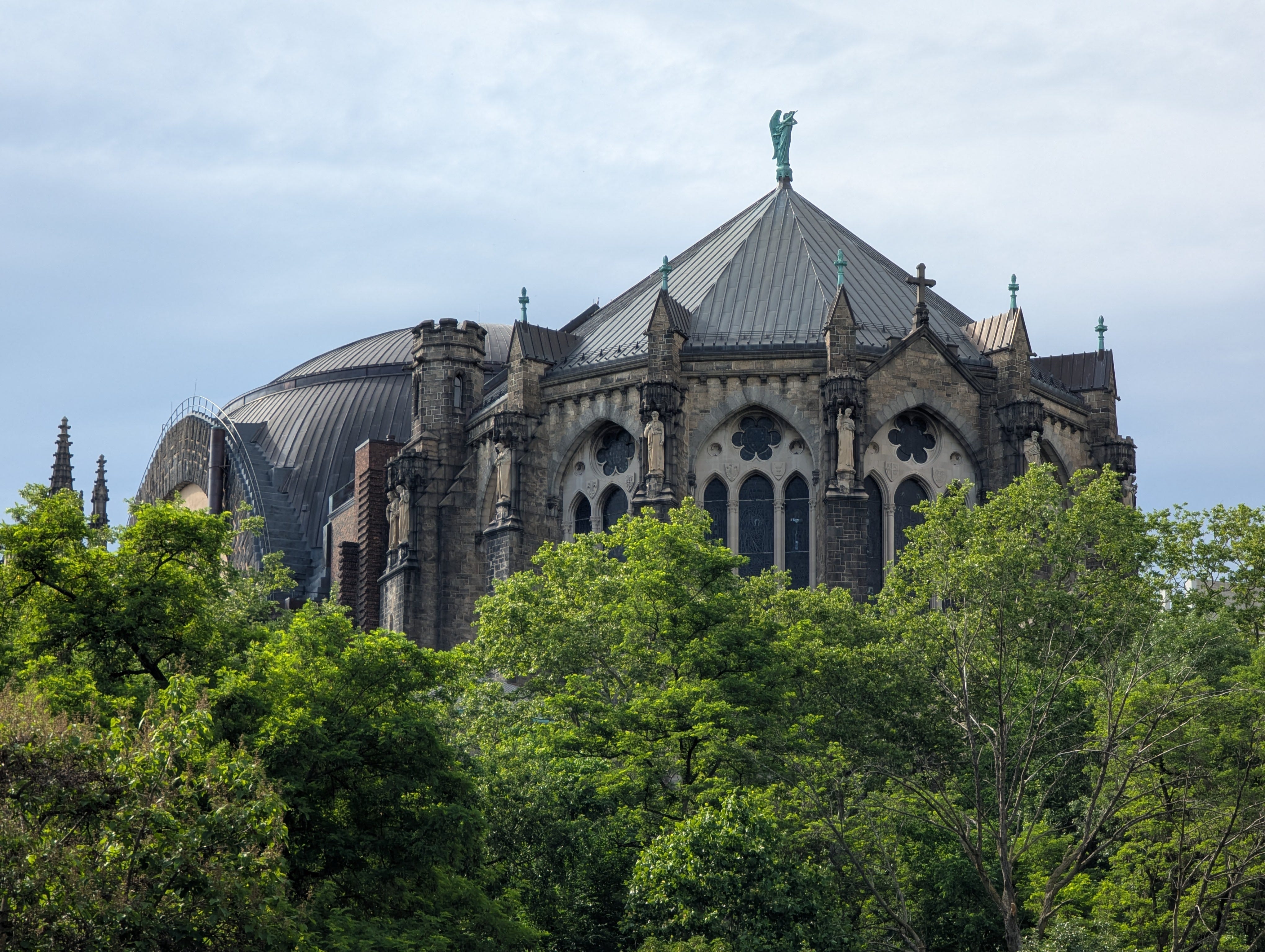

The roof of Cathedral of St John the Divine was visible over the softball fields. I followed the path around to the Morningside Pond, scenically situated with a rocky outcrop behind it and with bright flowers on some of its banks.


While looking at the pond, two men walked up to me and asked me whether I was photographing the goose. I had been, but it turned out that they were referring to a different goose from the one that I had been photographing. They pointed out a female Canada goose beyond the patrolling male; she had been sitting on her eggs for nearly thirty days and they were expected to hatch soon.

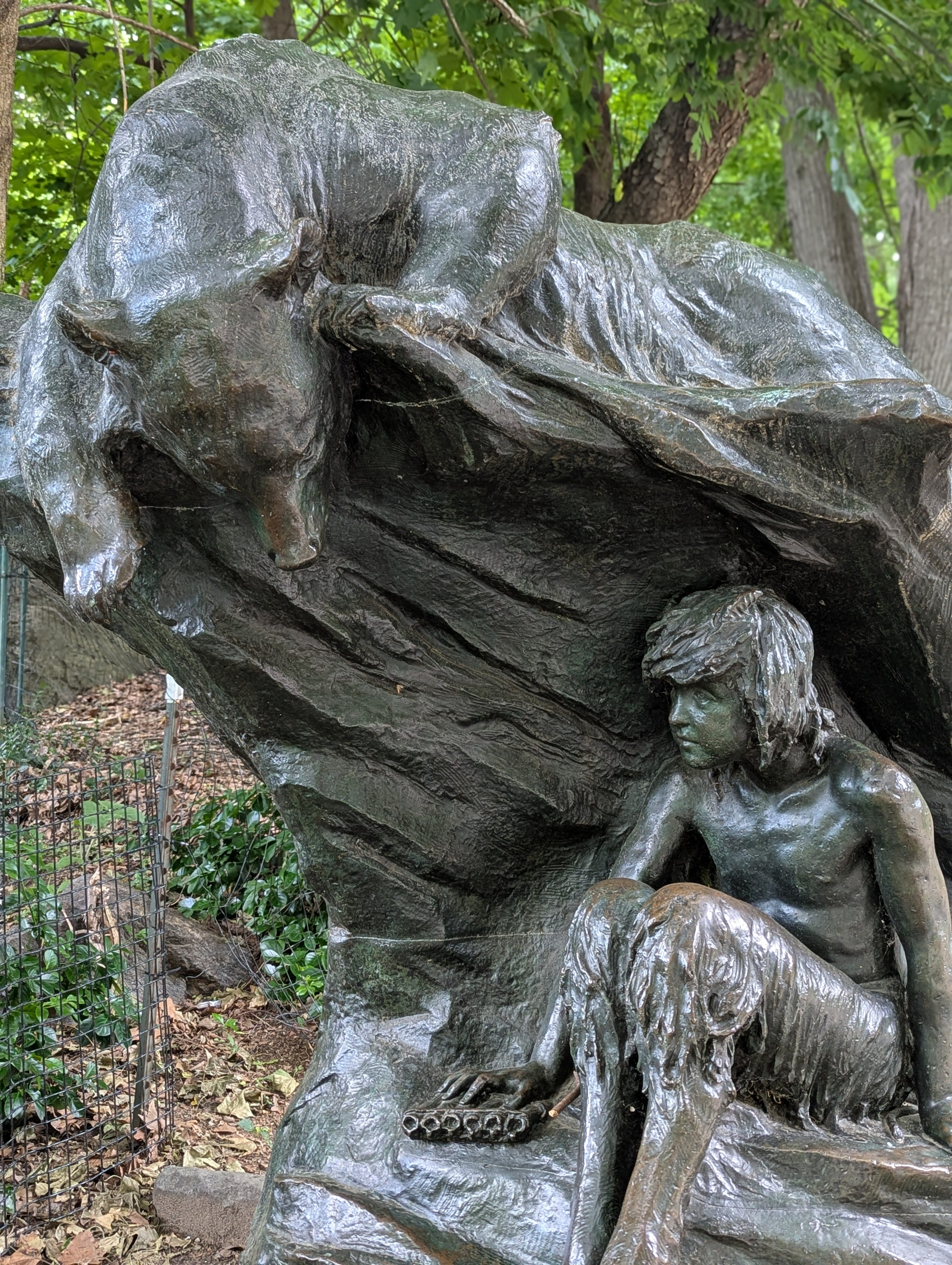
They went on to tell me more about the park, about its various levels, about some of the volunteers that work there, about some of the public art there, and how much they appreciate it. It gave me a splendid first impression of the place.
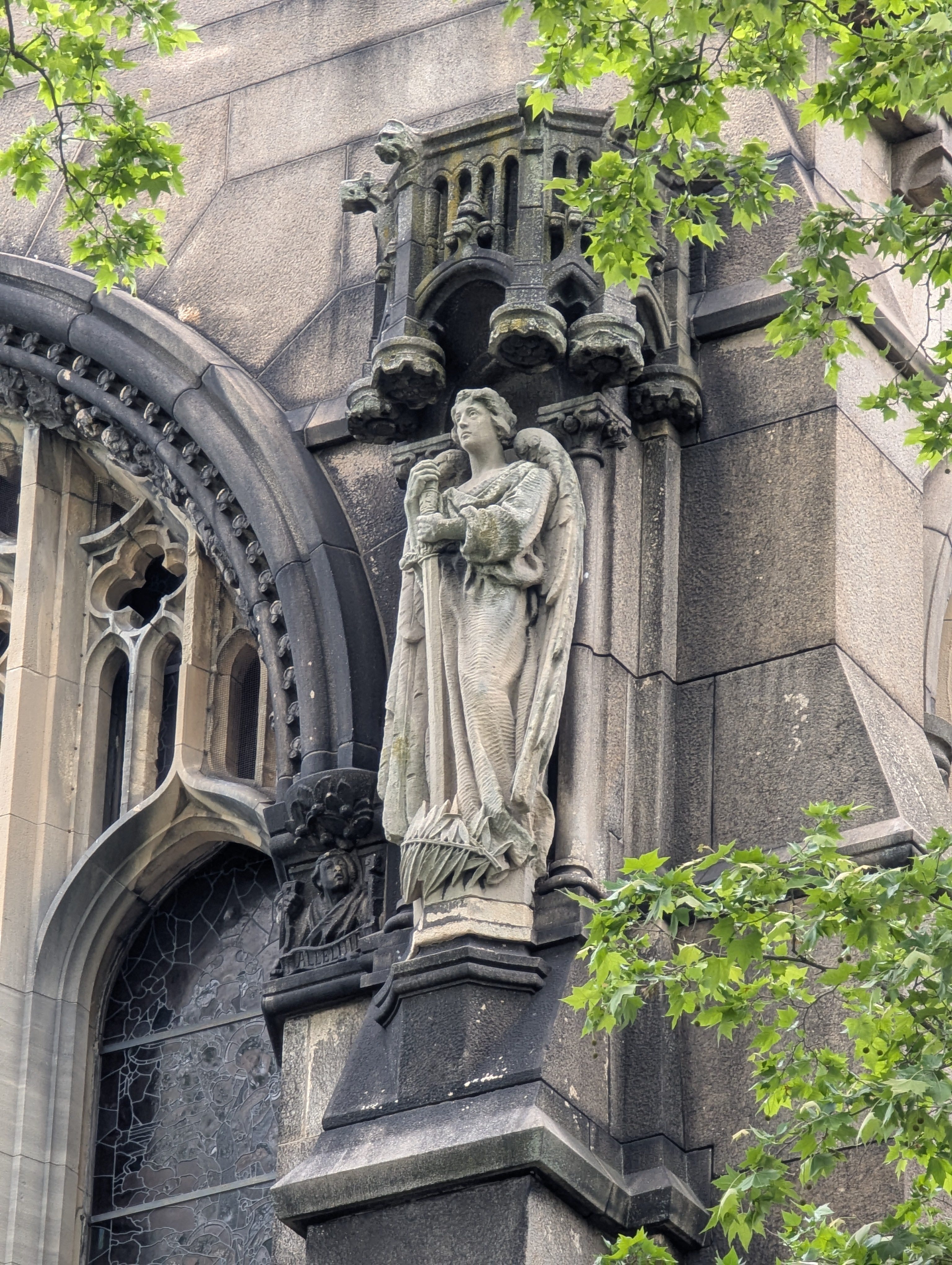

Susannah arrived back early on Saturday evening, with a very positive report of her conference.
Understory Excursus:
Way back in Covid-times, Anne Snyder and I started a sort of emergency magazine called Breaking Ground. It was a wonderful project and she’s a dear friend, so when she let me know about her Understory project, I was entirely up for it.
It’s hard to describe. A Catholic friend called it Protestant Comicon. Not wrong. But like, Protestant AntiTrump But Not Very Political Nerd Comicon. It was in and around the National Cathedral in DC; there were around a thousand attendees and maybe 200 participants, with a keynote by David Brooks (who’s married to Anne) and Ross Douthat, which I didn’t make, plus probably a dozen or two breakout sessions, which I participated in one of. I went to one other talk — Michael Sacasas plus two others on AI; he was great and I thought that he and the other two were kind of talking past each other — and then my talk was downstream of a series of zoom calls I’ve had over the past couple of months with various other Christian humanist/Christian-adjacent humanist/just humanist magazine editors. You will be hearing more from me about this but it was sort of a soft launch of a Thing. A consortium, of Christian/humanist magazines as cultural and intellectual hubs in An Age Of AI (blech.)
It was great, though. David Brooks chaired it, and I think we mostly made sense. Then my friend Tara and I (she had a breakout session the next day) retreated to the art deco lobby of the Omni hotel nearby and held court, and went over my lines for my Dorothy Sayers play.
I was staying with my Godmother and her husband, both of whom I love very much (she is my mother’s best friend from the time they were like 8, and I grew up with her as a sort of extra family member; he I spent a formative sailing voyage with on his sloop more than a decade ago) but for various reasons didn’t get to see either of them, so I spent time going over my lines for my play and then in the morning had a lovely breakfast with a very dear friend and got back on the train.
/end Understory Excursus


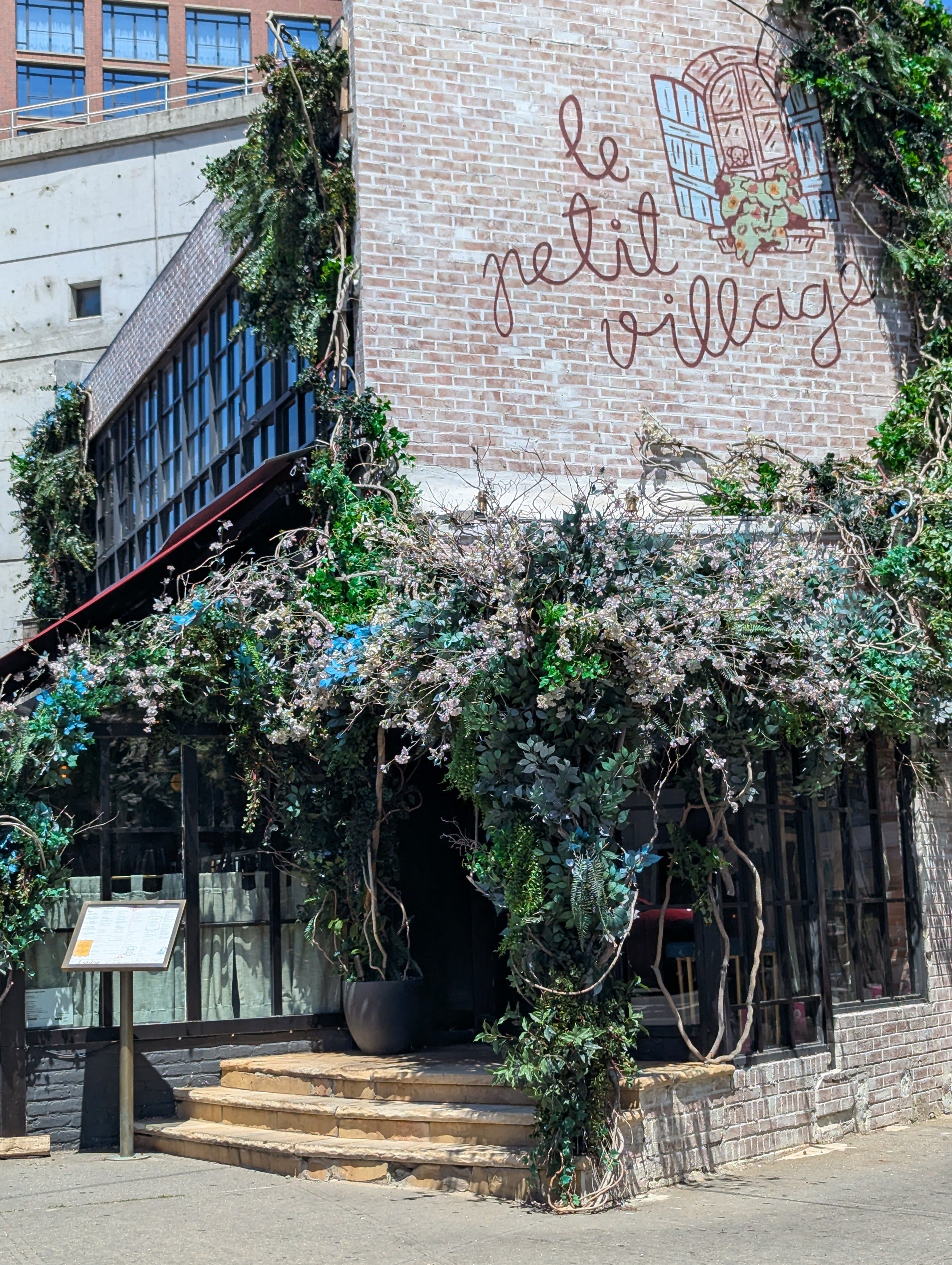
On Sunday afternoon, Susannah was doing a reading of a play at the Lamb’s Club, of which she is a member. She had to go there early for rehearsals, so after church I made my way there in a more leisurely fashion, wandering through Times Square, which is an overwhelming place, somewhere I usually make a point of avoiding.


The play was a dramatization of Busman’s Honeymoon, a 1937 Dorothy Sayers detective novel. Susannah was playing the part of Harriet Vane, Lord Peter Wimsey’s newlywed. It was also the public debut of the Club’s new black box rehearsal room, an intimate performance space, with room for an audience of around forty. Susannah’s father and stepmother were down in the city, so were able to attend the event.


Not many people can boast of giving their first stage performance since school on Broadway, but Susannah now (technically) can! The production was a simple play reading, but was very enjoyable and greatly appreciated by the audience. Susannah did a marvelous job; she was clearly exhilarated by the experience and will doubtless do something like it again. After the performance, we stayed for some drinks and conversation before heading back to the apartment.
THEATER EXCURSUS
Honestly it’s too much. It was too good. It was too important. I can’t. Now, I am in the Theatre.
/end Theater Excursus

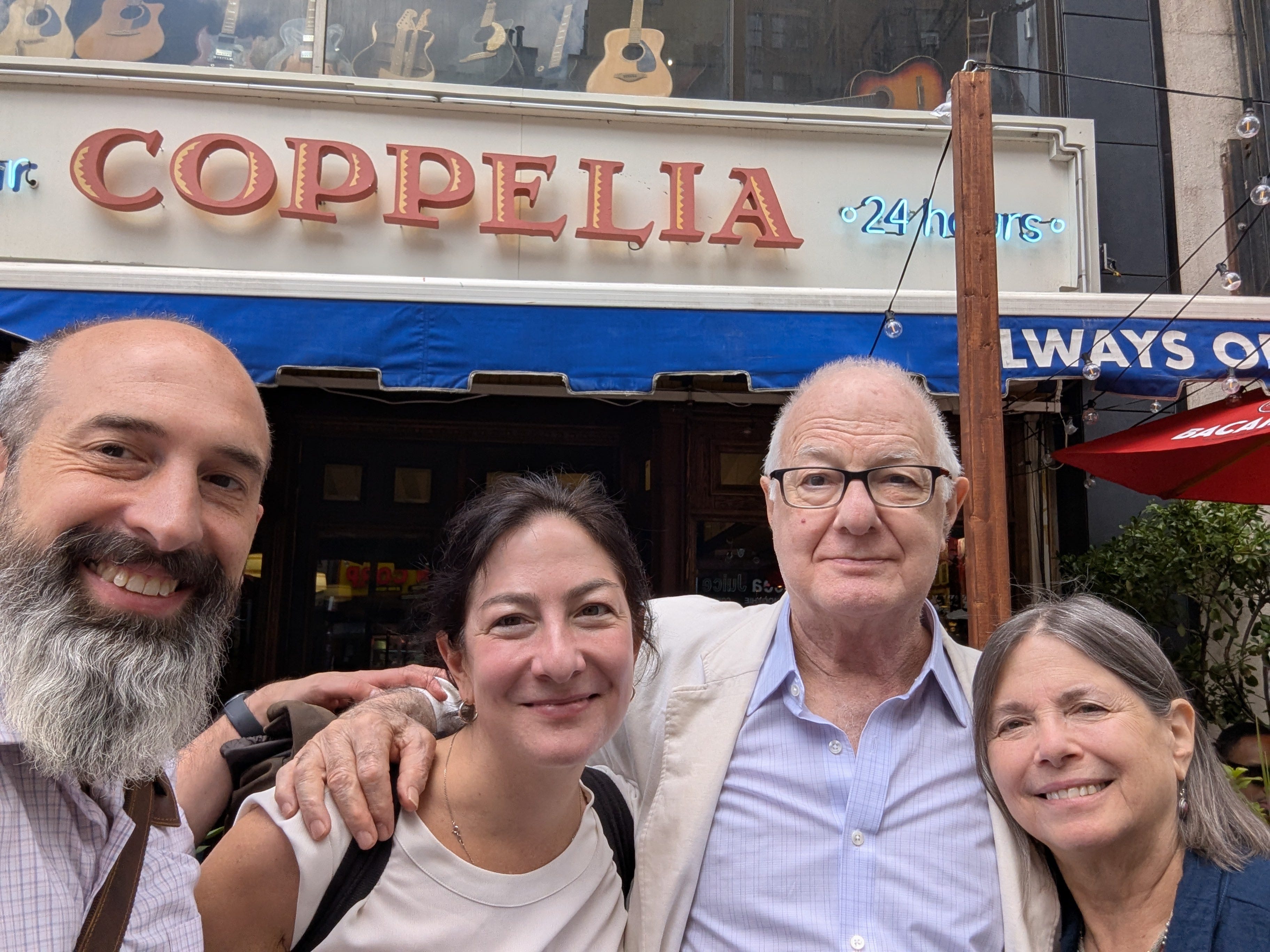
We met up with Susannah’s father and stepmother the next day for a late brunch. Susannah stayed downtown to work, while I went back for a podcast recording. I later rejoined her, hanging out and talking theology with some friends.
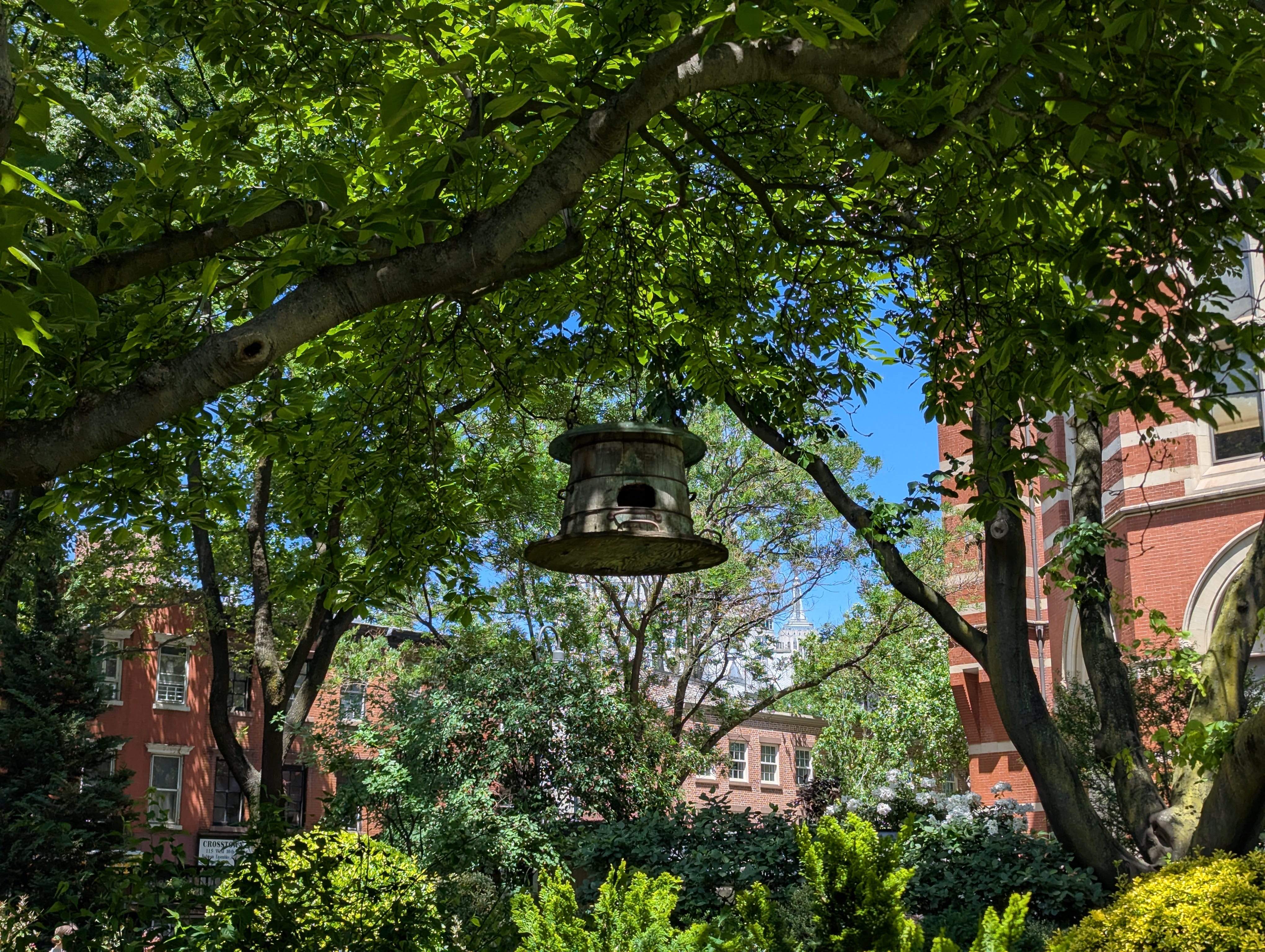

The next day, we did more work downtown. I finally got around to finishing reading Magnifica Humanitas, the papal encyclical, which had some good passages, but was largely underwhelming. I then returned to the apartment for a series of meetings in the later afternoon.

Slop

The term ‘slop’, which many use to characterize AI, is worth considering. ‘Slop’ is uniform, formless, tasteless food, produced in great quantity, with low nutritional value, designed for swift mass delivery to and consumption by large groups for whose specific members one holds no meaningful regard and with whom one desires no sustained interactions. ‘Slop’ is typically served to animals, to prisoners, and to other institutionalized persons, to groups that are entirely dependent, to those who have no other choice or alternative, and to those who have appetite but no taste. ‘Slop’ has much less value when there are realistic alternatives on the menu, or a menu in the first place.
‘Slop’ has caught on as a term to describe much of the AI-generated content that we encounter online, and increasingly also off. The term feels like an apt one to describe the deluge of bland, generic, uncanny, mindless, impersonal, and insubstantial content that is filling our feeds. The ease of production with AI has made it possible for lazy, untalented, thoughtless, uncaring, and dishonest people to produce innumerable shallow semblances of things that might once have reliably indicated skill, thought, and care. As our social and communicative spaces are flooded with such AI-generations, the humanity that we value in art and writing will steadily get substituted for by hollow simulations of it. Calling such AI generations ‘slop’ is a way of naming the adulteration that they involve, like a stealthy replacement of good food with a cheap substitute that does not taste entirely dissimilar, yet which lacks all the nutrients.
Such content can sometimes appear indistinguishable from material thoughtfully and lovingly created by human beings, and those who produce it will often try to pass it off as such. The recognition that it is in fact slop often feels like an insult, like knowing that the friend that has invited you to a meal is trying to pass off a cheap microwave dish as something they laboured over themselves. While the quality of the food may be inferior, the real issue is the lazy avoidance, coupled with the deceptive pretense, of the generous work of preparing a meal for you. Had they been forthright that they were serving microwaved food, you might have been a bit disappointed that they did not go to more effort, but through the deception they desire the appreciation you would have given for a home-cooked dish. ‘Yet it might all taste the same!’ This is badly to miss the point.
When people receive a personal message, enjoy a creation, or have a conversation, they feel some sense of being valued. Flooding our social communications and our realms of creation with empty semblances of these acts will have a Gresham’s Law-like effect: debased communications will drive out good. A sense of mutually-accorded dignity and trust is replaced with a sense of being used and growing cynicism and suspicion. Had we no expectation of truly human communication to be betrayed, so much AI use would be of little value to us. It is only in the deceitful ‘value’ it enjoys as it masquerades as human that it will be appreciated. Yet, as it becomes pervasive, all communication will be diminished in value and distrusted. To use a food metaphor not unrelated to ‘slop’, it is akin to ultra-processed foods, which may be engineered to be hyperpalatable, to fool us that we are eating something different, and/or to replace healthy and nutritious ingredients with cheaper substitutes. Such a product may successfully deceive many consumers that they are eating some quality and unprocessed food; yet this does not make it interchangeable with or substitutable for that food! Ingredients and the healthiness of processes of preparation matter immensely, which is why there are regulatory bodies to protect the public from the adulteration of their food.
There are innumerable applications of AI, many of them worthwhile (chiefly in those areas where they are most clearly distinguished from human beings, such as in predicting the structures of proteins or registering significant patterns in vast quantities of astronomical data). However, so many of its most prominent and popular uses, as they concern activities and creations that are more properly human, systemically encourage deception (of others and of the user themselves), corner-cutting, laziness, and disregard for others. When uses of AI substitute for or simulate communication with others, they encourage both neglect and pollution of our social commons, allowing the non-human to become ubiquitous in those areas where we most need to practice our shared humanity. As Proverbs 18:21 teaches, ‘Death and life are in the power of the tongue, and those who love it will eat its fruits.’ Protecting the relationship between our words and human interiority from being simulated or adulterated should be a matter of grave social concern.
This is a systemic problem, which cannot merely be dealt with by virtuous personal use: like the use of performance-enhancing drugs in sports, it requires strict regulation, along with, in certain contexts, stigma and punishment. As in a sport afflicted by drug cheats, the integrity of entire realms of communication and social practice—the university being a good example—depend upon ensuring that what we are engaged in is authentically and unadulteratedly human.
When establishing and applying drug guidelines in sports, there will be complicated cases, substances, and practices, which will require prudence and considered yet contestable judgment calls. Some practices may not technically cross the line of illegality, yet should be discouraged as contrary to the spirit of the activity. Different organizations will likely have slightly different rules.

However, many of the issues are society-wide, and the task of managing them cannot merely be given to private and voluntary organizations. People can often focus on edge cases and not consider the broader effects of weak standards: lowering the bar for some supposedly worthy instance also admits a great many unworthy ones. They consider how they might function virtuously as individuals, but give little thought to population-wide tendencies within radically transformed incentive structures and environments. Or they regard new technologies as things that users can straightforwardly stand over against, without considering what facilities might be lost in persons formed by them. As Antón Barba-Kay recently observed, commenting upon the papal encyclical, Magnifica Humanitas:
The encyclical does draw a categorical distinction between AI and human intelligence. It assumes and defends our capacities for “inner freedom,” responsibility, and critical thought. Yet these capacities, like our capacity for reason itself, are not fully given in advance. They are developed through specific media and ordinary practices, some of which tend to establish attitudes of attention, reverence, care, and insight. And if it would be wrong to think that a human soul could be completely frittered away by distraction, we have also seen enough to realize that it can be deformed by practices that abridge or automate thought.
Many think of the technology as if merely additive, without considering its long-term ecological effects. For instance, few consider the way that the growing shadow of government upon our daily lives—I here recall A.J.P. Taylor’s famous description of pre-1914 England—is in large measure a result of modern technologies (often of war), techniques, and systems that have subjected formerly largely self-regulating societies to disruptive forces beyond their effective control. Modern policing is down the road from the automobile. Immigration regimes need to develop to deal with the large-scale movements and dislocations of people in a hyper-connected world, wrestling with the ways that mass movements of people can overwhelm localities and their capacities of self-regulation, many of which have operated by strong cultural norms and shared values, the strong customs, high trust, and reputational controls of stable intergenerational communities, reputational forces, and other such things.

Governments have long had to expand their scope to manage the transnational and international forces of a globalized economy and to enforce, police, and constrain interests of capital and aggregative systems of human action and communication that operate in vast networks that extend across the world and bring people under their sway. For instance, when AI companies can wield power far exceeding most states, something needs to be done to protect the common good from being destroyed by their private interests. This, again, is not an entirely new phenomenon. At its height, the East India Company’s private military was twice the size of the standing British Army. Unaccountable mercantile, industrial, technological, and digital forces are not unprecedented. The idea that the greatest threat is government can be very naïve to such realities.
If no action is taken, my suspicion is that AI and AI-like content will become pervasive in popular culture, with little to stop it, and that it will drive out most quality human content. Increasingly, entertainment produced for (and by) the general public will be largely AI-produced. Video and TV will be largely AI-produced. Music will be largely AI-produced. Advertisements will be largely AI-produced. Art will be largely AI-produced. Most of the text people encounter and produce will be AI-produced. Because of its derivative character, even the human creations upstream of AI will feel debased by AI’s constant semi-digested regurgitations of them. Because of the imitative character of creation, even the human creations of people surrounded by AI will themselves start to share its features.
Increasingly, services delivered to the public will be AI, with AI taking the place of and simulating what were once human interactions. Value and humanity will be drained out at every step. The ‘taste’ of many things may be the same, but the ingredients will have been completely altered. We will find ourselves living in the uncanny valley and most people will not register the significance of the disaster that has befallen us. It is already well underway, of course, and most do not care. AI could easily overwhelm the public education system, infecting every aspect of the learning process, demoralizing students and teachers. It will break talent pipelines. It will hasten a general move to a post-literate culture as people are denied the opportunity to gain a taste for something more substantial.
The quiddity of the world can never be destroyed. But as presented to us, it will be sapped as the artifice, the replication, the disembodied, the virtual, the spectacle, and the simulation take the place of the real and then remake it in their image. Most people, having been raised on spectacle and slop, will have little sense of its unhealthiness. An example of this is the way that real historic places can be reformed to look more like the hyperpalatable images that may once have been inspired by them. Medieval towns are refashioned to attract Instagram tourists raised on the artificial spectacles of Disney and Harry Potter, the confected image steadily consuming and effacing the original. [Susannah: The Shambles in York hardest hit.]

Now, again, as I have argued elsewhere, forms of ‘slop’ and other AI-like creations have long been with us, nor was this phenomenon restricted to low culture. We have lots of impersonal and engineered boilerplate language in terms and conditions and advertising emails, and other such documents, which, for their purpose, is often not inappropriate. However, we also have academic texts filled with undigested ideological jargon. We have work that is mindlessly derivative, bland, or sentimentalist, often cynically designed to spam or mash people’s emotional and aesthetic receptors. Much of the work of someone like Thomas Kinkade, for instance, feels like a sort of AI slop avant la lettre, which, while quite technically competent, is hyperpalatable, generic, uncanny, and insubstantial. We have websites filled with utterly formulaic articles, optimized to attract eyes—often through non-human algorithms—to generate ad revenue.
People producing such material have often complained about the constricting effect that such production has had upon them, stifling their humanity in service of the imperatives of efficiency, rationalization, monetization, and production. All these things have merely been waiting to be automated. The values were already in place; we were merely awaiting technologies to implement them at scale. So much of the perceived gains of the past couple of centuries have been a result of conforming ourselves to, rendering ourselves scrutable by, modeling ourselves with, identifying ourselves with the representations of, quantifying ourselves by, outsourcing our deliberation and agency onto, and submitting ourselves to manipulation by the Machine and its logics. Our inability to consider and weigh the costs that accompanied these ‘gains’ has much to do with the fact that they do not register within the Machine’s frames of value.
When people have long been writing for the Machine, it makes sense that they would want to offload that dehumanizing work onto AI, getting the Machine to write for them. So many of these activities are themselves results of a society that has already wholly submitted itself to a series of depersonalized, automated, standardized, and engineered imperatives and logics for the sake of maximization of productivity and exchange value. AI merely permits these imperatives and logics to be thoroughgoing, spreading their control to realms that once felt their dominion much less keenly.
For instance, universities have increasingly been perverted by the imperatives of the market, their internal formative ends being subordinated to external ends of revenue maximization, credentialism, careerism, and the like. [Susannah: I also think the main problem here is the application of the German research university with its focus on “knowledge production” to the humanities.] The crisis of AI in the university is an amplification of the existing tensions that threaten the soul of the institution: if university is really about credentialism, careerism, and networking, why not cheat on your academic work? If university is merely about research generation, why not outsource this? If this can be undertaken more effectively with much diminished human involvement, why not adopt AI wherever we can?

Much of what we are concerned about relative to AI is the escalation of long-existing logics and trends and the trophic cascades that these can cause in society and its institutions. Society and its institutions require some degree of ecological balance and the uncontrolled implementation of a new set of technologies such as those named by AI can be catastrophic, collapsing whole ecosystems. Now that the generation of slop, mindless, and/or generic words can be automated on a mind-bogglingly immense scale, and with so much more ease than authentic words and creations, what was formerly an unpleasant yet more limited phenomenon threatens society in general with a Great Uncannying. Our spam filters fail and our societal inbox is filled with unwanted garbage. Rather than manifestations of human beings falling short of the vocations of speech and creation, we will be exposed to a myriad expressions of the non-human feigning humanity and of human beings outsourcing their human expression to the non-human.
When I shared some of the above thoughts a few days ago, someone responded by suggesting that we replace the term ‘TV’ for ‘AI’ and imagine ourselves back in 1955. What might we notice?
This, it seems to me, is a very worthwhile experiment.
Some people have a notion that those resisting the encroachments of AI are merely instinctively reacting against its novelty, perhaps animated by a constitutional dislike of change and undifferentiating prejudice against the new, or nostalgia for some fancied pre-technological idyll from which we have fallen.
It is helpful to recognize the strong continuities in technological criticism and how many of the strands of argument and consideration raised in response to AI are applicable to and have been developed in relation to precursor technologies, such as television. It is also important to appreciate that many of the people challenging many forms of AI adoption are wary of many very familiar technologies (such as television) and may even encourage more reflection upon and circumspection about our use of technologies that seem almost natural (such as the printed book). What many of us are concerned about in AI is not merely a saltational leap of evolution beyond our existing form of technocultural society, but an accelerated though incremental development of logics that are already endemic.
Such technological criticism is not the same as an aversion to any novel technology, nor does it treat a technology’s novelty as the primary criterion for our assessment of it. Some of our most formative technologies in the present are among the oldest technologies of all, things such as writing, the mirror, or money.

Likewise, technological criticism need not entail a resistance to using new technologies (AI among them). The accusation of being a ‘Luddite’, besides generally being wielded by people with limited sense of the Luddite movement, is inaccurate in the sense that it is usually intended. Our concern is that we use—or determine not to use—both new and familiar technologies in ways that are considered and discriminating, ordered by an understanding of such technologies, what they entail, and how they frame and form our reality. Such an understanding is not merely an understanding of a technology on its own terms—the sort of understanding typically pursued by early adopters—but an understanding of, among other things, the ecological societal effects it has.
It is interesting to revisit the criticism that responded to the screen age and to see how prescient much of it feels in relation to the Internet, social media, mobile devices, and AI. From Walter Benjamin’s ‘The Work of Art in the Age of Mechanical Reproduction’ and its recognition of the way that logics of creation and production transform our experience of things, to Guy DeBord’s The Society of the Spectacle and its exploration of how representation and the image consume and efface a reality that once stood over against them, drawing all into a sort of show-business, to Marshall McLuhan’s The Medium is the Massage, to Neil Postman’s Amusing Ourselves to Death with its discussion, among many other things, of the trivializing effect of television, to writings by Martin Heidegger, Jacques Ellul, Ivan Illich, Jean Baudrillard, and many others, it should be evident that AI is a further development and radicalization of technocultural logics that have been advancing dramatically over the past hundred years. The deeper logic and tendencies of these developments have long been recognized and presented as objects of concern and criticism. Critiques of AI are standing on the shoulders of several giants of twentieth century thought.
In our current contexts—with their growing tendency to fuse in a single common context of technologically-mediated and specious hyperreality—Susannah and I have spoken a lot about the need for something akin to the Arts and Crafts Movement, a movement that maintains and pursues excellence in the face of the plummeting of standards for the sake of mass output, while seeking to make beautiful, good, human, and humanizing creations available to everyone. We are also calling for a Christian humanism. As Tyler Austin Harper argued in a recent article in The Atlantic, Christians have conceptual resources with which to speak to realities such as AI that non-Christians, even when they have a growing unease with AI, typically lack. Those who largely resist the move towards AI, yet do not merely retreat into elite enclaves, seeking rather to spread human creations to all, forming, defending, and extending communities of virtue, can really make a difference. And the Church is, as Christians have long recognized, an Ark amidst the Deluge. This is where our work must focus.

The Eighth Commandment Versus Private Property

Alastair: The association of the Christian faith with the political right in America can often result in a perspective upon the Christian tradition and Holy Scripture that obscures many of the ways in which the Christian faith resists simplistic alignment, potentially unsettling people on both sides of our political aisles. One of the areas where this is evident is on the subject of private property.
The eighth commandment declares ‘you shall not steal’. For many, this assertion clinches the matter: the principle of private property is sacrosanct for the right, which asserts it against the depredations of overweening government, the envy that fuels much class grievance, the entitlement and dependency of the wilfully improvident, and the petty theft and vandalism of the lawless. And they are not without any justification in hearing the commandment as opposing much that they are also rejecting here. Yet there remains much more to be said.
Initially, we might note the many ways in which Scripture seems to relativize private property, treating it as legitimately conditioned by and subject to, not only divine law, but also human custom and convention and government restrictions and claims.
For instance, the Torah required that landowners permit gleaning on their property. There are matters relating to building safety codes in the Law, presumably permitting judges to assess and enforce private property (Deuteronomy 22:8). Governments have the right to tax (and there is no straightforward limit placed upon legitimate levels of taxation scripturally, the justice of taxation needing to be discerned more contextually and prudentially). There are zoning laws related to Levitical cities. There are limits placed upon voluntary contracts and the alienation of land from families by things such as the year of Jubilee. There are laws concerning externalities and risks. There are laws concerning the dissolution of debt in the seventh year, while requiring people to lend money to the needy regardless.
There are prohibitions upon interest, prohibitions that apply differently in relation to foreigners. We see cases such as Ornan’s threshing floor, suggestive of some form of eminent domain (1 Chronicles 21:18-26). Righteous rulers could confiscate people’s property for crimes or unfaithfulness (e.g. 2 Samuel 16:4; Ezra 10:8; Esther 8:1). There are laws to prevent the stripping of basic productive capital from debtors and taking basic necessities of clothing as pledges without returning them when they are required (e.g. Deuteronomy 24:6). The Levites had the right to condemn houses when they were infected and to enforce quarantine laws (Leviticus 13-14). There were laws requiring same day payment of poor labourers (Deuteronomy 24:15).
Notably, several such teachings can be found within the material focused upon the eighth commandment in the book of Deuteronomy (23:15—24:7). As I have observed elsewhere, after the Ten Commandments are reiterated in Deuteronomy 5, chapters 6-26 are loosely ordered in a way that considers illustrative concrete applications of each commandment in succession. Read in juxtaposition with the core commandments, this material helps us to understand both the broader import of the Law, the principles of its application, as well as the inner unity, coherence, and architectonics of the Deuteronomic legislation (take my forthcoming Davenant Hall course to learn much, much more about this!).

For instance, Deuteronomy 23:24-25 allowed people to walk into a vineyard and eat their fill of the grapes. The landowner who erected fences to prevent gleaners from entering their property was stealing from the poor, who had a right to enjoy the good fruit of the land, even in another man’s vineyard. The principle of not stealing is a protection of rights and property, but this is not the same as enshrining and applying the principle of private property; even though it often upholds private property, it often subjects private property to higher principles that can relativize and supersede it. The understanding of ownership in Scripture more broadly, and embodied in the Law, then, is one in which private property is nested within a more complex account of ownership.
As Brad Littlejohn argues in a 2013 article, private property is a matter of human positive law, not, contra Locke, natural law:
We simply do not find in Genesis 2 the sort of account that a theologically-sensitive Lockean would want us to find: “And God saw that it was not good for man to be propertyless. So he took Adam to a plot of land, had Adam mix his labor with the soil, and presented the plot to Adam. And Adam said, ‘Sweat of my brow and labor of my hands! You shall be called “Manland” for you came out of man’s labor.’”
As Thomas Aquinas argued, for instance, private property is a matter of human agreement, which is typically good, but neither absolute nor a matter of natural right. Though not a matter of natural law, the division of possessions is taught by natural reason and respected accordingly (Summa Theologiae, II-II:57:3). Private ownership reduces conflict, enables greater responsibility, and encourages the diligent devotion of each to his own labour and realm. Were there not private—or, at least, well-defined—property, conflict would be far more likely, due to competing claims and people getting into others’ business. The so-called ‘tragedy of the commons’ describes the way that, where ownership is not defined (and contrary some accounts of the tragedy of the commons, ownership need not be private to be well-defined), responsible use may be disincentivized and resources overused, underused, abused, or misused. Where no one possesses something, no one is likely to exercise dedicated stewardship of it. In these ways, private property is conducive to the better use of the earth, which is a divine gift common to humanity.
Aristotle maintained the preferability of private property, as it makes liberality possible: where there is not private property, the display and enjoyment of acts of service, hospitality, and kindness are largely excluded (Politics, Book II, Chapter 5). He argues that it is best when property is private, yet its use rendered common through benevolence, when people put their property at the disposal of others, share the use of it, or use it for others’ benefit.

While ownership can be private, the earth is given for common use. In cases of extreme need, the overriding character of this truth is seen, granting someone the right to take someone else’s property that answers to it (Summa Theologiae, II-II:66:7). This can also be related to the notion of the ‘universal destination of goods’: as the earth is given to mankind in general, all who possess property must use it with moderation and in ways that wisely and providently direct it towards the service of others. Private property is subordinated to this and needs to be regulated in terms of it.
It is such an understanding that explains statements like that of Ambrose, cited by Aquinas, to the effect that ‘he who spends too much is a robber’ (Summa Theologiae, II-II:66:2). Likewise, hoarding commodities to raise their price is treated as a violation of the eighth commandment in the Westminster Larger Catechism (Q.142).
As ‘the earth is the Lord’s and the fullness thereof’ (Psalm 24:1a) and it has been given to humanity and other creatures in common, all private property is a stewardship, accountable to these higher truths. Property must be understood in terms of generous stewardship within the peaceful unity of gift. While the existence of enmity and envy, and the frequently contested or rejected claims of ownership, in a fallen world are not denied, any ultimate grounding of property in the assertion of various parties’ potestas against their opponents within a rivalrous order must be rejected.
Resources in provident and generous hands is the ideal, being to the benefit of all, as such owners allow for many to enjoy the good gifts of the earth. Conversely, the improvident or selfish undermine the use that society should enjoy of God’s gifts. John Ruskin wrote:
Wealth, therefore, is “THE POSSESSION OF THE VALUABLE BY THE VALIANT;” and in considering it as a power existing in a nation, the two elements, the value of the thing, and the valour of its possessor, must be estimated together. Whence it appears that many of the persons commonly considered wealthy, are in reality no more wealthy than the locks of their own strong boxes are; they being inherently and eternally incapable of wealth; and operating for the nation, in an economical point of view, either as pools of dead water, and eddies in a stream (which, so long as the stream flows, are useless, or serve only to drown people, but may become of importance in a state of stagnation, should the stream dry); or else, as dams in a river, of which the ultimate service depends not on the dam, but the miller; or else, as mere accidental stays and impediments, acting, not as wealth, but (for we ought to have a correspondent term) as “illth,” causing various devastation and trouble around them in all directions; or lastly, act not at all, but are merely animated conditions of delay, (no use being possible of anything they have until they are dead,) in which last condition they are nevertheless often useful as delays, and “impedimenta,” if a nation is apt to move too fast.

Ruskin’s metaphor of watercourses is an apt one, illustrating the way that possession should serve circulation and that wealth is relative to the character of its owner. The benefits of wealth and power in a society too often only trickle down. However, when righteous people prosper and rule, everyone benefits. ‘When it goes well with the righteous, the city rejoices’ (Proverbs 11:10a). ‘In the light of a king’s face there is life, and his favor is like the clouds that bring the spring rain’ (Proverbs 16:15). By provident, generous, and wise management of their resources and talents, such persons enable the wider and fuller use and enjoyment of the good gifts of the earth. In a society where such people are prominent, private ownership and significant disparities in possessions can serve the common good.
Paul’s teaching about spiritual gifts can be illuminating at this juncture. The manifold spiritual gifts within the body of Christ re-present the one Gift of the Holy Spirit that is common to all. They both minister that common Gift to others and confirm the minister of the spiritual gift in his participation in the Gift of the Spirit, within the fellowship of the body. The spiritual gifts that people have received differ in kind and degree: there is not equality of distribution. However, all gifts exist to serve the common good, to build up the body of Christ. Likewise, a gift is only received as something to be given, and a spiritual gift is only truly received as it is given in its exercise. A ‘hoarded’ spiritual gift is an impossibility. The spiritual gift does not become a privatized possession, but is a ‘manifestation of the Spirit for the common good’ (1 Corinthians 12:7).
Were there no gifts of the Spirit—no differing assignments of the common charism—everyone’s enjoyment of the Spirit would be much diminished. In being given gifts of the Spirit, we are all empowered actively to participate in God’s giving and the building up of the Church (Ephesians 4:11-16). Through the membering of the Gift of the Spirit in manifold spiritual gifts, the vertical bond established at Pentecost also empowers a horizontal communion of liberality in mutual service.
In Exodus 16, shortly after the deliverance from Egypt and the crossing of the Red Sea, God provided food for the Israelites, granting them manna from heaven. Each Israelite household received its own daily portion directly from heaven, with everyone having just what they needed, without any excess (Exodus 16:16-18): ‘whoever gathered much had nothing left over, and whoever gathered little had no lack.’ The Apostle Paul cites this verse in 2 Corinthians 8:15. However, there he is not referring to an equal doling out, but to the outcome of generous giving, where one party’s temporary lack is addressed by the generosity of another, ultimately yielding a reciprocity of love. Each person’s generous use of their personal possessions for the common good of the body conduces to a richer and more dignifying union than the abolition of private property or an equal apportioning to individuals would (families, societies of friends, or vowed communities, where individuals willingly devote themselves to a common life and community of goods can achieve something of this in a different manner). Inequality of distribution and private ownership is celebrated on account of its service of the greater ends of fruitfulness, compounding gift, mutual dependence, unity, commonality, and broader enjoyment. Private property needs to be considered relative to the universal destination of goods, as a generous stewardship that benefits others and is animated by the deeper truth that the earth is given for the common enjoyment of humanity and all creatures.

Once all this has been understood, social orders that constrain or otherwise regulate private property rights in various respects, or in which governments assert various claims over people’s private property, might make more sense. As a conventional human institution, a matter of human agreement, not merely natural law (contra Locke), property is variously organized in different states and societies. ‘Stealing’ needs to be considered relative to the relevant conventions of society (much as sins of speech need to be understood relative to the varying conventions of language). Further, tithing and taxation are also ways in which the priority of the common gift can be displayed: in the tithe, people return a token of the gifts they have received back to their Giver and, in taxation, the priority of claims of the common good are asserted by divinely-established stewards of it.
Arguments for private property, especially on the right, are often framed by concerns about government overreach and tyranny. Such concerns are certainly not foreign to Holy Scripture. In 1 Samuel 8:10-18, the prophet Samuel warned Israel that the king they desired to ensure their own standing among the nations would end up enriching his own household and associates at their expense and reducing them to servitude. Deuteronomy 17:14-20 subjects the king to constraints: the king is to be a humble servant of the Lord to his people, a student of God’s Law, not self-aggrandizing through war, taxation and tribute, or the multiplication of wives. Such self-aggrandizement was the way of the kings of the nations, but was not to be the way of Israel’s king.
Within the Law there were various guardrails to protect Israelites from the predation of kings. While there were situations where eminent domain seems to have operated (e.g. 2 Samuel 24:18-25), its scope was constrained by the preservation of tribal and familial ownership of the land, the year of Jubilee, and rights of redemption (Leviticus 25:8-34; Numbers 36:7). The release of slaves in the seventh year restricted debt bondage (Deuteronomy 15). More generally, the primacy of the Torah of the Lord and ministry of the prophets provided both principles and traditions of critique of unjust power, and the institutions of the priesthood and prophethood counterbalanced the king.
A recurring concern within the Law is that everyone enjoy the good gifts of the land. The Law was ordered towards everyone enjoying the means of independent subsistence and some form of ownership. The poorest had the right to glean from the fields of those who were better off and were to be invited to share freely in the bounty of feasts. Debt bondage was limited to six years at most and, in the seventh year, the former debt slave was to be given liberally from his former master’s possessions, dignifying him and setting him up well for liberty and self-sufficiency (Deuteronomy 15:12-15). In addition to the enjoyment of rest on the Sabbath and the feasts, those who had just married, built a house, or planted a vineyard were to be exempt from military service for a year, permitting them to enjoy God’s good gifts (Deuteronomy 20:5-7; 24:5).

Along with the way that the year of Jubilee prevented the alienation of land from families, all this encouraged a society of highly distributed responsible familial ownership, with families tethered to the land over generations, building up a legacy and influence in their local communities. Deeply-rooted old local families would discourage political over-centralization, as much of the practical business of rule would likely be undertaken by family elders within local communities. Strong families would also resist the weakening of the population that occurs in modern democratic systems when, increasingly stripped of various pre-political collective forms and solidarities (families, guilds, clans, towns, tribes, etc.)—or denied political representation and agency for them—detached and dependent individuals are increasingly positioned as dependents and suppliants over against the state, within which power has been concentrated.
This ideal of wide distribution of ownership and power is encapsulated in the expression ‘every man under his vine and under his fig tree’ (1 Kings 4:25; Micah 4:4; Zechariah 3:10). Everyone has independent means of subsistence, a familial stake in a particular part of the land, and, hence, good conditions for the exercise of responsibility, self-sufficiency and self-rule, and potential to develop and enjoy a modest degree of social and political participation, influence, and even power in their sphere.
Here it is very important to recognize that this ideal is not one of private property and the free market. As an ideal it is threatened, not merely by the excesses of government, but by the excesses of wealth and its tendency to pool in the hands of an oppressive class of rich and powerful people, reducing a nation of free smallholders to dependent serfs, slaves, and salarymen. The ‘freedom’ of the market could easily result in such a loss of the freedom in the population. Perhaps someone would enjoy greater personal affluence working as a regional salesperson for BigFig or MegaVine, but the concentration of capital in the hands of such businesses, rather than its wide distribution among rooted families, would diminish the conditions of freedom and that affluence would come at the cost of robust ownership.
Consequently, without idealizing equality of ownership, the Law was designed to prevent the concentration of ownership in a few hands and the reduction of the poor to enduring slavery and dependency. Usury was prohibited. Complete alienation of property from families was prevented by the year of Jubilee (the degree to which such laws were observed is unclear, but they still represent a scriptural vision for Israelite society). The release from the bondage of debt in the seventh year protected people from sliding into persisting servitude. Tethering of families to the land encouraged robust forms of local political power, organization, and influence, not easily overwhelmed by centralized state power or by mass migration.

The contrasts between this and the ideals of private property and the autonomous market will help us to understand the principles by which good governments can place limits and make claims upon private property and resist the autonomy of the market, without advocating statist collectivization or equalization of distribution. Recognition of the wisdom and justice in the principles of ownership within the Law’s ideal for Israel’s society, along with theological and philosophical reflection on property more broadly, has informed Christian accounts that push against both statism and the autonomy of the market.
Libertarian Christians, appreciating scriptural critiques of statism, its protection of private ownership, and its encouragement of self-sufficiency and self-rule, have often appealed to Scripture in support of an absolute principle of private property and the autonomous market. I think that libertarians can have a wariness about government that is salutary for society. I am thankful that there are convinced and vocal libertarians in the world, much as I am thankful that there are convinced pacifists. Many people can have a naïve level of trust in government and in its perfectability.
However, libertarians can too often have their own naïveté about the more insidious forms of bondage produced by the aggregation of ‘free’ individual actions and the sorts of gravity wells that they produce, into which we can be sucked and in whose orbit we can be bound. The market, social media, and other technologies provide various examples of how systems and innovations that aggregate or excite individual choices on a vast scale can empower our worst vices, and without forms of action sufficient to counteract the ecological power they exert, they can generate forms of bondage no less oppressive and far more insidious than statist ones. Further, libertarians have a naïveté about the much less accountable yet vast power of private agencies, which can operate without regard to the common good of society, exercise forms of alienating dominance over their workers, concentrate ownership and power, or feed the binding vices of their consumers. Government may often be ‘lawless’, but individuals and private business are often also lawless.

Christian libertarians, perhaps most notably Theonomic Reconstructionists, have sometimes sought a model for modern polities in Israel’s Law. Such an approach to biblical law has the appeal of giving a biblicist grounding to the demand for a minimal state. Deuteronomy itself presents the Torah as a wise model for the nations (Deuteronomy 4:6-8). However, believing that we can largely port Israel’s polity over to contemporary society is badly to mistake how texts like Deuteronomy are suppposed to work. Their purpose is to exemplify principles of jurisprudence, not to present a comprehensive body of legislation. They develops wisdom in their students, which can be applied to very different polities and to the development of laws that are very different from those in the Torah. I summarized Richard Hooker’s helpful teaching on this matter here:
Hooker wants us to consider the nature of laws by their ends and their aptness to serve those ends. This requires attending, not solely to the authors and ends of laws, but also to the ‘particular context and matter upon which they are made to work’ [III.10.3]. While some laws are enduring, other laws concern specific and changeable social realities. This is the case even if God is their author and he has ordained them for an enduring end: if the circumstances are changeable, it is possible that the laws might need to be changed, in order better to serve as divinely appointed instruments for unchanging ends. The case laws of a book such as Exodus or Deuteronomy, for instance, were crafted for a specific temporary social order, were incomplete, and needed to be added to through later judgments, as new circumstances arose [III.11.6]. Their wisdom and fittingness in their context does not mean that it would be good to transplant them to our radically different contexts, but it does mean that we should meditate upon and learn from them in our own jurisprudence.
There is an irony in the fact that the values such as self-rule and popular ownership that libertarians so prize are very much at the heart of many of the Christian visions that relativize, while largely celebrating, private ownership and oppose the autonomy of the market, without advocating statism or collectivism. The values of self-rule and popular ownership are best defended in a more distributist system.
The libertarian account of freedom tends to be a negative and individualistic one—the absence of external control, coercion, or interference upon the individual. Scriptural visions of freedom tend to be much more positive and communal. While libertarianism seeks freedom chiefly by removing controls, scriptural visions are much more concerned to establish the conditions conducive to the enjoyment of the freedom of responsible and meaningful action: strong families and stable communities, broadly distributed ownership, formation in virtue, self-sufficiency, etc. Various forms of government involvement will be required to maintain such conditions against forces such as the pooling of ownership, the concentration of power in less accountable corporate agencies, and a disenfranchisement and reduction to dependency of the general populace (it should be considered that ‘government involvement’ will likely take a much less centralized and top-down approach in a society with a much broader distribution of ownership).

Such involvement is neither government engineering of society, nor its getting out of the way and allowing a society formed by private property subjected to market forces to grow more or less unhindered. Government functions more like a diligent gardener, paring some plants back, while watering others, planting new seeds, providing supports for weak plants, removing weeds, driving away destructive creatures, establishing boundaries, ensuring that growth occurs, but without anything overrunning the whole or pests infesting it. The actual growth will come from the plants themselves; the gardener is to serve and direct this well. The ‘garden’ of a good society does not merely happen; it must be closely tended and defended. Further, much as gardens, societies vary considerably and require different degrees and forms of tending. Humanity’s first task was that of gardening, a task within which much of the form of his developing vocation was manifested.
Libertarians rightly perceive the problems with a society that is more like a hydroponics greenhouse than a garden; much about modern society is analogous to engineered crops growing in an artificial setting, according to constantly analyzed and controlled processes. Against such a vision, a libertarian approach is akin to the celebration of the growth of the untended wilderness. Against both stands a vision of society as a well-tended garden and government as a careful gardener, attentively serving the healthy and beautiful growth of all.
A healthy society needs to use government to restrict the power of many damaging individual choices and the systems and techniques that amplify them, and also to restrict private agencies that act in ways that undermine the common good. People have a duty to govern themselves, but there is also a need for government to govern for the common good, especially in light of the reality of sin. Such government should not be a terror to the righteous, who do not envy their neighbour’s wealth or wish to take from others for their own gain, who recognize the claims that the common good and the poor have upon them, and are thankful for stewards committed to protecting these things, not begrudging them what they require for this purpose. Our ownership is not absolute, but a stewardship of the common good, and government should ensure that this ordering is upheld, asserting the superior claims of the common good through taxation that serves it, and preventing property from becoming overly concentrated.

Government, of course, is fallen and should not simply be trusted. Individuals, their private and voluntary organizations, and their collective systems, emergent or designed, are not simply to be trusted either. We need laws that bind those exercising rule (and, again, an encouragement of broad distribution of ownership tends to result in a wider distribution of government too). We need laws that bind individuals. We need laws that bind business and the market. We need laws that bind our technologies and media. None of these should be unbound by law. However, such binding by law, far from being restrictive, can serve true liberty.
Some of the most disruptive and revolutionary forces in society are not political or statist, but economic or technological. The autonomous market and new technologies can disenfranchise people, uproot them from and fracture their communities, destroy the former freedoms and agency of their groups, centralize power, subject them to new forms of domination, alienate them from their labour, and cause them to lose their former livelihoods and the self-sufficiency and independence they once enjoyed. These forces can be immensely socially destructive and enervating. The good gardener does not allow the garden under his care to be overrun by kudzu and celebrate the result as ‘growth’.
Here we might consider something like the example of the Luddites. While often unjust as violent terrorists and revolutionaries, the Luddites were not without a legitimate contention on questions of property. Industrialization brought with it enclosure, disenfranchisement, alienation, and loss of the freedom of independent livelihood on a vast and likely unprecedented scale, rendering many who formerly had the freedom (if very precarious) of an independent livelihood, dependent upon and under the dominance of factory owners and capitalists. It stripped them of their possession of common land and the freedom that comes with ownership of your labour, communities of labour, places of labour, and products of labour. It also fractured the old familial and communal order. It effected alienation on a vast and socially transformative scale. While this was all ‘fair’ in terms of the rules of the autonomous market and private property, it seems much more suspect when considered in light of the positive vision of freedom set forth in truths such as the universal destination of goods and the ideal of broad distribution of ownership. It was deeply destructive of the garden.
That social goods like those mentioned above might meaningfully be deemed ‘property’, such that the loss of them might come with reasonable claim for restitution or restoration can seem strange to libertarians. I suspect that this is because, despite their best intentions, libertarians typically have a very thin view of property, which excludes much that people have historically considered to be proper to people. In the name of ‘private property’, much of the freedom that people enjoyed can be stripped from them for the mythic ‘freedom’ of the market.
A society that truly prioritizes a thick understanding of freedom needs to be much more circumspect and thoughtful in managing revolutionary technological forces and systems and the social transformations they cause, ensuring that the typical benefits of new technologies do not come at the expense of the conditions of true freedom. In the vast majority of cases, this will not involve a rejection of new technologies, but regulation to ensure that their adoption enriches rather than overwhelms the ecosystem.
Several of the visions of society, freedom, law, ownership, and government we encounter in Holy Scripture and the Christian tradition gesture towards a better way. Considered in terms of these and its fuller articulation in Deuteronomy and elsewhere, the eighth commandment does not surrender society to the unfettered forces of the market and private property. Rather, it is the principle of a well-tended garden, within which all are enabled to thrive.

Chiasmic Resonances

Last week, I printed out the text of the central section of Luke, cut it up into sections, and then considered some of the internal symmetries and relations.
In particular, the section seems to follow what is called a ‘chiastic’ structure, also called a palistrophe or ring composition. A chiasm is a sort of ‘there-and-back-again’ structure, wherein one moves to a central point and then moves back to one’s starting position, or something paralleled with it. The structure is a sort of A B C D E D’ C’ B’ A’ pattern, where each element can be mapped onto something on the other side. The parallels are seldom exact, even though they can be very clear. They set up juxtapositions, which can be very fruitful for interpretation.
Chiasms can be very short. ‘Whoever sheds the blood of man, by man shall his blood be shed’ (Genesis 9:6) is a chiasm: shed, blood, man, man, blood, shed—A, B, C, C’, B’, A’. However, they can also be quite extended. Gordon Wenham identifies a chiasm spanning the entirety of the narrative of the Flood, for instance.
Luke’s central section seems to exhibit a chiastic character, as several scholars have noted. For instance, the Sabbath healing of Luke 13:10-17 parallels with the Sabbath healing of Luke 14:1-6 (Sabbath healing, controversy, saying about ox and donkey, etc.). The section about the dishonest manager in 16:1-9 corresponds with the teaching about prepared servants and managers in 12:35-48. The Parable of the Good Samaritan in 10:25-37 has several connections with the sections from 18:18-43—the conversation with the rich ruler (‘what must I do to inherit eternal life?’, a summary of the Law, followed by identification of the one obstacle), possibly the foretelling of Christ’s death (the man heading towards Jerusalem, man beaten and left for dead?), and the healing of the blind beggar (the road from Jericho to Jerusalem heading in the opposite direction, a man in need by the side of the road, ignored by passersby, yet Jesus, like the Good Samaritan, shows compassion).
Many other associations could be mentioned, but such associations and juxtapositions are illuminating, have been observed by several commentators, and prove fruitful both for our structuring and interpreting of the section (see some of my thoughts on what emerges from the chiastic placement of the Parable of the Good Samaritan here). There is always an element of subjectivity to the discerning of such structures. Interpreters will typically differ in the structures that they perceive. Nevertheless, there are often plenty of pronounced convergences, which strongly suggest that, while it may be more of an art than a science, it is certainly not purely subjective (although too many novices see chiasms everywhere and argue for extremely tenuous connections). One of the purposes of my exercise was to consider what patterns I recognized in the text for myself, before reading Hobert Farrell’s treatment of it. While having a few points of divergence from Farrell, we largely observed the same patterns.
Whenever I work with chiasms, one of the things that really stands out to me is how much we are limited by the printed word and the habits of textual engagement it forms us within.
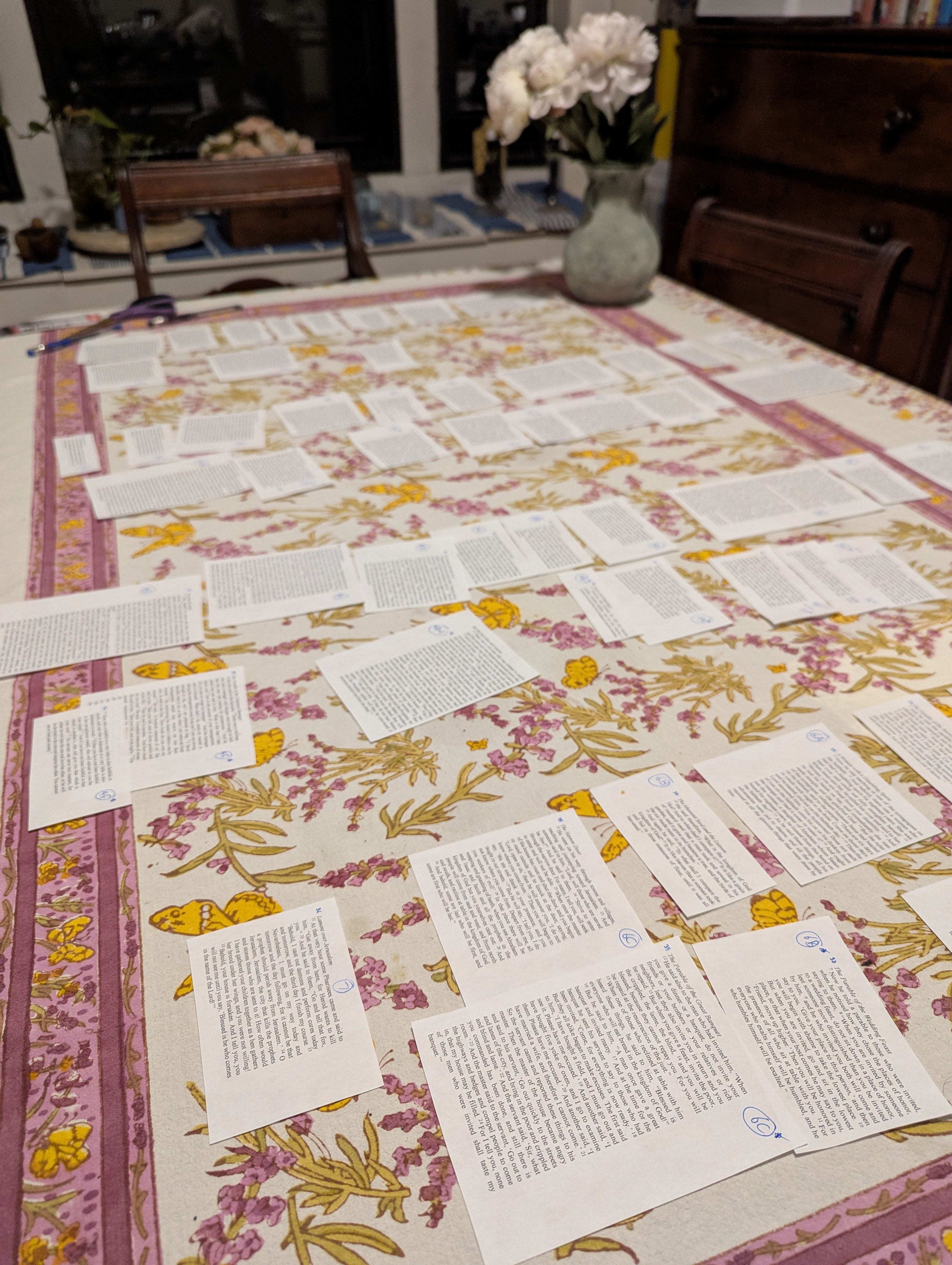
To consider the chiastic structure of Luke’s central section, my first instinct, as a child of the printed text, was to print it out and order it spatially, so as more fully to subject it to the rule of my sight. This proved a helpful exercise, but, while doing it, I also felt its inherent constraints and novelty. Whatever I was doing was quite alien to the ways that people would have experienced chiasms in the past!
While the writers of the scriptural texts may have been literate, they were primarily people of skilled orality, for whom the written text was likely ordered to orality in every respect: in the design and process of its composition, in its personal study, in its performance, in its memorization.
Texts were written by and for the ear more than the eye. For such an approach, diagramming chiasms might be almost as odd as diagramming the symmetries of a symphony. The symmetries may exist, but are primarily experienced through time, rather than in the synchronic spatiality of the eye. Where symmetries were considered in a more spatial mode, the ‘spatiality’ might function more as a sort of imagined itinerary through a memory palace or the like.
In an oral culture, texts are more inherently temporal and ‘musical’ rather than primarily structural and schematic. Perhaps this more musical character can be heard in the performance of texts by skilled rhetors and storytellers (listen to this interview with an Irish seanchaí for an example). It may be that things like chiasms seem odd to us in large part because we have lost much of the musicality of speech. We try to understand and to articulate chiasms in spatial modes, but have dull ears, unable truly to hear the word. Consequently, we might not be able really to understand things like chiasms on their own terms. When we listen to words put to music, structure can become quite apparent to us.
Chiasms are also an instance of the way that Holy Scripture encourages and rewards juxtapositional reading. The chiastic structure of a larger text is heard in the resonances between corresponding verses or sections in the larger sequence. In these resonances, deeper readings of a text can emerge. When we have heard the resonances between the Parable of the Good Samaritan and the conversation preceding it with the second half of Luke 18, with the conversation with the Rich Young Ruler and the healing of the blind man, both texts open up in new ways. Other forms of juxtapositional reading encouraged by the literary forms of Scripture include passages that are related like diptychs, two similar images next to each other, inviting comparison and contrast. Genesis 18 and 19 would be an instance of this. On other occasions, the juxtaposition is with another scriptural book or narrative. Matthew, as Peter Leithart has argued, is juxtaposed with the entire Old Testament narrative.
The lectionary, where we hear texts alongside other texts, at various times in the Church year, and in the resonance chamber of the Church’s practices, enables us to hear texts in new and surprising ways, discovering unexpected resonances between the texts and practices that are juxtaposed in the Church’s worship. As I discussed in a recent video, listening to Scripture well involves exploration of such resonances. Indeed, much of the task of preachers is to equip congregations to hear some of the revelatory ways that the words of Scripture resonate in their world. Such exploration of the resonances of Scripture, while not a free-for-all, greatly exceeds mere grammatical-historical reading. Starting with close attention to the intracanonical resonances of Scripture—both those arising from the Scripture’s own literary juxtaposition of various kinds and those arising from a broader hearing of scriptures alongside each other—we will be increasingly prepared for the work of hearing the broader meaningful resonances of Holy Scripture as it is read in our worlds.

Recent Work

Alastair:
❧ On Mere Fidelity, Kelly Kapic joined us to talk about his New Studies in Dogmatics volume, Christian Life. Derek and I had a discussion of idolatry and the shape of worship.
❧ Our Theopolis podcast series on Malachi continues and concludes, with the following episodes: Robbing the Storehouse (Malachi 3:6–12), Vain to Serve God? (Malachi 3:13–18), and The Sun of Righteousness (Malachi 4).
❧ My God’s Story Podcast series on John continues with an episode on John 2, within which we discuss the wedding at Cana and the cleansing of the temple. In the next episode, we explore chapter 3, where Jesus talks with Nicodemus.
❧ The final video in my Theopolis series on Psalms 1 and 2.
❧ A Theopolis video on Pentecost and the Coming of the Spirit.
❧ I continue to respond to questions left by my supporters on Discord.
What Changes at Pentecost?
How Creative Can We Be in Our Interpretation?
❧ I recorded the following reflections.
The Mission of Christian Study Centres
The Parable of Eliezer’s Test

Upcoming Events

❧ Alastair’s next Davenant Hall course, on Biblical Law, is now open for registration!
The Law is both fundamental and central to the biblical witness. This course will explore the Scripture’s own theology of the Law, its diverse content, its redemptive historical unfolding, its fullfillment in Christ and his body, and its proper place in our lives. The Law is a central theme throughout the Scriptures and focusing upon it will shed light on a host of other areas: our account of redemptive history and salvation, our Christology, our eschatology, our understanding of the Church, our doctrine of Scripture, our teaching concerning Christian moral duty and instruction, and much besides.
Register here!
❧ This June, Alastair will be in Oregon, teaching at a church family camp. He will be passing through Los Angeles on the way.
❧ On Wednesday, 17th June, Alastair will be speaking in Village Church Annandale, Sydney for an event entitled Cross-Related. Find out more here.
❧ On Saturday, 20th June, Alastair has a teaching day in Perth on Christian Faith and Politics.
❧ On Wednesday, 24th June, Alastair will deliver a public lecture in Perth on The Bible in the Age of AI.
❧ Alastair will be speaking in the Theopolis Ministry Conference in Birmingham, Alabama, July 13-14th.
❧ Alastair will be at the Theopolis Fellows Program from July 15th to 24th.
❧ On Saturday, 24th October, Alastair will be one of the speakers at the Raising Expectations conference, organized by Emmanuel Church, Cockfosters, London.
❧ Much of Alastair’s work is as an independent scholar, funded by generous donors. His primary goal is to create thoughtful yet free Christian material for the general public, most notably his largely-completed chapter-by-chapter commentary on the whole Bible (available here and here). If you would like to support his continuing research, teaching, writing, and other content production, you can do so here or here.

Much love,
Alastair and Susannah
Fun fact about Sayers: she invented the Guinness Toucan.
Susannah! I did not know you had such a relationship with Harbor School! Both my sons went there (the eldest did CTE in Ocean Engineering at Harbor and has just graduated from St John’s College in Annapolis with first prize for the Senior Essay and is in the slow process of applying to FDNY alongside pursuing other things…), the younger son is a rising Senior at Harbor in CTE Marine Systems Technology and is intending to go to Burke trade school in LIC to become an electrician…
Love Gov Is! Thanks for listening!♥️